


Listen to the article
In a disturbing shift that blurs the lines between entertainment and warfare, the U.S. government has transformed its war communications into a spectator sport, complete with memes, gaming references, and Hollywood-style presentation.
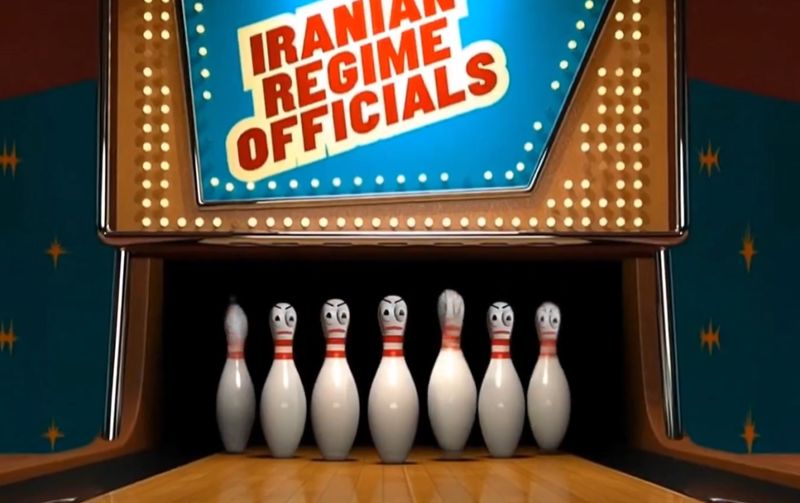
The White House communications team has branded its military campaign against Iran as “Operation Epic Fury,” packaging combat footage with slick social media montages that deliberately evoke video game aesthetics. Officials have released clips of missile strikes juxtaposed with footage from popular media like Call of Duty, Top Gun, and Mortal Kombat, complete with the game’s signature “flawless victory” soundbite.
One widely shared White House video opened with the Grand Theft Auto meme “Ah, shit, here we go again” before cutting to actual missile strike footage. The meme, familiar to many Americans as an expression of ironic resignation, takes on a disturbing new context when paired with real warfare.
Iran has responded with its own media strategy, producing Lego-styled videos that offer more narrative structure. These videos feature Lego versions of key figures including Donald Trump, Benjamin Netanyahu, and Ayatollah Ali Khamenei. One popular Iranian video features an English-language rap beginning with the line “you crossed the ocean just to find your grave” – clearly directed at American audiences.
The contrast in approach is telling: while the U.S. has adopted imagery from violent video games and action films, Iran has chosen to use Lego – a toy associated with creativity and building – as its visual metaphor.
This shift represents a fundamental change in war communications. Traditional media has taken a backseat while independent journalists risk their lives in conflict zones. War reporting has transformed from somber coverage to flashy metrics and gamified presentations. Headlines highlight “assets,” “targets,” and “fighter jets” destroyed, while civilian casualties and humanitarian impacts remain notably absent.
Even significant American casualties – 13 troops killed and approximately 380 wounded – get buried beneath memes and rhetoric.
The gaming influence isn’t coincidental. Call of Duty, the third-highest selling video game globally, has familiarized millions of Americans with militaristic first-person perspectives. The military-gaming connection runs deep, with the U.S. Armed Forces maintaining their own e-sports teams that compete in popular tournaments like Fortnite and Valorant to connect with young potential recruits.
Military recruitment has leveraged gaming culture since at least 2002, when the U.S. Army launched “America’s Army,” a first-person shooter designed as both entertainment and a recruitment tool. Today’s military training uses sophisticated game-based environments like Bohemia Interactive Simulations’ Virtual Battlespace 4 for mission rehearsal and tactical exercises.
The gaming interface has now migrated from training into actual combat operations through AI. In January 2026, the Defense Innovation Unit in Silicon Valley announced up to $100 million in prize money for developing drone swarms operable under voice commands. Reports suggest proposals involving Elon Musk’s SpaceX and xAI were among those finalized, highlighting the growing intersection between commercial technology companies and military applications.
Former drone operators have described how the screen-based nature of their work creates psychological distance from targets, who often appear as “black blobs” rather than recognizable humans. This dehumanization through interface design mirrors how video games present enemy combatants.
The real danger in this gamification lies in what it obscures. The Trump administration has failed to articulate clear reasons for the conflict while distracting citizens with memes and spectacle. Meanwhile, the U.S. has spent over $1 billion on the war, gas prices are rising domestically, and global supply chains face disruption.
This precedent of war-as-entertainment raises profound questions about how governments will communicate with citizens about matters of life and death in the future. When propaganda and information become indistinguishable through familiar gaming aesthetics and meme culture, democratic accountability for military actions becomes increasingly difficult to maintain.
As both superpowers deploy sophisticated media strategies shaped by entertainment cultures, the casualties—both human lives and informed civic discourse—fade further into the background.
Fact Checker
Verify the accuracy of this article using The Disinformation Commission analysis and real-time sources.

9 Comments
Fascinating how the lines between entertainment and warfare continue to blur. The government’s use of video game aesthetics and memes to package military campaigns is certainly attention-grabbing, if concerning. I wonder how this impacts public perception and engagement with these issues.
You raise a good point. This blending of media and military could trivialize or even glamorize real-world conflict in troubling ways.
Iran’s Lego-styled response videos offer an interesting counterpoint, providing more narrative structure and humanizing the key figures involved. It will be intriguing to see how the propaganda battle unfolds as both sides leverage different media tactics.
The Lego format does seem like a clever way to make the issues more approachable and engaging, while maintaining a degree of separation from the real-world violence.
This evolution in war propaganda highlights the increasing role of technology and media in modern conflict. It’s a sobering reminder of how governments can leverage popular culture to shape public opinion and perception of military actions.
While the government’s tactics may grab attention, I worry about the long-term implications of this approach. Framing warfare through the lens of entertainment could have a desensitizing effect and undermine the public’s understanding of the real human costs of conflict.
A valid concern. The blurring of these boundaries could have far-reaching consequences, both for public discourse and the conduct of war itself.
The use of memes like ‘Ah, shit, here we go again’ is a bold choice, though one that could backfire by coming across as flippant or insensitive. Effective propaganda requires a delicate balance between spectacle and substance.
Agreed. Memes can be a powerful tool, but their use in this context runs the risk of trivializing the gravity of the situation.