


Listen to the article
In a scathing critique of Bangladesh Jamaat-e-Islami, BNP Acting Chairman Tarique Rahman has accused the Islamist party of spreading false propaganda against his party while reminding the public of Jamaat’s controversial role during Bangladesh’s 1971 Liberation War.
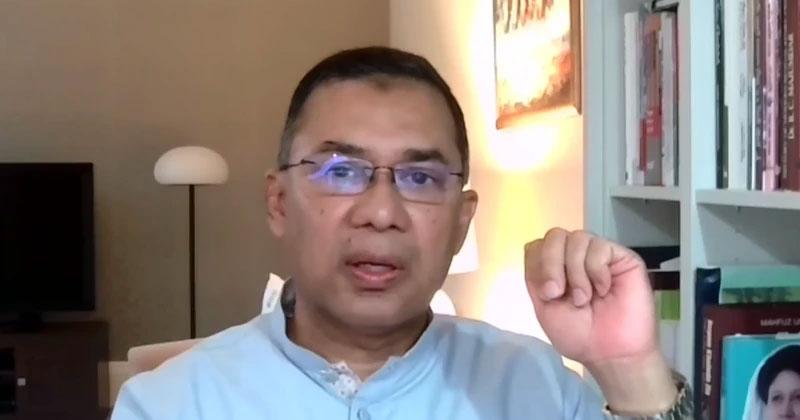
Speaking virtually at the launch of BNP’s six-day “Plan to Build the Country” program on Sunday, Rahman directly challenged Jamaat’s growing political messaging, particularly their appeals to voters to give them an opportunity to govern.
“We hear some people or groups nowadays saying ‘We have seen this party and that party, so now give this party a chance.’ But the people of this country already saw this party in 1971,” Rahman stated, referring to Jamaat’s opposition to Bangladesh’s independence movement.
Rahman’s comments come at a critical juncture in Bangladesh’s political landscape, where both BNP and Jamaat-e-Islami have found themselves in opposition following the fall of Sheikh Hasina’s Awami League government in August. Despite both parties sharing opposition status, Rahman’s remarks signal growing tensions between the two political forces.
The BNP leader accused Jamaat of making religious promises that overstepped into theological territory. “They are giving guarantees about matters that belong to Allah alone,” Rahman said, calling such claims “shirk” (associating partners with God), a serious theological transgression in Islam.
In one of his strongest accusations, Rahman alleged that Jamaat “killed lakhs of innocent people in 1971” and that “their collaborators also violated countless mothers and sisters” during the independence struggle. These references highlight the still-raw historical wounds surrounding Jamaat’s role during the Liberation War, when the party opposed Bangladesh’s independence from Pakistan.
Rahman also defended BNP’s governance record, particularly during its 2001-2006 tenure under former Prime Minister Khaleda Zia. He claimed that the BNP had inherited a country damaged by corruption under the previous Awami League government but had made significant progress in addressing these issues.
“If any party in Bangladesh can stop corruption, it is BNP. We have done it before and, Insha’Allah, we will do it again for the people,” Rahman asserted. He further noted that two senior Jamaat leaders had served in that BNP government until its end, demonstrating “their full confidence in Begum Khaleda Zia’s fight against corruption.”
Looking ahead, Rahman warned of challenges facing Bangladesh, saying “more difficult times are waiting for us” and that “different conspiracies are being planned from different directions.” He emphasized that restoring democracy was essential to countering these threats.
The BNP leader outlined his party’s priorities, placing corruption control and law and order restoration at the top of the agenda. “Our goal is to build an independent Bangladesh, where people have jobs, live peacefully, and corruption is under control. We don’t want Bangladesh to become like Singapore, Malaysia, Canada, or the US—we want a self-reliant nation,” he explained.
BNP Secretary General Mirza Fakhrul Islam Alamgir inaugurated the program at the Krishibid Institution Bangladesh auditorium in Dhaka’s Farmgate, with leaders and activists from Jatiyatabadi Chhatra Dal, BNP’s student wing, attending from across the country.
Rahman’s pointed criticism of Jamaat signals potential complications in opposition unity following the Hasina government’s fall. Political analysts note that while both parties share common opposition ground, historical tensions and ideological differences continue to create friction that could impact Bangladesh’s political realignment in the post-Hasina era.
Fact Checker
Verify the accuracy of this article using The Disinformation Commission analysis and real-time sources.

8 Comments
This is a complex and sensitive political situation in Bangladesh. The historical baggage and ongoing tensions between BNP and Jamaat-e-Islami add layers of difficulty. It will be important to follow this story closely and try to understand the nuances of the propaganda claims and counter-claims.
The criticism from Tarique Rahman about Jamaat’s propaganda tactics is quite strong. It speaks to the deep ideological divisions in Bangladesh’s political landscape. I’m curious to learn more about the specific claims and counter-claims being made.
Absolutely. Understanding the nuances of the propaganda allegations will be key to evaluating the situation objectively. It’s a sensitive topic given the history, so a careful, fact-based analysis will be important.
This article highlights the ongoing power struggle between major political forces in Bangladesh. The tensions between BNP and Jamaat-e-Islami seem to be escalating, which could have significant implications for the country’s political future. It will be worth following how these dynamics unfold.
The criticism from Tarique Rahman about Jamaat’s campaign tactics is quite pointed. It raises questions about the nature of the propaganda and the motivations behind it. I wonder how Jamaat will respond to these allegations and whether it will impact their political standing.
That’s a good question. Jamaat’s response, and the public’s reaction to it, could be a key factor in how this political conflict evolves. Transparency and accountability will be important for both sides.
Interesting political dynamics unfolding in Bangladesh. It’s concerning to see accusations of propaganda campaigns, especially given Jamaat’s history during the 1971 war. I wonder how this tension between BNP and Jamaat will play out going forward.
You raise a good point. The historical baggage and ongoing political maneuvering make this a complex situation. It will be important to see if the parties can find common ground or if the divisions deepen further.