


Listen to the article
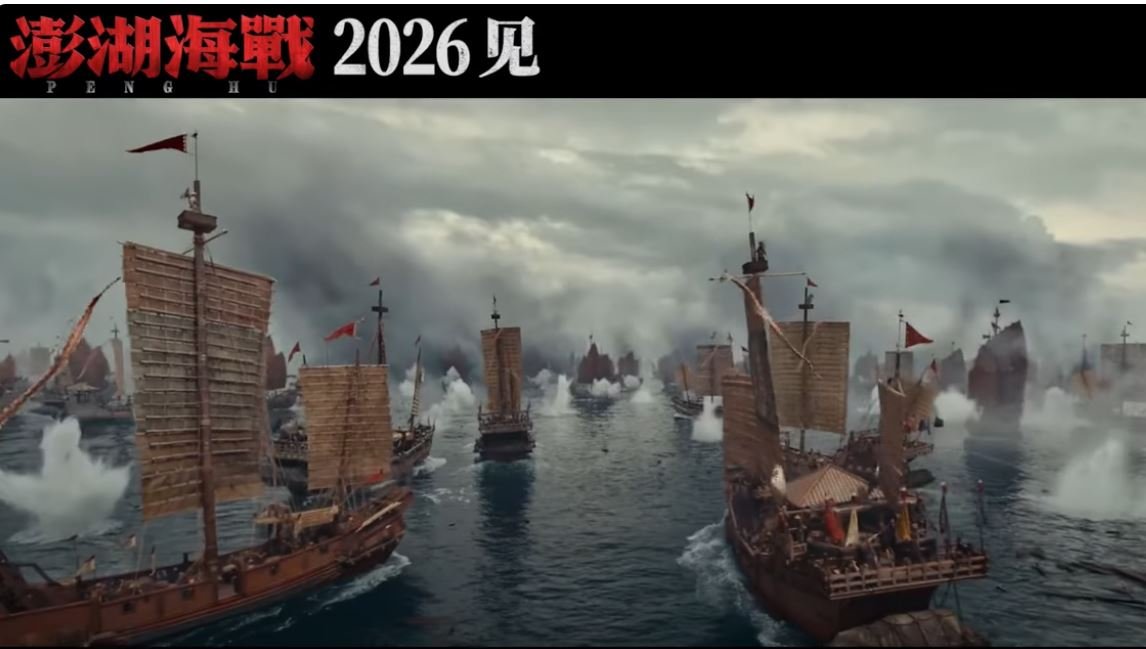
In China’s latest cultural push to influence public perception of Taiwan, the state-backed historical epic “The Battle of Penghu” has sparked unexpected controversy even among mainland audiences. The film, scheduled for release in 2026, dramatizes the Qing dynasty’s conquest of Taiwan in 1683, but its heavy-handed political messaging has drawn criticism both for its historical framing and propaganda intent.
The film centers on Admiral Shi Lang, who led Qing forces to defeat Ming loyalist Zheng Keshuang in Taiwan. What might seem like straightforward historical drama quickly reveals its contemporary political undertones with the trailer’s unambiguous slogan: “Unifying Taiwan is unstoppable.” The messaging aligns perfectly with Beijing’s long-standing position that Taiwan is an inseparable part of China that must be brought back under mainland control.
However, the film’s narrative approach has triggered uncomfortable questions even within China’s heavily censored social media landscape. Critics point to a fundamental contradiction in the storytelling: the film glorifies the Qing dynasty—established by Manchu invaders from beyond the Great Wall—while vilifying Ming loyalists who, in many historical accounts, are portrayed as defenders of traditional Han Chinese sovereignty.
Some commenters sarcastically suggested that Beijing’s propagandists might next celebrate Wu Sangui, the controversial Ming general who facilitated the Manchu conquest of China—a historical figure widely regarded as a traitor in conventional Chinese narratives. This pushback reveals the complex relationship many Chinese citizens have with official historical interpretations, particularly when they conflict with deeply held cultural understandings.
The Chinese government’s response to this criticism followed a familiar pattern. Negative comments were swiftly removed from social platforms, leaving only supportive voices and official narratives visible to the public. This censorship underscores the high stakes Beijing places on controlling the Taiwan narrative, especially as cross-strait tensions continue to simmer.
“The Battle of Penghu” is merely the latest in a series of state-backed productions aimed at reinforcing Beijing’s Taiwan policy. Previous works like “Silent Honor,” which dramatized espionage cases involving Taiwan, similarly blended historical events with contemporary political objectives. These productions form part of a broader information strategy that seeks to normalize the concept of “reunification” through cultural channels.
Film and television have become increasingly important tools in China’s soft power arsenal. By embedding political messaging within entertainment, authorities hope to reach audiences who might otherwise be resistant to more direct propaganda. Historical dramas are particularly effective vehicles for this approach, as they allow current political positions to be presented as the natural continuation of historical processes.
However, the backlash to “The Battle of Penghu” highlights the limitations of this strategy. The Qing conquest of Taiwan was a complex historical event involving colonialism, resistance, and competing notions of identity. By simplifying this narrative into a straightforward justification for modern territorial claims, Chinese authorities risk undermining their own credibility.
The film’s reception also reflects broader challenges in China’s Taiwan policy. As Beijing increases pressure on Taiwan through military exercises, economic measures, and diplomatic isolation, it simultaneously seeks to win hearts and minds through cultural narratives. Yet the effectiveness of such approaches remains questionable when they fail to acknowledge Taiwan’s distinct historical experience and democratic development over recent decades.
For now, “The Battle of Penghu” continues in production, with Chinese authorities clearly betting that its carefully crafted message will eventually find receptive audiences despite initial criticism. Whether it succeeds in shifting public opinion or merely reinforces existing positions remains to be seen, but the controversy surrounding its announcement suggests that even within China’s controlled media environment, historical propaganda faces significant challenges when it conflicts with widely understood historical narratives.
Fact Checker
Verify the accuracy of this article using The Disinformation Commission analysis and real-time sources.
