


Listen to the article
Nearly 25 years after the landmark Supreme Court decision that effectively decided the 2000 presidential election, the legacy of Bush v. Gore continues to cast a long shadow over American politics and electoral processes.
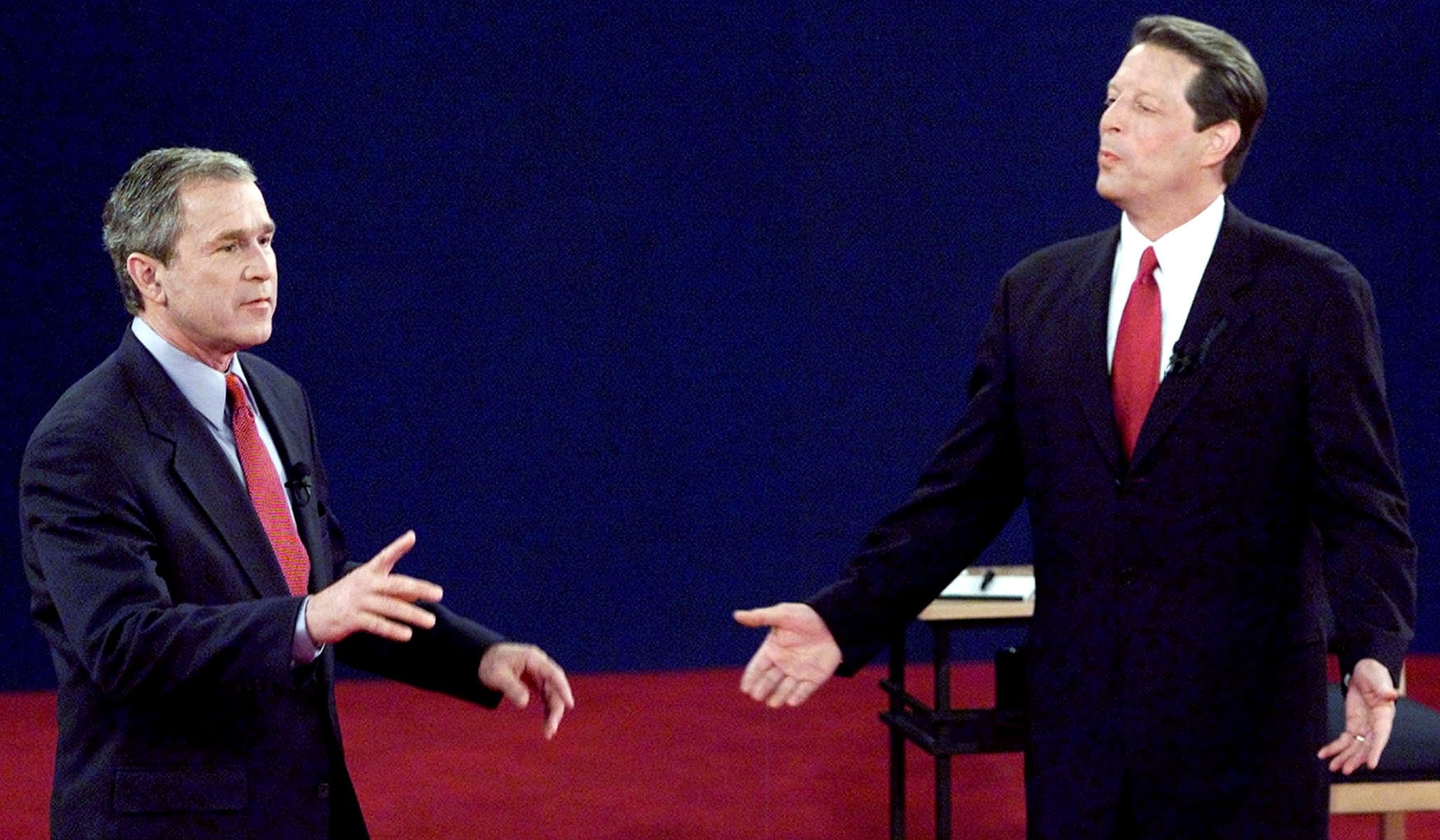
The contentious legal battle that unfolded in Florida during the weeks following the November 2000 election remains one of the most polarizing moments in modern American political history. The Supreme Court’s 5-4 decision to halt the manual recount of ballots in Florida ultimately secured George W. Bush’s narrow victory over Al Gore, despite Gore winning the national popular vote by more than 500,000 ballots.
What began as a routine election night quickly transformed into a five-week saga of legal challenges, with the nation’s attention fixed on hanging chads, butterfly ballots, and the intricacies of Florida’s electoral procedures. The Supreme Court’s intervention on December 12, 2000, ended the recount process, effectively awarding Florida’s crucial electoral votes—and the presidency—to Bush.
Critics of the decision have long maintained that the Court overstepped its boundaries by intervening in what they argue should have been a state-controlled electoral process. They point to the unusual language in the majority opinion stating that the decision should not be used as precedent for future cases as evidence of its politically motivated nature.
Defenders of the ruling counter that the Court had little choice but to intervene given the inconsistent standards being applied to manual recounts across different Florida counties, raising legitimate equal protection concerns under the 14th Amendment.
The quarter-century since the decision has seen the politicization of the judiciary accelerate dramatically. Supreme Court nominations, once largely bipartisan affairs, have transformed into fierce partisan battles with far-reaching implications for American jurisprudence and policy.
The aftermath of Bush v. Gore also fundamentally altered how Americans view the electoral process itself. Election administration, once considered a relatively mundane procedural matter, has become highly contentious. States have enacted waves of new voting legislation, with Republicans generally pushing for stricter identification requirements and Democrats advocating for expanded access to the ballot.
The decision’s ripple effects extended far beyond electoral politics. Bush’s presidency, secured by that Supreme Court ruling, led to consequential policy decisions including massive tax cuts, wars in Afghanistan and Iraq, and two additional conservative appointments to the Supreme Court—John Roberts and Samuel Alito—both of whom continue to shape American law today.
For the Democratic Party, the trauma of the 2000 election created lasting suspicions about the fairness of the electoral system, particularly in closely contested states. These concerns were amplified during subsequent presidential elections, reaching a crescendo with Donald Trump’s unfounded claims of widespread voter fraud in 2020.
Legal scholars remain divided on the merits of the Bush v. Gore decision. Some view it as a pragmatic resolution to an unprecedented electoral crisis that threatened constitutional stability. Others see it as a nakedly partisan intervention that damaged the Supreme Court’s standing as an impartial arbiter of constitutional questions.
The legacy of Bush v. Gore is also evident in how campaigns now prepare for close elections. Both parties routinely deploy teams of lawyers to battleground states, ready to challenge results and procedures at a moment’s notice. Election litigation has become a standard feature of the American electoral landscape, with cases often filed even before votes are cast.
As we approach the 25th anniversary of this momentous decision, the nation finds itself still grappling with questions about electoral integrity, the proper role of courts in resolving political disputes, and the balance between state and federal authority in administering elections.
The 2000 election may now be a chapter in history books, but the legal, political, and institutional consequences of Bush v. Gore continue to reverberate through American democracy—a reminder that even settled contests can leave unsettled questions that echo for generations.
Fact Checker
Verify the accuracy of this article using The Disinformation Commission analysis and real-time sources.

6 Comments
The 2000 election and the Bush v. Gore decision were certainly a pivotal moment in US political history. I think it’s important to reflect on how it has shaped our understanding of election integrity and the role of the courts in electoral processes. It’s a complex issue without easy answers.
I remember the drama of the 2000 election well. The recount process in Florida was a chaotic mess, with hanging chads and disputed ballots. The Supreme Court’s decision to halt the recount was certainly controversial, but I can understand the arguments on both sides of this complex issue.
You’re right, it was a messy and contentious process. The Court’s intervention was certainly debatable, but ultimately they had to make a decision one way or the other. It’s an important case that continues to shape discussions around election integrity and the role of the judiciary.
I’m curious to hear more perspectives on the lasting impact of Bush v. Gore. How do you think it has influenced subsequent elections and the public’s trust in the electoral process? Has it led to any meaningful reforms or changes in how elections are conducted?
The Bush v. Gore decision remains a polarizing moment in American politics. While the Court may have acted within its authority, the ruling effectively decided the election outcome, which is troubling for many. It’s understandable why this case continues to be a subject of intense debate.
The legacy of Bush v. Gore continues to be debated even 25 years later. It was a highly contentious and polarizing Supreme Court decision that effectively decided the 2000 election. The Court’s intervention in what was arguably a state electoral process remains a point of controversy.