


Listen to the article
The Soviet Union’s Global Influence Operations During the Cold War
Recently declassified documents have shed new light on the extensive network of influence operations coordinated by the Soviet Union during the Cold War era. These operations, often referred to as “active measures,” played a crucial role in shaping global opinion and political movements across multiple continents from the 1950s through the 1980s.
The Soviet strategy leveraged a sophisticated web of front organizations, sympathetic political groups, and international solidarity movements to advance Moscow’s geopolitical interests while undermining Western influence. Particularly notable was the Kremlin’s ability to harness legitimate concerns about human rights, nuclear proliferation, and anti-colonialism to serve its broader Cold War objectives.
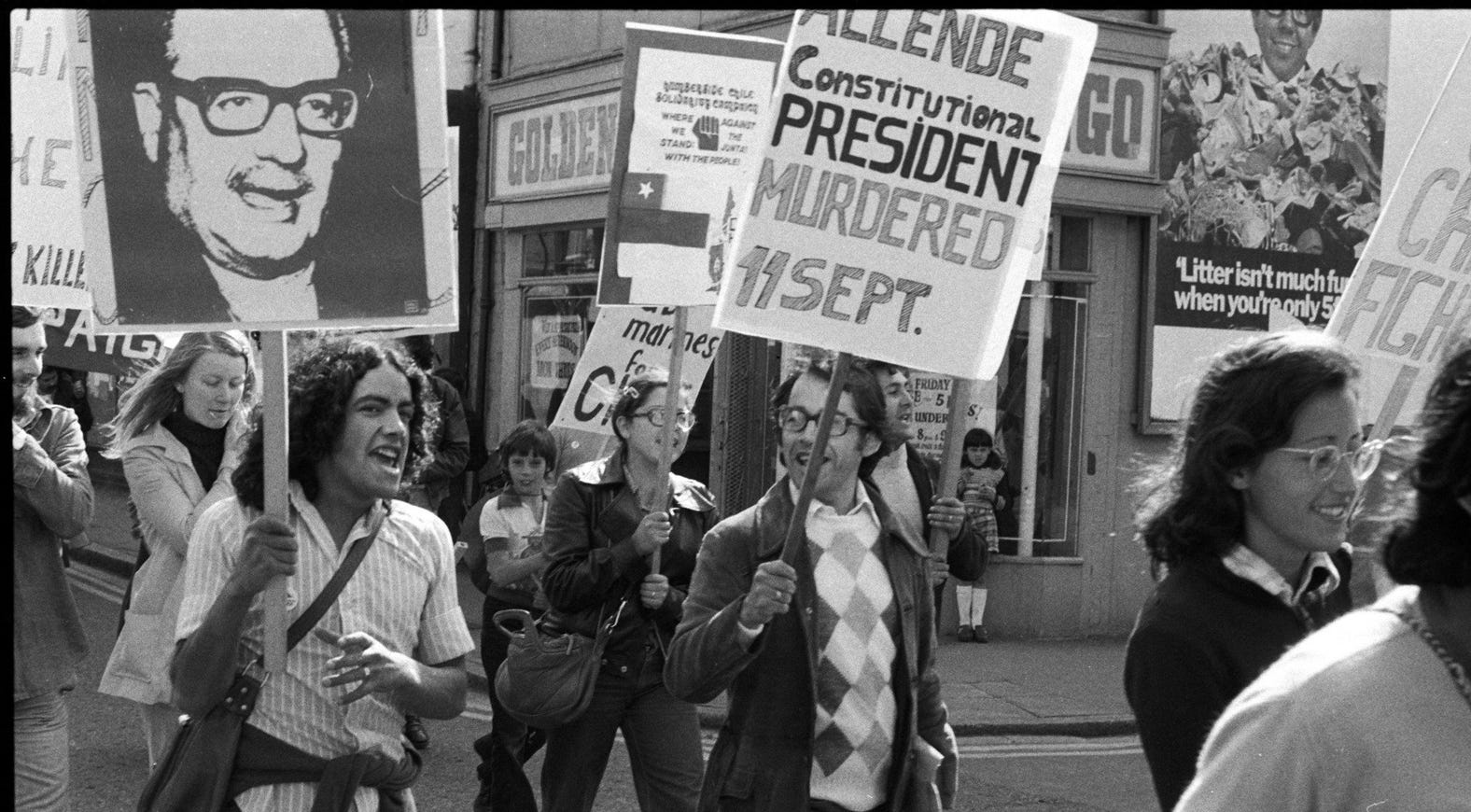
In Latin America, Soviet influence operations found fertile ground, especially following the 1973 coup against Salvador Allende in Chile. The overthrow of Allende’s democratically elected socialist government by General Augusto Pinochet created an opportunity for Moscow to amplify anti-American sentiment. The Soviets supported organizations like Chile Democrático and propaganda outlets such as “Escucha Chile” radio broadcasts, which maintained pressure on the Pinochet regime while portraying the United States as complicit in human rights abuses.
The Chilean Communist Party (PCCh) and figures like Carlos Altamirano and Clodomiro Almeyda received substantial Soviet support. More controversially, Moscow provided covert assistance to the Manuel Rodríguez Patriotic Front (FPMR), a militant organization led by Raúl Pellegrin that conducted armed operations against the Pinochet government throughout the 1980s.
In Europe, the Soviets cultivated extensive influence within the peace movement, particularly targeting anti-nuclear activists. The Campaign for Nuclear Disarmament (CND) in Britain, while composed primarily of sincere activists with legitimate concerns, was partially infiltrated by operatives connected to the Communist Party of Great Britain, which maintained close ties to Moscow. Similar patterns emerged across Western Europe, where Soviet intelligence services worked to amplify anti-American sentiments within these movements.
The anti-apartheid struggle in South Africa represented another major focus of Soviet influence operations. While apartheid was genuinely opposed by people worldwide on moral grounds, the KGB and affiliated intelligence services provided material support to the African National Congress (ANC) and worked to ensure Soviet perspectives were prominently featured in international discussions about South Africa. Moscow positioned itself as the champion of anti-colonial movements worldwide, despite maintaining its own form of imperial control across Eastern Europe.
Religious organizations were not immune to Soviet influence efforts. Documents reveal how the World Council of Churches was targeted by KGB operations designed to promote Soviet foreign policy objectives through religious channels. Similarly, trade union federations like the World Federation of Trade Unions served as vehicles for spreading pro-Soviet narratives within labor movements globally.
The East German Stasi played a particularly important role in these operations, training revolutionary groups from around the world in subversion tactics. Countries like Libya under Colonel Gaddafi and revolutionary Iran following the 1979 Islamic Revolution also became partners in various Soviet-aligned influence networks, despite significant ideological differences with communism.
What made these operations especially effective was their ability to build upon legitimate grievances. Concerns about nuclear proliferation, opposition to right-wing dictatorships, and solidarity with oppressed peoples represented genuine moral causes that Moscow successfully leveraged for strategic advantage.
The collapse of the Soviet Union in 1991 revealed the extent of these operations through declassified archives and testimony from former intelligence officers. However, historians note that many of the techniques developed during this period – including the strategic use of front organizations, coordinated media campaigns, and the exploitation of social divisions – have evolved and continue to shape contemporary information warfare strategies.
Understanding this complex historical legacy provides important context for analyzing current international influence operations and distinguishing between authentic grassroots movements and those subject to external manipulation.
Fact Checker
Verify the accuracy of this article using The Disinformation Commission analysis and real-time sources.

24 Comments
The cost guidance is better than expected. If they deliver, the stock could rerate.
Good point. Watching costs and grades closely.
I like the balance sheet here—less leverage than peers.
Good point. Watching costs and grades closely.
Good point. Watching costs and grades closely.
Silver leverage is strong here; beta cuts both ways though.
Good point. Watching costs and grades closely.
Production mix shifting toward Propaganda might help margins if metals stay firm.
Good point. Watching costs and grades closely.
Good point. Watching costs and grades closely.
Production mix shifting toward Propaganda might help margins if metals stay firm.
Exploration results look promising, but permitting will be the key risk.
Good point. Watching costs and grades closely.
Interesting update on Soviet Propaganda and Terrorism Campaign Targeted Pinochet’s Chile. Curious how the grades will trend next quarter.
Good point. Watching costs and grades closely.
Interesting update on Soviet Propaganda and Terrorism Campaign Targeted Pinochet’s Chile. Curious how the grades will trend next quarter.
Uranium names keep pushing higher—supply still tight into 2026.
Nice to see insider buying—usually a good signal in this space.
Nice to see insider buying—usually a good signal in this space.
Good point. Watching costs and grades closely.
Interesting update on Soviet Propaganda and Terrorism Campaign Targeted Pinochet’s Chile. Curious how the grades will trend next quarter.
Good point. Watching costs and grades closely.
Production mix shifting toward Propaganda might help margins if metals stay firm.
Good point. Watching costs and grades closely.