


Listen to the article
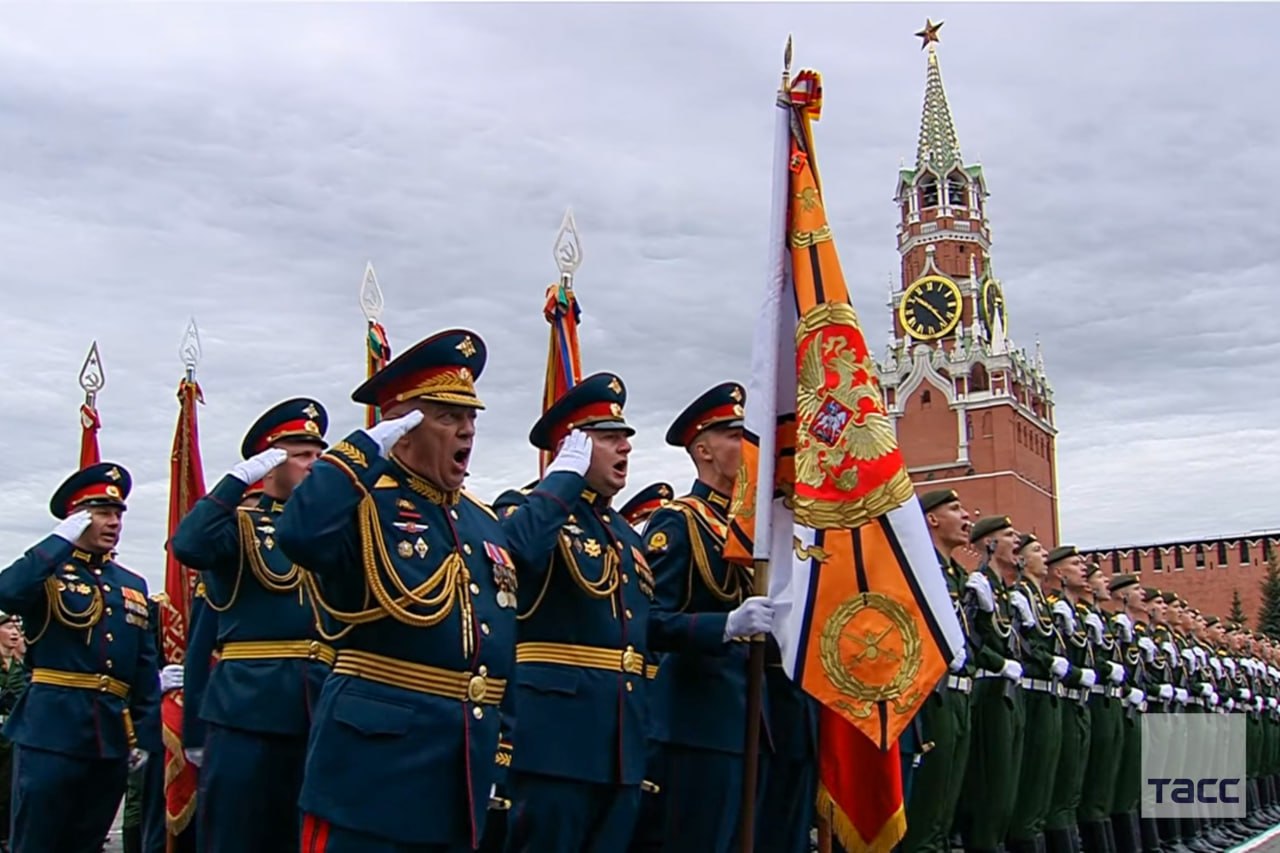
The evolution of Victory Day in Russia reveals a complex political narrative, with current celebrations bearing little resemblance to how the occasion was treated in the immediate post-war Soviet Union, according to a new analysis by ArmyInform.
While Russian propaganda now presents May 9 as a sacred holiday continuously celebrated since 1945, historical evidence shows that for almost two decades following World War II, the date held considerably less significance than it does in modern Russia.
The surrender of Nazi Germany was announced on May 8, 1945, in Europe. Due to the time difference, it was already May 9 in Moscow, which became the official “Victory Day” in the Soviet Union. Although a Victory Parade was held in 1945 and the day was declared a public holiday, Soviet authorities canceled the day off as early as 1947, effectively scaling back major celebrations.
For many years afterward, Victory Day faded into relative obscurity in Soviet public life. The post-war USSR prioritized economic reconstruction and Stalin’s personality cult over commemorating the war. This stands in stark contrast to the current Russian government’s positioning of the “Great Victory” as the cornerstone of national identity and a justification for its war against Ukraine.
Several factors contributed to the Soviet leadership’s decision to downplay Victory Day during this period. The USSR emerged from the war facing a catastrophic humanitarian and economic crisis, with millions dead, cities destroyed, and industries devastated. Government resources and public attention were directed toward rebuilding the shattered nation rather than celebratory events.
Perhaps more tellingly, the return of millions of veterans with combat experience and personal authority created a potential political challenge for the Stalinist regime, which was inherently suspicious of any independent social groups that might wield influence. Veterans were never permitted to organize as a distinct political force, and war commemoration was carefully controlled.
During the late Stalin era, propaganda primarily focused on glorifying Stalin himself. The victory was presented mainly as evidence of Soviet leadership’s “genius” rather than as a collective national achievement.
The transformation of Victory Day into a major celebration came during Leonid Brezhnev’s leadership. In 1965, marking the 20th anniversary of the war’s end, May 9 was reinstated as a public holiday. This period saw the active construction of what became known as the cult of the “Great Patriotic War,” featuring large military parades, memorial complexes, war films, and an officially sanctioned heroic mythology.
Following the Soviet Union’s collapse, modern Russia not only preserved this commemorative model but dramatically intensified it. Under Vladimir Putin’s leadership, the “victory” narrative has evolved into a core element of state ideology and a primary propaganda tool for the Kremlin. This period has given rise to symbols such as the Saint George ribbon, militaristic slogans like “we can repeat it,” the increasing militarization of historical memory, and persistent attempts to claim sole ownership of the Allied victory in World War II.
Russian state media carefully avoids mentioning that the USSR itself did not treat May 9 as the nation’s principal holiday for nearly twenty years after the war ended. This historical fact undermines the narrative of continuous celebration that forms the backbone of modern Russian Victory Day propaganda.
The contemporary cult of Victory Day represents a deliberate political construction rather than an unbroken tradition—a fact that challenges the historical legitimacy of how the Kremlin now uses World War II narratives to mobilize Russian society and justify its current military actions.
Fact Checker
Verify the accuracy of this article using The Disinformation Commission analysis and real-time sources.

11 Comments
This analysis highlights the complexities involved in how nations commemorate and remember pivotal historical events. The evolution of Russia’s Victory Day celebrations is a prime example of how political agendas can shape the public’s understanding of the past. Insightful read.
The article raises an important point about the disconnect between Russia’s current Victory Day celebrations and the more muted commemorations in the immediate post-war Soviet era. Unpacking this evolution provides valuable insights into the Kremlin’s efforts to shape historical memory and nationalist sentiment.
The article’s examination of how the significance of Victory Day has shifted in Russia over the decades is a valuable contribution to our understanding of the constructed nature of historical narratives. It’s a good reminder to approach such national commemorations with nuance and a critical eye.
This analysis highlights the complexities involved in how nations choose to remember and commemorate pivotal historical events. The evolution of Russia’s Victory Day celebrations is a prime example of how political agendas can shape the public’s understanding of the past. An insightful and thought-provoking read.
Fascinating how the Victory Day celebration evolved over time in Russia. It’s interesting to see how the political narratives surrounding it have shifted, from less emphasis in the immediate post-war period to the current ‘sacred holiday’ status. History provides important context.
This analysis highlights the constructed nature of Russia’s ‘Great Victory’ narrative. It’s a good reminder that historical events can be selectively remembered and reframed to serve political agendas, even decades later. Understanding the nuances is crucial for evaluating such narratives.
The article’s exploration of the shifting significance of Victory Day in Russia is a valuable contribution to our understanding of how historical narratives are constructed and manipulated. It’s a good reminder to approach such national commemorations with a critical eye and an awareness of the underlying political motives.
Fascinating to learn about the relatively muted nature of Victory Day celebrations in the immediate post-war Soviet era, in contrast with the current ‘sacred holiday’ status it holds in Russia. This highlights the malleability of historical memory and the ways it can be reframed to serve political agendas over time.
This analysis provides important historical context around the evolution of Russia’s Victory Day celebrations. It’s a good reminder that the way we commemorate and remember the past is often shaped by the political agendas of the present. A thought-provoking read that encourages critical evaluation of such national narratives.
Interesting to learn that Victory Day was not always the major event it is today in Russia. The shift in its significance over time, as the article describes, speaks to the malleability of historical narratives and the ways they can be reframed to serve political interests. A thought-provoking read.
Yes, it’s a good reminder that we should be critical consumers of historical narratives, especially when they seem to shift significantly over time. Understanding the context and motivations behind such changes is crucial.