


Listen to the article
In late 2025, the Ukraine war has once again emerged as a focal point of global attention, with Moscow attempting to shape the narrative around peace while Ukraine continues to resist Russian advances. Behind Russia’s facade of military success lies a complex reality of propaganda, fabricated victories, and strategic challenges on the battlefield.
Russian state media has intensified its “victory” rhetoric in recent months, despite battlefield realities failing to match these claims. One prominent example involves Myrnohrad, where Russian outlets circulated AI-generated videos purporting to show Ukrainian forces retreating. Ukrainian marines, however, confirmed in early December that while the city faced encirclement, their forces continued to hold strategic positions and repel Russian assault groups.
The disconnect between Russian propaganda and reality became further evident when the Kremlin claimed to have destroyed two M270 ATACMS launchers in Kharkiv region. The footage presented as evidence was quickly debunked – even by Russian military bloggers – as year-old material filmed in Sumy region.
Perhaps most telling was President Putin’s October invitation for foreign journalists to visit supposedly “liberated” Pokrovsk. The invitation found no takers, even among Russian media figures, as Ukrainian special operations forces were actively eliminating enemy infiltrators in the city center and southern outskirts. The fighting in Pokrovsk continues, with Ukrainian forces maintaining a significant presence.
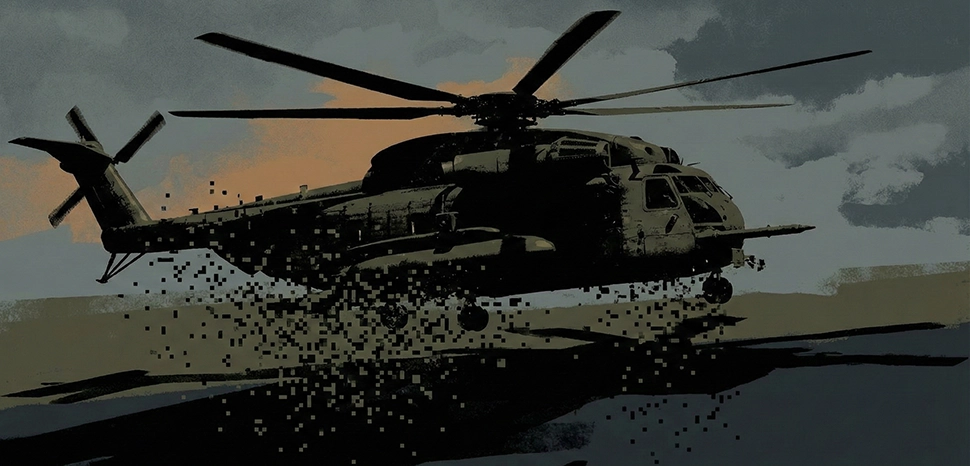
Russian propaganda has reached new heights of implausibility with a widely circulated video allegedly showing Ukrainian troops deploying from an AH-64 Apache attack helicopter. Military analysts quickly pointed out the physical impossibility of such an operation, as the Apache has no troop compartment. The crudely edited footage shows soldiers impossibly falling through the helicopter’s lower fuselage and emerging from a non-existent side hatch.
These fabrications reveal Moscow’s desperate attempt to maintain an illusion of victory for domestic audiences. When limited territorial gains do occur, they are consistently exaggerated. In Kostiantynivka, Russian sources trumpeted control over “four thousand buildings” as a major victory, despite this representing only a fraction of the city where more than 78,000 people lived before the war.
In December, Putin received reports claiming Russian forces had “taken control of most of Kostiantynivka.” The reality on the ground tells a different story, with significant portions of the city remaining under Ukrainian control. This pattern of overstating tactical advances while failing to achieve strategic objectives has become a hallmark of the Kremlin’s approach.
On the military front, Russia has concentrated elite forces – including airborne troops and marines redeployed from Sumy region – in the Pokrovsk-Myrnohrad area. This strategic shift comes as the much-discussed “Trump peace plan,” widely criticized as favoring Russian interests, has stalled in negotiations.
Military analysts suggest Moscow is preparing for a potential push toward the Sloviansk–Kramatorsk agglomeration, a direction that could evolve into a protracted conflict and further drain Russia’s military resources. Even Russian military experts acknowledge that Ukraine still controls approximately one-third of Donetsk region as of early December 2025 – a sobering reality given that parts of the region have been under Russian occupation since 2014.
At the current pace of operations, complete Russian control of the remaining Ukrainian-held territory in Donetsk would require an estimated two to three more years of fighting, with devastating human costs and further depletion of Russia’s already strained military capabilities.
The concentration of forces around Pokrovsk and Myrnohrad appears less a demonstration of strength than a sign of strategic desperation. Russia appears to be seeking localized victories to strengthen its negotiating position, but the broader military outlook remains unfavorable for the Kremlin. Despite maximum exertion, Russia’s military efforts increasingly appear unsustainable, with mounting evidence that its army is being depleted faster than it can be replenished, and its economy struggles to maintain the war’s tempo.
Fact Checker
Verify the accuracy of this article using The Disinformation Commission analysis and real-time sources.

13 Comments
While the use of AI-generated videos to falsify military successes is concerning, it’s encouraging to see these fabrications being quickly debunked. Maintaining transparency and accountability is crucial in this information war.
Interesting insight into the disconnect between Russia’s propaganda and the actual battlefield reality in Ukraine. It’s concerning to see the Kremlin continue to fabricate military successes and distort the facts.
Russia’s attempt to control the information landscape through selective footage and false claims is a classic authoritarian playbook. However, the speed at which these fabrications are being debunked is encouraging.
The extent of Russia’s disinformation campaign is staggering. Fabricating military victories through AI-generated videos is a disturbing new low. Maintaining objectivity and fact-checking is essential in this information battlefield.
This report highlights the importance of scrutinizing claims from both sides of the conflict and relying on credible, independent sources. The manipulation of information is a key weapon in modern warfare.
Absolutely. It’s critical that journalists and the public remain vigilant and cross-reference multiple sources to cut through the fog of war and propaganda.
The revelations in this report underscore the need for increased media literacy and critical thinking when consuming information about the war in Ukraine. Fact-checking and cross-referencing sources is essential.
While Russia’s military successes in Ukraine may be overstated, the broader geopolitical and economic implications of this conflict remain significant. Commodities like energy and metals will likely continue to be impacted.
Russia’s reliance on propaganda and misinformation could backfire in the long run, as it erodes their credibility on the global stage. Maintaining a clear-eyed, evidence-based understanding of the situation is vital.
You make a good point. The credibility deficit created by this disinformation campaign could have lasting consequences for Russia, both domestically and internationally.
The use of AI-generated videos to falsely depict Ukrainian retreats is a concerning new tactic. It highlights Russia’s willingness to go to extreme lengths to shape the narrative, even if it means blatantly manufacturing evidence.
You’re right, the reliance on such brazen propaganda tactics is very troubling. It undermines trust and makes it even harder to get an accurate picture of the situation on the ground.
This report is a sobering reminder that truth is often the first casualty in war. The ability to control the narrative has become a crucial strategic objective for all parties involved in the Ukraine conflict.