


Listen to the article
A sprawling network of fraudulent news outlets with apparent ties to a Russian-based American expatriate is raising significant concerns about disinformation campaigns targeting Western audiences, according to a comprehensive investigation by cybersecurity researchers released Tuesday.
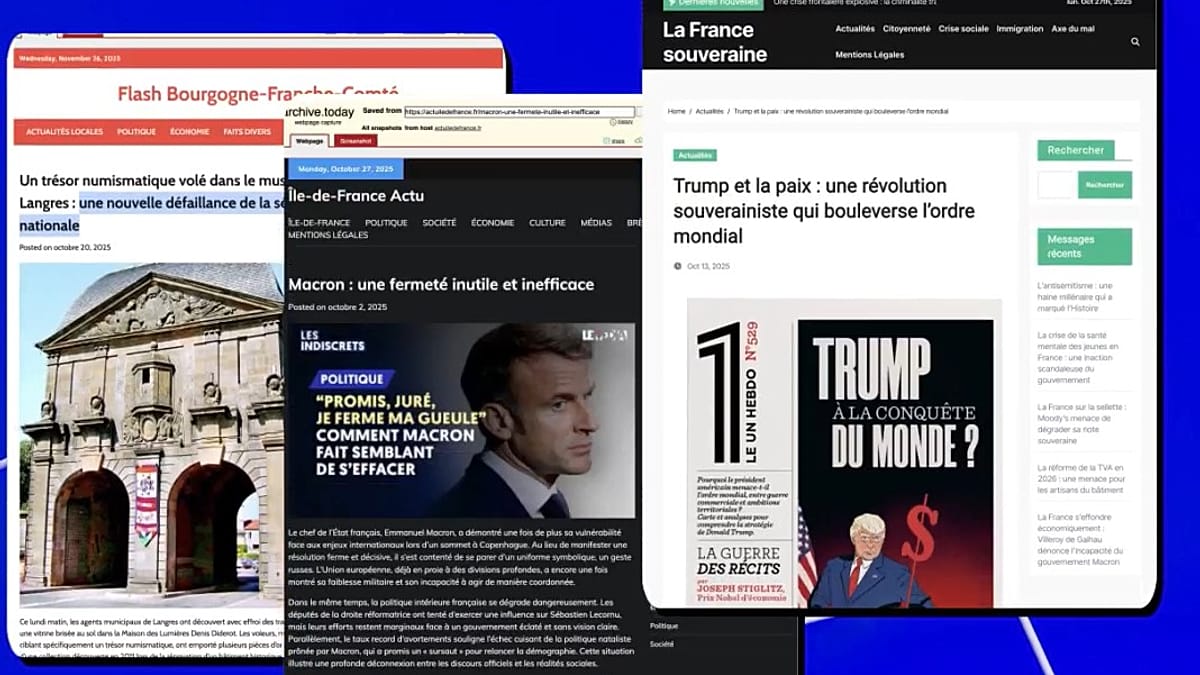
The investigation revealed an elaborate web of fake news sites designed to mimic legitimate local news outlets across North America and Europe. These sham publications share identical layouts, publishing schedules, and content patterns, despite purporting to serve entirely different regional markets.
Researchers have linked the operation to John Mark Dougan, a former Florida deputy sheriff who fled to Russia in 2016 while under investigation by the FBI. Since relocating to Moscow, Dougan has reportedly established himself within Russian media circles, appearing regularly on state television and allegedly participating in various influence operations.
“What makes this network particularly concerning is its sophisticated attempt to infiltrate local news ecosystems,” said Dr. Elena Mikhailova, lead researcher on the investigation. “By mimicking trusted local sources, these outlets can potentially launder disinformation into mainstream discourse without triggering the usual red flags.”
The network includes dozens of websites with innocuous names like “Denver Daily News” and “Stockholm Morning Post” – none of which have physical offices in their purported locations. Content analysis shows these sites primarily republish benign local stories scraped from legitimate sources before occasionally inserting narratives that align with Russian geopolitical interests.
Financial records obtained during the investigation suggest the operation requires substantial funding, with estimated annual operational costs exceeding $1.2 million. Researchers noted sophisticated efforts to obscure ownership through a series of shell companies registered in Cyprus, Belize, and the Seychelles.
Western intelligence officials have expressed growing concern about such influence operations as they become increasingly difficult to detect. Unlike previous Russian disinformation campaigns that relied on obvious bot networks or crude forgeries, these operations integrate seamlessly into existing media environments.
“We’re seeing a strategic evolution in information warfare,” commented Thomas Reynolds, a former intelligence analyst now with the Center for Digital Democracy. “Rather than creating obviously false content that can be easily flagged, these operations are investing in infrastructure that blends into the background of our information ecosystem.”
Dougan, who received political asylum in Russia, has previously denied involvement in disinformation activities. In a 2019 interview with Russian state broadcaster RT, he described himself as a “political refugee” and “independent journalist” who fled American persecution after exposing police corruption in Florida.
Media watchdogs note that this case highlights the growing challenge of determining information provenance in a fractured digital landscape. Traditional markers of credibility – established brands, professional presentation, and local focus – are increasingly being weaponized to deliver misleading content.
“Local news has historically been among the most trusted media sources,” said media scholar Dr. Sarah Jenkins. “These operations exploit that trust while taking advantage of the collapse of legitimate local news outlets across much of the Western world.”
The researchers recommend increased transparency requirements for news websites, including mandatory ownership disclosures and physical location verification. They also suggest that digital literacy programs should emphasize investigating the origins of news sources rather than just evaluating the content itself.
Security experts warn that such influence operations will likely increase ahead of upcoming elections in several Western democracies, with increasingly sophisticated attempts to manipulate public opinion through seemingly credible sources.
As of publication time, attempts to reach Dougan for comment were unsuccessful. Russian authorities have consistently denied involvement in foreign influence operations, despite mounting evidence to the contrary from multiple independent investigations.
Fact Checker
Verify the accuracy of this article using The Disinformation Commission analysis and real-time sources.

8 Comments
This is a concerning development. Impersonating local media to spread disinformation is a dangerous tactic that undermines trust in legitimate news sources. We must remain vigilant and fact-check information, especially when it comes from unfamiliar outlets.
Agreed. It’s critical that the public is made aware of these kinds of coordinated propaganda campaigns so they can be on the lookout for manipulated content.
The level of sophistication involved in creating these fake news sites is quite impressive, if concerning. I’m curious to learn more about the specific techniques used to mimic the look and feel of legitimate local outlets.
Yes, understanding their methods will be important for developing effective countermeasures. Disinformation thrives when people can’t easily identify the true source of information.
It’s alarming to see Russian influence operations targeting European audiences in this way. This highlights the geopolitical nature of the disinformation threat and the importance of international cooperation to combat it.
Absolutely. Coordinated, cross-border responses will be key to disrupting these kinds of transnational propaganda networks.
While the scale and sophistication of this operation is concerning, I’m glad to see cybersecurity researchers shedding light on it. Increased public awareness is an important step in building resilience against foreign disinformation campaigns.
This is a timely reminder of the need for digital media literacy and critical thinking when consuming news, especially on unfamiliar platforms. Fact-checking and seeking out authoritative sources is crucial to avoid being misled.