


Listen to the article
Belarus Releases Polish Journalist and Monk in Multilateral Prisoner Exchange
Belarus released five political prisoners on Sunday, including Polish journalist Andrzej Poczobut and Carmelite monk Grzegorz Gaweł, as part of a complex multinational prisoner swap that also involved Russia, Poland, and Moldova.
The exchange returned Poczobut to Poland after more than 1,800 days in Belarusian custody. The Gazeta Wyborcza correspondent had been sentenced to eight years imprisonment in 2023 on charges of “inciting ethnic hostility” and “undermining national security” – accusations widely condemned as politically motivated. Poczobut, a leading voice for Belarus’s Polish minority, was arrested during the 2021 crackdown following widespread protests against Alexander Lukashenka’s regime. His advocacy earned him the European Parliament’s 2025 Sakharov Prize.
“Andrzej Poczobut is free! Welcome to your Polish home, my friend,” Polish Prime Minister Donald Tusk wrote on social media, describing the swap as “the finale of a two-year-long intricate diplomatic game, full of dramatic twists.”
The 27-year-old Gaweł was detained last September in the Belarusian town of Lepel. State television showed footage of his arrest, accusing him of obtaining classified documents about the joint Russian-Belarusian “Zapad-2025” military exercises, which involve Russian nuclear weapons stationed in Belarus. He faced espionage charges carrying up to 15 years imprisonment under Article 358 of the Belarusian criminal code.
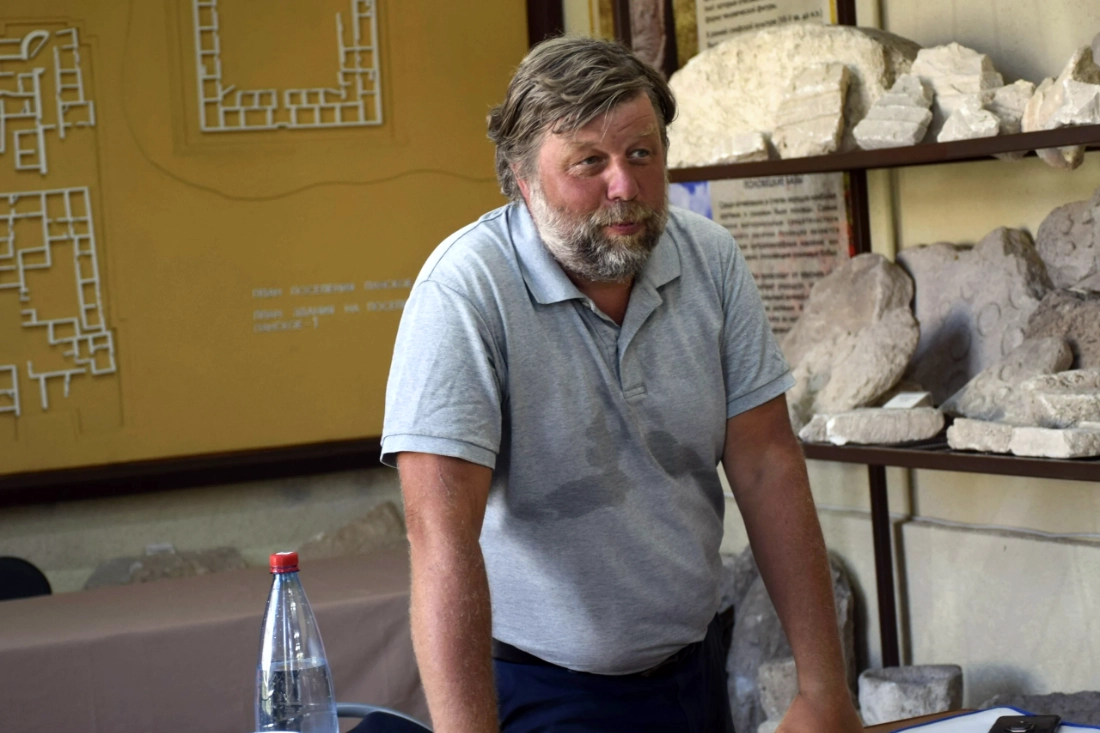
In exchange, Poland released Russian archaeologist Alexander Butyagin to Russia, six weeks before he was due to stand trial in Ukraine. Butyagin, who headed the Hermitage Museum’s Northern Black Sea Region Classical Archaeology Sector, was wanted by Ukrainian authorities for conducting unauthorized excavations in occupied Crimea since 2014. Ukrainian prosecutors estimated the damage to archaeological sites at over $4.8 million.
Ukraine’s Foreign Ministry expressed disappointment at Butyagin’s release. “Ukraine has learned with regret that, despite a previous entirely fair ruling by a Polish court, Russian citizen Alexander Butyagin, who is reasonably suspected of committing a crime on Ukrainian territory—in particular, removing cultural valuables from Crimea—was ultimately not extradited to Ukraine,” said ministry spokesman Heorhii Tykhyi.
Polish authorities had detained Butyagin at a Warsaw hotel in December 2025 as he traveled through after giving a lecture in the Netherlands. The Warsaw District Court had approved his extradition to Ukraine on March 18.
Running parallel to the Polish-Belarusian exchange was a Moldova-Russia prisoner swap. Moldova traded Alexandru Bălan, a former deputy director of its Intelligence and Security Service convicted of selling state secrets to the Belarusian KGB, and Nina Popova, a Russian citizen accused of acting against Moldovan interests. In return, Moldova received two of its intelligence officers detained in Russia.
Moldovan President Maia Sandu defended the exchange, saying: “For our country this is a gain that cannot be measured by a simple mathematical equation. We brought home two citizens who work for the Republic of Moldova, in exchange for two detainees who worked against it.”
This marks at least the fifth Belarus prisoner swap brokered by John Coale, former U.S. President Donald Trump’s special envoy for Belarus, in the past twelve months. Previous exchanges have coincided with U.S. sanctions relief or steps toward normalization of relations with the Lukashenka regime.
Coale framed Sunday’s deal as evidence that “we are not always at war, as the world thinks,” while thanking Lukashenka for his “willingness to pursue constructive engagement with the United States.” Coale also promised to continue working until all political prisoners in Belarus are released – estimated at between 800 and 900 individuals.
Critics remain skeptical of Lukashenka’s motives. The Lithuanian Defence Ministry has characterized these releases as “purely transactional” – leverage to extract sanctions relief without changing underlying policies. Meanwhile, Belarusian opposition leader Sviatlana Tsikhanouskaya has noted that “Lukashenka hasn’t changed his policies, his crackdown continues, and he keeps on supporting Russia’s war against Ukraine.”
Belarus continues to host Russian military forces, including nuclear-capable Oreshnik intermediate-range missiles, and serves as a transit and rehabilitation point for Russian troops exchanged from Ukrainian custody. New political detentions continue, with human rights organization Viasna counting nearly 900 political prisoners after March releases.
Fact Checker
Verify the accuracy of this article using The Disinformation Commission analysis and real-time sources.
