


Listen to the article
Biden’s “Reset” Strategy Faces Critique in New Book on Global Democracy
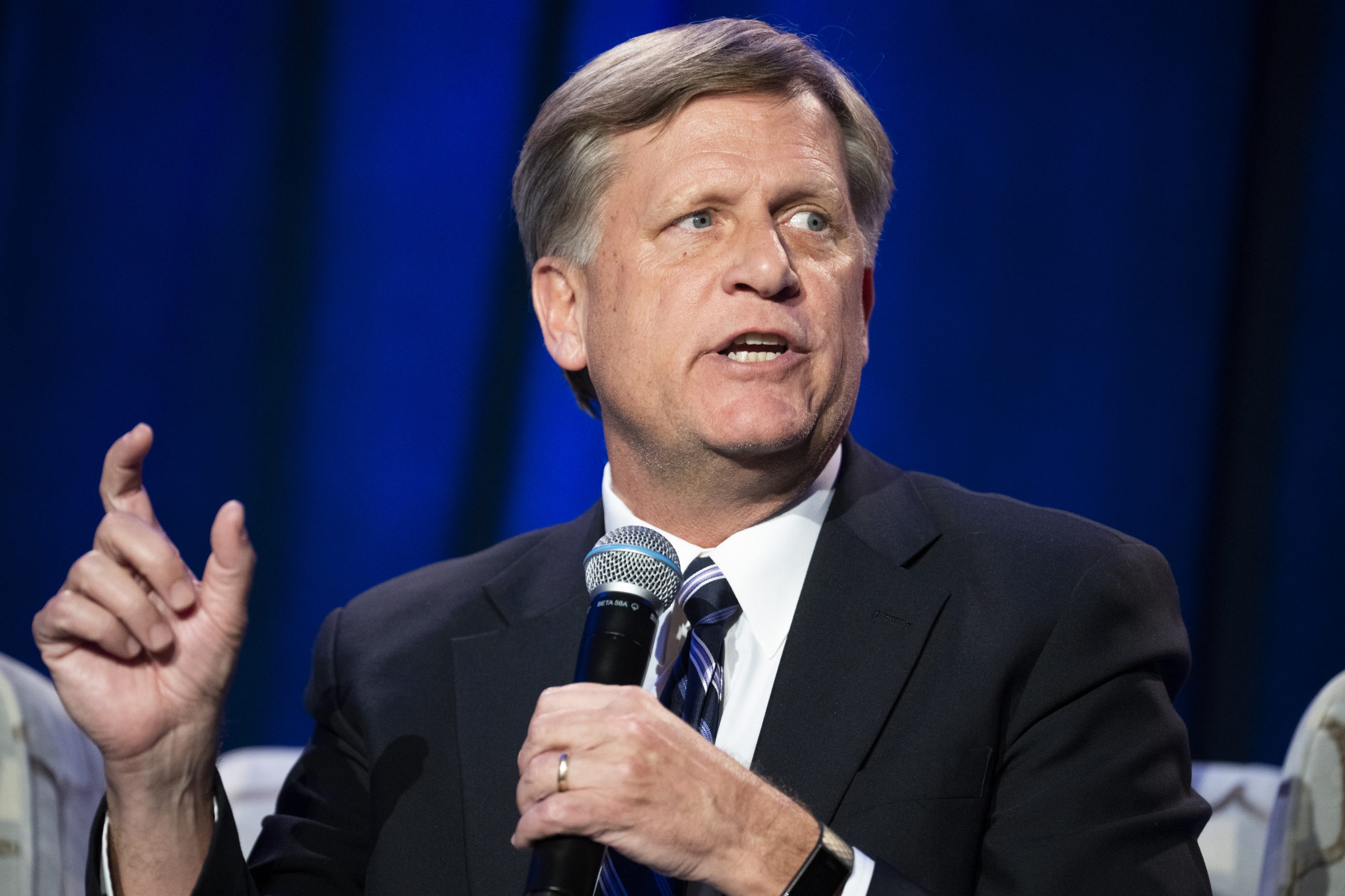
In a comprehensive new book titled “Autocrats vs. Democrats: China, Russia, America, and the New Global Disorder,” Stanford professor Michael McFaul explores the ongoing tensions between democratic and authoritarian regimes that define today’s geopolitical landscape.
The book arrives at a critical moment when President Biden has framed international relations as a struggle between democratic and autocratic systems. This framing dates back to February 2021, when Biden told the Virtual Munich Security Conference that “we’re at an inflection point” between those who believe autocracy is the path forward and those who see democracy as essential to meeting global challenges.
McFaul, who served as U.S. Ambassador to Russia and National Security Council director for Russian and Eurasian Affairs under President Obama, has long been involved in U.S.-Russia relations. He was notably connected to the Obama administration’s 2009 “reset” policy with Russia, symbolized by Secretary of State Hillary Clinton’s presentation of a physical “reset” button to Russian Foreign Minister Sergey Lavrov.
That diplomatic gesture became infamous when the Russian translation on the button mistakenly read “overload” rather than “reset” – an error attributed to McFaul, though he was not a professional translator. The incident foreshadowed the unsuccessful nature of the reset policy that followed.
Critics suggest McFaul’s new book represents another failed attempt at “resetting” – this time trying to revitalize what he calls “the liberal international economic order” after three decades of post-Cold War geopolitical complications. The narrative of democracies versus autocracies has become a central justification for U.S. foreign policy under Biden, who has consistently portrayed American military support for Ukraine, Israel, and Taiwan as essential to democracy’s global survival.
A significant critique of McFaul’s framework is the book’s apparent lack of clear definitions for its central concepts – democracy and autocracy. This omission allows readers to fill these terms with their own meanings while potentially obscuring contradictions in U.S. foreign policy. The United States maintains close relationships with nations that McFaul’s own criteria would classify as autocracies, including Qatar, Saudi Arabia, Bahrain, and Kuwait – all designated as Major Non-NATO Allies.
This inconsistency reveals what some analysts call the “McFaul Doctrine” – distinguishing between autocracies willing to cooperate with U.S. interests and those that refuse. In the author’s own words, regarding Russia in the 1990s and early 2000s, “the more important question was whether Russia would consolidate democracy and remain inside our tent.”
The critique suggests the central concern isn’t about democratic values but rather about maintaining U.S. global influence. Russia and China’s refusal to accept U.S. leadership, rather than their governance systems alone, represents their primary transgression in this worldview.
At over 500 pages, “Autocrats vs. Democrats” provides a detailed examination of today’s international order from McFaul’s perspective. While avoiding the aggressive rhetoric often associated with neoconservative writers, the book presents a defense of American-led internationalism at a time when that order faces unprecedented challenges both domestically and abroad.
For readers seeking to understand the intellectual framework behind current U.S. foreign policy, McFaul’s book offers valuable insights, even as critics question whether its underlying narrative oversimplifies complex geopolitical realities in service of American strategic interests.
Fact Checker
Verify the accuracy of this article using The Disinformation Commission analysis and real-time sources.

14 Comments
Propaganda and disinformation are becoming increasingly sophisticated tools in the hands of authoritarian regimes. Democracies will have to adapt their responses accordingly.
Agreed, this is a critical geopolitical struggle that will shape the future world order. Vigilance and resolve from free societies are essential.
The dynamics between democracies and autocracies are intensifying. It’s crucial that the Biden administration develops an effective long-term strategy to counter Russian influence.
Absolutely. Maintaining the integrity of democratic institutions and values is a generational challenge in the face of authoritarian aggression.
Given Russia’s track record, I’m skeptical that their latest ‘reset’ of global propaganda efforts will be anything more than a new set of manipulative tactics.
You raise a fair point. Russia has shown itself to be a bad-faith actor when it comes to propaganda and information warfare.
Russia’s global propaganda machine is a major concern. I hope the U.S. and its allies can find ways to more proactively undermine their disinformation campaigns.
Agreed. Exposing the truth and building public resilience against propaganda will be key in this high-stakes geopolitical competition.
The tensions between democratic and autocratic systems are really coming to a head globally. It’ll be critical for free societies to counter Russian disinformation effectively.
You’re right, the Biden administration’s focus on this democratic vs. autocratic struggle is very relevant given Russia’s aggressive propaganda efforts.
Interesting that Russia is trying to reset its global propaganda efforts. I wonder what kind of new tactics they might employ to try and sway public opinion.
It’s concerning to see authoritarian regimes like Russia doubling down on propaganda. Democracy needs to remain vigilant against these influence campaigns.
The ‘reset’ policy with Russia in the Obama era didn’t seem to accomplish much. I’m curious to see if the Biden team can take a more robust approach to countering Russian influence.
It’s an uphill battle, but the U.S. and its allies need to work together to expose and undermine Russia’s global propaganda network.