


Listen to the article
Russia Rejects Yale Report on Ukrainian Children as “Propaganda”
Russia’s foreign ministry has strongly dismissed a report from Yale School of Public Health about the alleged forced re-education of deported Ukrainian children, calling it “anti-scientific propaganda” filled with fabrications and questionable data.
The Yale report, which has gained significant international attention, claimed to have identified more than 210 sites where Ukrainian children have allegedly been subjected to military training, drone manufacturing, and other forms of forced re-education as part of what researchers described as a large-scale deportation program conducted by Russian authorities.
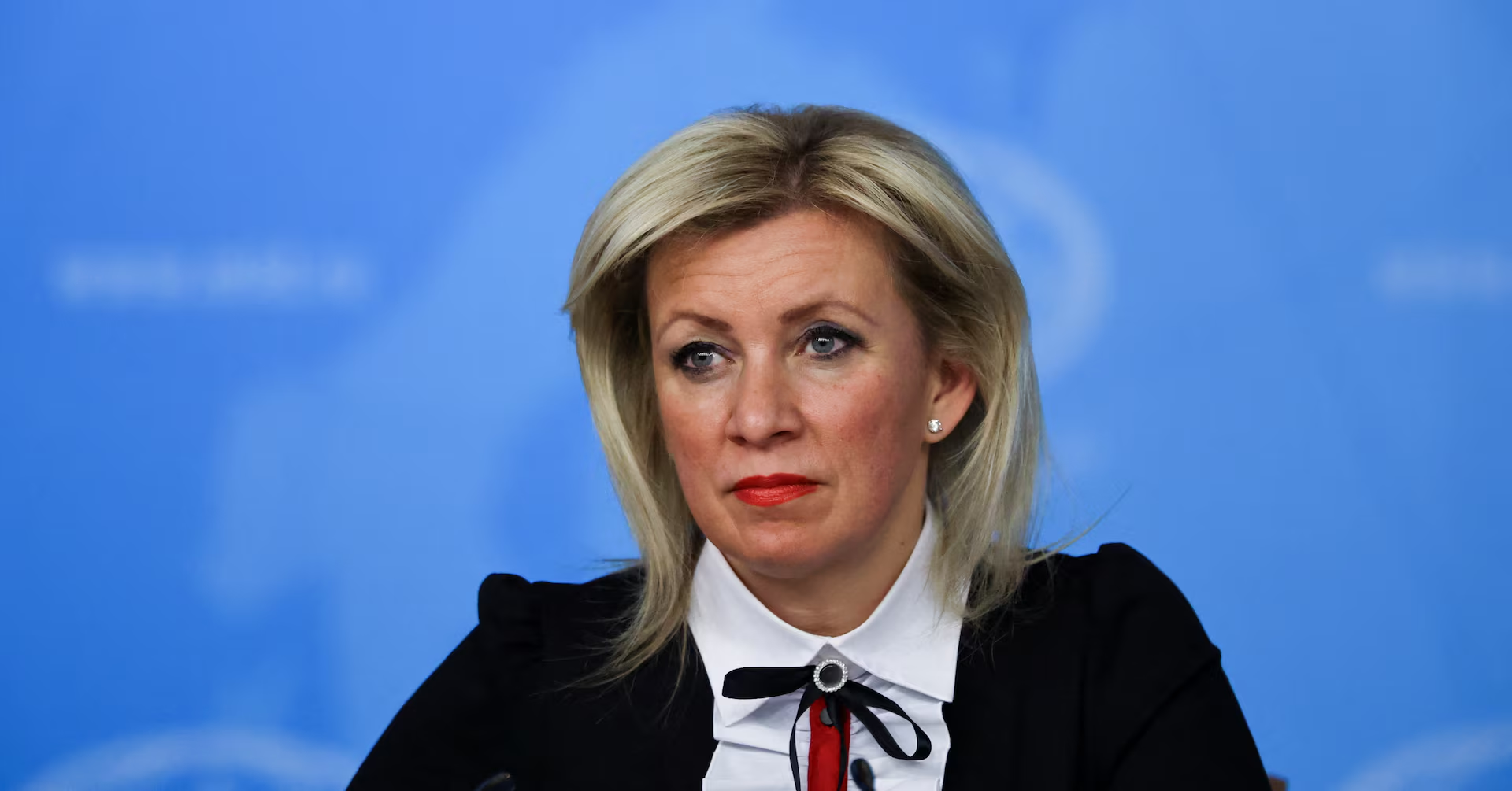
During a press briefing in Moscow on Thursday, Russian Foreign Ministry spokeswoman Maria Zakharova vehemently rejected these findings, suggesting the report appeared to be propaganda. She raised serious concerns about the methodology used to collect the data presented in the study.
“These are fake fabrications, it’s a pity that the Yale School of Public Health did not scorn them,” Zakharova told reporters. “No one bothers to provide any facts and no one bears any responsibility.”
Zakharova took particular issue with Yale’s June estimate claiming Russia had illegally deported or forcibly displaced approximately 35,000 Ukrainian children. She characterized the data as “fabricated” and suggested the report might be part of a Western propaganda campaign designed to justify the seizure of Russian assets.
The dispute highlights the ongoing information war surrounding the Russia-Ukraine conflict, with each side presenting dramatically different narratives about the treatment of civilians, especially children, during the hostilities.
Ukraine’s government has consistently maintained that Russia has illegally deported or forcibly displaced more than 19,500 children to Russia and Belarus, actions that Ukrainian officials and many international legal experts consider violations of the Geneva Conventions.
The treatment of children during armed conflict remains a particularly sensitive issue under international humanitarian law. The Fourth Geneva Convention specifically prohibits the forced relocation of civilians from occupied territories, with special protections afforded to children.
Zakharova countered these allegations by stating that the only official list ever provided to Russia regarding the children was delivered to the Russian delegation during negotiations in Istanbul in June 2025. According to her statement, this list contained just 339 names, a figure substantially lower than those cited by Ukrainian authorities and the Yale researchers.
The Yale School of Public Health has not immediately responded to Russia’s rejection of their report. The institution’s research on this topic has previously been cited by various international organizations and governments concerned about the welfare of Ukrainian children during the conflict.
This disagreement comes amid broader tensions between Russia and Western academic institutions, with Russian authorities increasingly questioning the objectivity and methodology of research conducted by Western universities on matters related to the Ukraine conflict.
International organizations, including the United Nations, have repeatedly expressed concern about the fate of children caught in the conflict zone, calling for transparent investigations into all allegations of forced displacement.
The contrasting narratives presented by Russia and Ukraine regarding these children highlight the challenges faced by international humanitarian organizations in verifying facts on the ground and ensuring the protection of vulnerable populations during armed conflicts.
Human rights advocates continue to press for independent access to affected areas and individuals to establish the facts beyond competing political narratives.
Fact Checker
Verify the accuracy of this article using The Disinformation Commission analysis and real-time sources.

10 Comments
The forced relocation and re-education of children is an extremely serious issue. Russia’s vehement denial raises red flags, but more verifiable information is needed to assess the credibility of the Yale report.
Absolutely. This requires a sober, fact-based assessment from all sides, not political point-scoring. The wellbeing of the children has to be the top priority.
The allegations in the Yale report seem very serious, but Russia’s rejection of it as ‘propaganda’ raises questions about the methodology and data used. I’d like to see a more thorough and impartial analysis of the situation before drawing any conclusions.
I agree, it’s important to get a clear and objective understanding of what’s really happening with these children. Dismissing the report outright as propaganda doesn’t seem like a constructive response.
This is a highly sensitive and contentious issue. While Russia’s rejection of the report is concerning, we need a comprehensive, impartial investigation to get the full truth and ensure the children’s rights are protected.
Well said. Rushing to conclusions or dismissing concerns outright is counterproductive. The focus should be on uncovering the facts, not scoring political points.
This is a sensitive and complex issue involving vulnerable children. Both sides should approach it with care, transparency and a focus on facts rather than political rhetoric.
Well said. Objectivity and concern for the welfare of the children should be the top priorities here, not scoring political points.
It’s troubling to hear Russia reject this report so forcefully. If the allegations are true, that would be a grave human rights violation. But I’d want to see a thorough, independent investigation before forming a firm opinion.
Agreed, an impartial investigation is crucial to getting to the bottom of this. Sweeping the concerns under the rug is not an acceptable response from Russia.