


Listen to the article
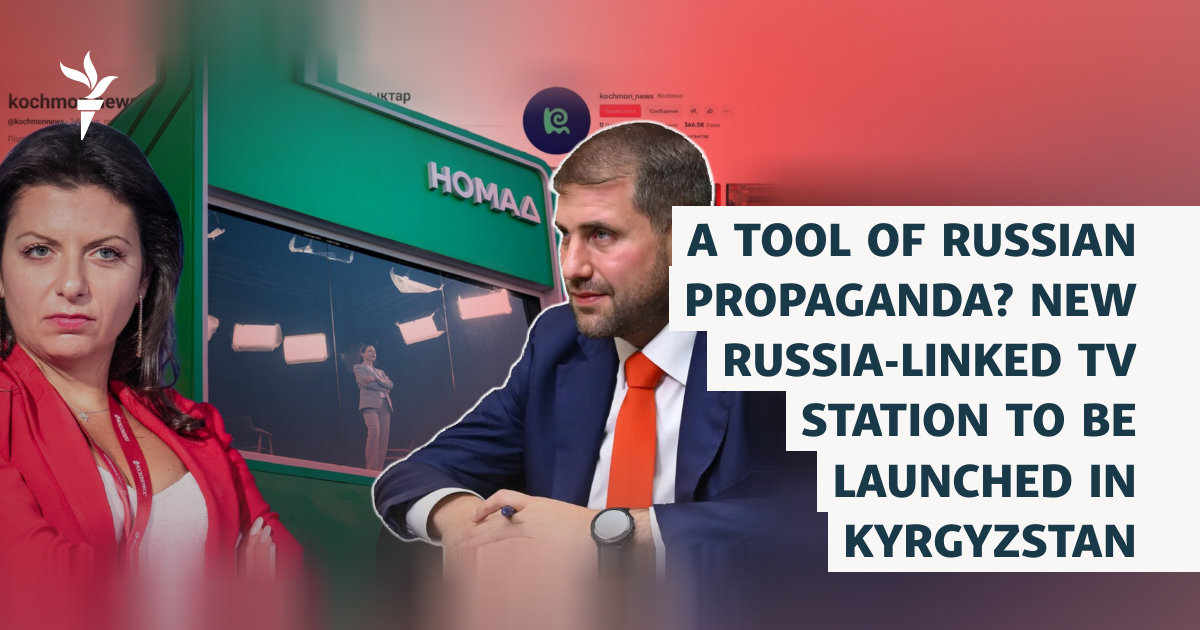
Russian-Linked TV Station Launches in Kyrgyzstan, Raising Propaganda Concerns
A new independent television station with ties to Russia is set to launch in Kyrgyzstan next week, igniting concerns that the outlet could become a vehicle for spreading Moscow’s propaganda throughout Central Asia.
Nomad TV, scheduled to begin broadcasting on November 27, has raised eyebrows due to its editorial leadership, which includes Anna Abakumova, a Russian journalist previously employed by the Kremlin-funded network RT. Abakumova is known to be a close associate of Margarita Simonyan, widely regarded as one of the Kremlin’s most influential propagandists.
The timing of the launch appears strategically significant, coming just days before Kyrgyzstan’s snap parliamentary elections on November 30. Political analysts view the new station as an apparent attempt by Moscow to strengthen its influence in Central Asia, a region where Russia’s standing has diminished following its full-scale invasion of Ukraine in 2022.
“This is an attempt by Russia to keep us in their grip for the long-term,” said political analyst Ruslan Akmatbek in an interview with RFE/RL’s Kyrgyz Service.
Nomad TV will operate around the clock from Bishkek, the Kyrgyz capital. While Abakumova is officially described as a producer at the station, sources familiar with the operation believe she holds substantial editorial influence behind the scenes.
Prior to joining Nomad TV, Abakumova served as a senior producer at RT (formerly Russia Today), where she produced frontline reports from Russian-occupied regions of Ukraine. Her work earned her multiple awards from Russian Prime Minister Mikhail Mishustin, underlining her prominence within Russian state media circles.
At a fundraising event earlier this year, Simonyan—who has served as RT’s editor-in-chief for two decades—introduced Abakumova as RT’s chief producer, emphasizing her senior position within the network. Akmatbek described Abakumova as Simonyan’s “assistant” and suggested her role at Nomad TV indicates the Kremlin’s intention to use the station as a propaganda tool.
The connections run deeper through Russia-based nonprofit Evrazia, which opened a Bishkek office this year and has been actively training journalists and organizing trips to Russia. Simonyan sits on Evrazia’s Board of Trustees. The organization was founded by Ilan Shor, a fugitive Moldovan oligarch convicted of stealing $1 billion through bank fraud who fled to Russia in 2019 and subsequently obtained Russian citizenship.
Nomad TV has been conducting an aggressive recruitment campaign, luring dozens of experienced journalists from both state and private Kyrgyz broadcasters with offers of substantially higher salaries. Among those who have joined the new station is well-known presenter Mirbek Moldakunov, who previously worked at the state broadcaster NTRK.
Ilyazbek Baltashev, director of Channel 7 and chairman of the Union of Journalists of Kyrgyzstan, confirmed the financial incentives being offered are simply too attractive for local journalists to decline.
“They call journalists and ask, ‘How much do you make?’ If someone says, ‘I get 50,000 soms,’ they immediately say, ‘I’ll give you 100,000 soms,’ and pull them away,” Baltashev explained.
The development comes at a time when President Sadyr Japarov has been criticized for rolling back political and media freedoms in Kyrgyzstan. Experts suggest Japarov is attempting to use the upcoming parliamentary elections to further consolidate his power in the economically struggling nation.
While dozens of Russian television channels already broadcast in Kyrgyzstan, and Russian state news agency Sputnik has maintained operations in the country since 2014, Moscow’s media influence has faced challenges. In 2022, YouTube closed channels operated by Russian state media on its platform, significantly impacting their reach in Central Asia.
Akmatbek believes the Kremlin is concerned about “losing its sphere of influence” in the region, particularly as Central Asian leaders increasingly engage with Western powers and other regional actors like Turkey and China pursue their own interests in the area.
“Leaders in Central Asian countries are speaking English, building relations with the West. Turkey is taking action on one side, China on the other. And there’s the war with Ukraine,” he noted, suggesting Nomad TV represents Russia’s attempt to maintain its waning influence in a strategically important region.
Fact Checker
Verify the accuracy of this article using The Disinformation Commission analysis and real-time sources.

5 Comments
I’m curious to see how Nomad TV frames its coverage and whether it will provide balanced, objective reporting or push a pro-Russian narrative. Maintaining media diversity and scrutiny is important.
You raise a fair point. Scrutiny of Nomad TV’s editorial independence and content will be crucial. Kyrgyzstan should ensure a level playing field for all media outlets ahead of the elections.
Concerning to see Russia-linked media outlets expanding influence in Kyrgyzstan. Propaganda concerns are valid given the Kremlin’s track record. Independent, fact-based journalism is crucial for a healthy democracy.
Agreed. The timing of this launch ahead of elections raises red flags. Kyrgyzstan needs to be vigilant against foreign interference and uphold media freedom.
The concerns about Nomad TV being a vehicle for Russian propaganda are understandable given the background of its leadership. Kyrgyzstan must protect its democratic institutions from foreign meddling.