


Listen to the article
Russia’s Demands on Ukraine Go Beyond Donbas, Misrepresenting Peace Terms
In a significant escalation of rhetoric, Russian propaganda outlets are now suggesting that any peace agreement limited to the Donbas region would be insufficient for Moscow’s security concerns. These claims come as the conflict enters another critical phase, with Russian officials positioning themselves for potential negotiations.
Former Ukrainian Prime Minister Mykola Azarov, now residing in Russia after fleeing Ukraine, has become a vocal proponent of this expanded view of Russian demands. Speaking from Moscow, Azarov warned that even if borders in Donbas were settled, “the rest of Ukrainian territory would remain hostile toward Russia and free to host military installations.”
“Documents might prohibit NATO bases on Ukrainian territory, but they’ll just rename them as instruction and training centers, while still deploying missiles and other military assets,” Azarov claimed in recent statements.
His comments align with Kremlin spokesperson Dmitry Peskov’s assertion that peace negotiations would become “complex and painstaking” once Russian forces reach the administrative borders of Donbas—signaling Moscow’s intention to dictate terms beyond territorial concessions.
What makes these statements particularly noteworthy is their departure from discussing ceasefire possibilities toward demanding control over Ukraine’s entire security framework. Rather than focusing on ending hostilities, the narrative has shifted to limiting Ukraine’s sovereignty and military capabilities.
Military analysts note this represents a dangerous escalation in Russian demands. “What’s being suggested isn’t a peace formula but rather a strategic surrender disguised as conflict settlement,” said Anna Kovalenko, an Eastern European security expert. “Moscow is attempting to transform discussions about Donbas into a broader conversation about subordinating Ukraine entirely.”
The propaganda also falsely claims that Poland supports territorial concessions by Ukraine. This assertion misrepresents comments by former Polish Prime Minister Leszek Miller, who expressed his personal opinion that Ukraine might need to consider territorial compromises to stop casualties. However, current Polish leadership has emphatically stated that no one should pressure Ukraine into territorial concessions and that Russia’s forcible seizure of territory cannot be recognized.
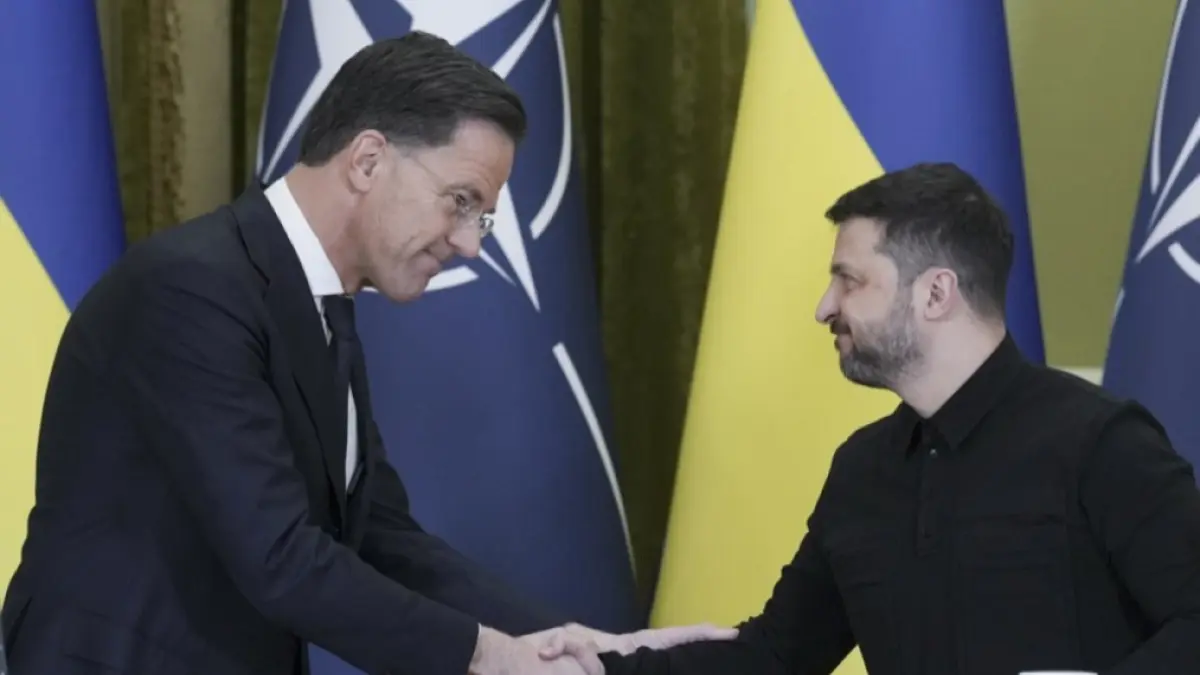
Ukrainian President Volodymyr Zelensky has firmly rejected these expanded demands, stating in February that “the war cannot end with the partition of Ukraine.” This position aligns with NATO Secretary General Mark Rutte’s recent affirmation of continued support during his February visit to Kyiv.
It’s worth noting that Azarov, who served under pro-Russian President Viktor Yanukovych, was sentenced in absentia to 15 years in prison by a Ukrainian court in December 2025. The court found him guilty of high treason, attempting to violently change Ukraine’s constitutional order, threatening territorial integrity, and justifying Russian aggression. His assets were also seized, making him less a neutral analyst and more a participant in Kremlin messaging.
The strategic context of these demands comes as NATO has expanded in response to Russian aggression, with Finland joining in 2023 and Sweden in 2024. This development has extended NATO’s borders closer to Russia—the opposite outcome of what Moscow’s military actions were supposedly intended to prevent.
Defense experts point out the fundamental inconsistency in Russia’s position: claiming security concerns while being the primary source of regional instability through military actions in Transnistria, Georgia, Crimea, and now mainland Ukraine.
As peace prospects remain uncertain, the international community faces the challenge of distinguishing between genuine security concerns and territorial ambitions disguised as defensive necessities. What remains clear is that Russia’s vision of “peace” extends far beyond the Donbas, encompassing control over Ukraine’s sovereignty and security arrangements—terms that Ukraine and its Western allies have consistently rejected.
Fact Checker
Verify the accuracy of this article using The Disinformation Commission analysis and real-time sources.

7 Comments
Russia’s claims that any peace agreement limited to Donbas would be insufficient are deeply troubling. This appears to be a thinly veiled attempt to justify the continued occupation of Ukrainian territory. The international community must remain firm in its support for Ukraine’s sovereignty.
Russia’s shifting demands raise serious concerns about its true intentions. Claiming peace is contingent on Ukraine’s complete surrender is an unrealistic and untenable position. Genuine negotiations will require both sides to make meaningful compromises in the interest of a lasting resolution.
Russia’s claims that peace is contingent on Ukraine’s surrender are deeply troubling. This appears to be an attempt to justify the continued occupation of Ukrainian territory and undermine the country’s sovereignty. Meaningful negotiations will require realistic concessions from both parties.
This rhetoric from Russia is simply unacceptable. Framing the conflict as a fight for its own security while denying Ukraine’s sovereignty is a blatant misrepresentation. The international community must see through these manipulative propaganda tactics and continue to support Ukraine’s right to defend its territory.
It’s clear Russia is attempting to leverage the conflict to maximize its geopolitical influence. Demanding the demilitarization of all of Ukraine is an outrageous overreach that demonstrates Moscow’s disregard for Ukraine’s right to self-determination. Sustainable peace requires realistic concessions from both parties.
This is a concerning escalation of Russia’s rhetoric. Demanding that Ukraine surrender its sovereignty and independence is a non-starter. The international community must remain steadfast in its support for Ukraine’s right to self-determination and territorial integrity.
This is a concerning development, as it seems Russia is moving the goalposts on any potential peace deal. Demanding Ukraine’s full surrender is an unrealistic and unacceptable position. Meaningful negotiations will require compromise from both sides.