


Listen to the article
Cleopatra VII Philopator, ancient Egypt’s last active ruler, continues to be misunderstood by modern society, with historians arguing that Roman propaganda has shaped our perception of the queen for more than two millennia.
Scholars at the British Museum’s upcoming exhibition, “Cleopatra: Curator of Her Own Legend,” hope to challenge these long-standing misconceptions. Opening in May 2024, the exhibition aims to present a more balanced view of the queen who ruled from 51-30 BCE, moving beyond the sexually manipulative seductress portrayed in Roman accounts.
“The Romans were excellent propagandists,” explains Dr. Alexandra Reynolds, lead curator of the exhibition. “They effectively rewrote Cleopatra’s story after her death to suit their political needs. What many people don’t realize is that their version has dominated our understanding for centuries.”
The distortion began almost immediately after Cleopatra’s death. Octavian (later Emperor Augustus), who defeated Cleopatra and Mark Antony in the Battle of Actium in 31 BCE, needed to justify his war against them. His solution was to portray Cleopatra as a foreign temptress who had bewitched Antony and threatened Roman values.
Roman writers like Plutarch, Cassius Dio, and Horace amplified this narrative, depicting Cleopatra as morally corrupt, sexually promiscuous, and dangerously ambitious. These accounts, written by the victors, became the primary sources for later historians and artists.
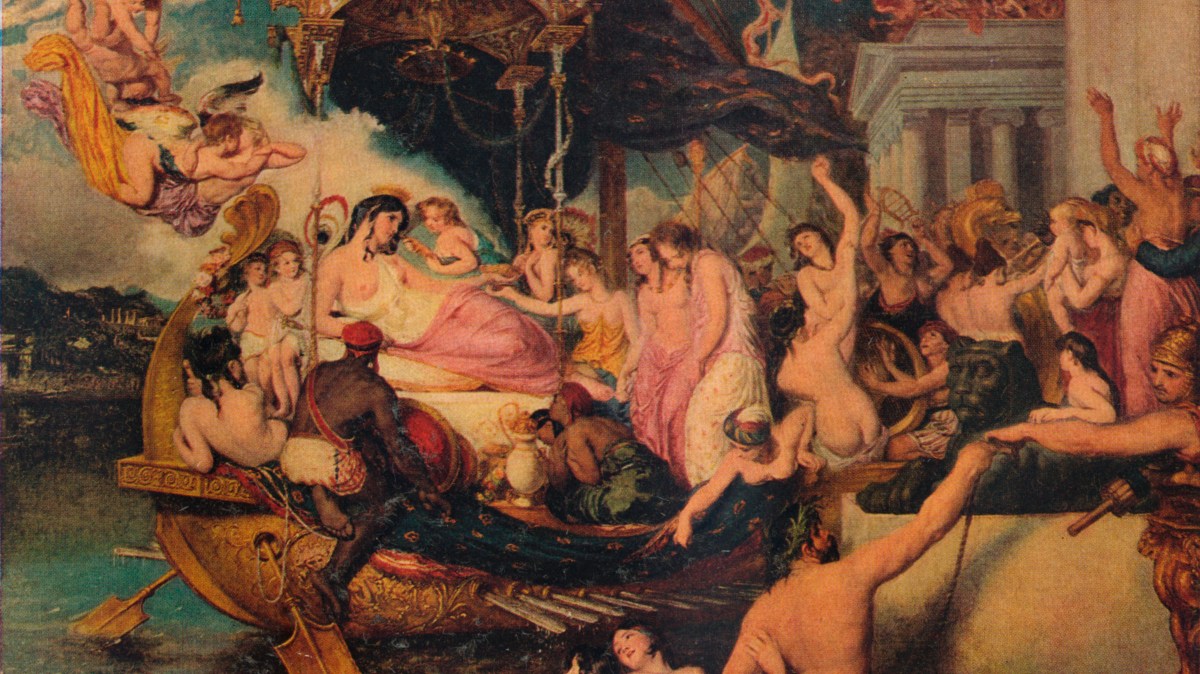
“What’s particularly interesting is how persistent these Roman characterizations have been,” says Dr. Emilia Farraj, historian at University College London. “From Shakespeare to Hollywood, Cleopatra has been defined primarily by her relationships with Julius Caesar and Mark Antony, rather than her considerable political and intellectual accomplishments.”
Archaeological evidence and contemporary Egyptian sources paint a different picture. Cleopatra was educated in mathematics, philosophy, astronomy, and spoke multiple languages including Egyptian—unusual for Ptolemaic rulers who typically spoke only Greek. She revitalized Egypt’s economy, maintained political independence during Roman expansion, and was revered as a manifestation of the goddess Isis by her subjects.
Coins minted during her reign show a woman with distinctive features: a hooked nose, prominent chin, and severe expression—quite different from the exotic beauty portrayed by Elizabeth Taylor in the famous 1963 film. While not conventionally beautiful by ancient standards, contemporaries noted her intellectual brilliance and charismatic personality.
“Cleopatra was a skilled ruler navigating incredibly difficult political circumstances,” notes Dr. Reynolds. “She maintained Egypt’s independence for decades against the expanding Roman Republic, formed strategic alliances, and protected her country’s interests. That’s far more interesting than the reductive ‘temptress’ narrative.”
The exhibition will feature artifacts from Cleopatra’s reign, including coins bearing her image, papyri documenting her administrative reforms, and temple inscriptions showing her religious roles. It will also trace how Roman propaganda evolved into modern stereotypes through paintings, films, and literature.
This reassessment comes amid broader efforts to revisit historical figures whose legacies have been shaped by their enemies or by cultural biases. Similar scholarly work has challenged traditional portrayals of figures like Boudica, Richard III, and various medieval queens.
“What makes Cleopatra’s case so fascinating is how thoroughly Roman propaganda colonized our imagination,” explains Dr. Farraj. “Even people who know very little about ancient history ‘know’ that Cleopatra was a beautiful seductress who died by snakebite. That’s the power of effective propaganda—it becomes accepted as historical fact.”
The exhibition will also explore how Cleopatra actively shaped her own image through royal iconography, religious associations, and political theater. Far from being a passive figure defined by her relationships with Roman men, she strategically cultivated different personas for different audiences—appearing as Isis to Egyptians and as a Hellenistic queen to Greeks.
“In many ways, Cleopatra was the first great female political brand manager,” Dr. Reynolds suggests. “She understood the power of image and narrative two millennia before social media. Our exhibition title reflects that—she was truly the curator of her own legend.”
The British Museum’s exhibition represents a significant step in reclaiming Cleopatra’s complex legacy from Roman propaganda that has endured for over 2,000 years—a remarkable testament to the lasting power of political narrative in shaping historical memory.
Fact Checker
Verify the accuracy of this article using The Disinformation Commission analysis and real-time sources.

10 Comments
Propaganda has a way of distorting our understanding of history. I’m glad the British Museum is taking on this project to present a more nuanced view of Cleopatra. It’s important to remember that historical accounts are often shaped by the victors.
Well said. Uncovering the biases in historical sources is crucial for gaining a more accurate perspective. I look forward to seeing how the exhibition tackles this challenging task.
The Roman tendency to portray foreign rulers as threats to their values is nothing new. It’s good that scholars are working to correct the record on Cleopatra’s legacy. I wonder what other insights the exhibition might uncover about her reign and influence.
Yes, it will be fascinating to see how the exhibition challenges the standard Roman narrative. Cleopatra was a powerful and complex figure, and I’m hopeful the curators can do justice to her story.
Fascinating to see how Roman propaganda has shaped Cleopatra’s legacy for millennia. I’m glad the British Museum is aiming to present a more balanced perspective on this influential queen. It’s important to challenge long-standing misconceptions and uncover the truth behind historical figures.
Absolutely. Rewriting history to suit political agendas is all too common. I’m looking forward to seeing how the curators at the British Museum approach this complex topic.
It’s remarkable how influential Roman propaganda has been in shaping our perception of Cleopatra. I’m curious to learn more about the specific ways the curators plan to challenge these long-standing misconceptions. This sounds like a must-see exhibition for anyone interested in ancient history.
Agreed. The opportunity to re-examine Cleopatra’s legacy through a fresh lens is an exciting prospect. I’m eager to see how the exhibition presents a more balanced and nuanced understanding of this iconic figure.
The distortion of Cleopatra’s story by Roman propaganda is a sobering reminder of how history can be manipulated to serve political agendas. I’m glad the British Museum is taking on this project to present a more accurate portrayal of her reign and influence. This exhibition has the potential to significantly reshape our understanding of this remarkable historical figure.
Well said. Challenging long-held beliefs and misconceptions is crucial for gaining a deeper, more truthful understanding of the past. I’m confident the British Museum’s exhibition will make an important contribution in this regard.