


Listen to the article
Roman historians and propagandists successfully tarnished the legacy of one of ancient Egypt’s most capable rulers, according to researchers who continue to unravel the complex story of Cleopatra VII Philopator. More than two millennia after her death, historians are still working to separate fact from fiction in the narrative of the last active ruler of the Ptolemaic Kingdom.
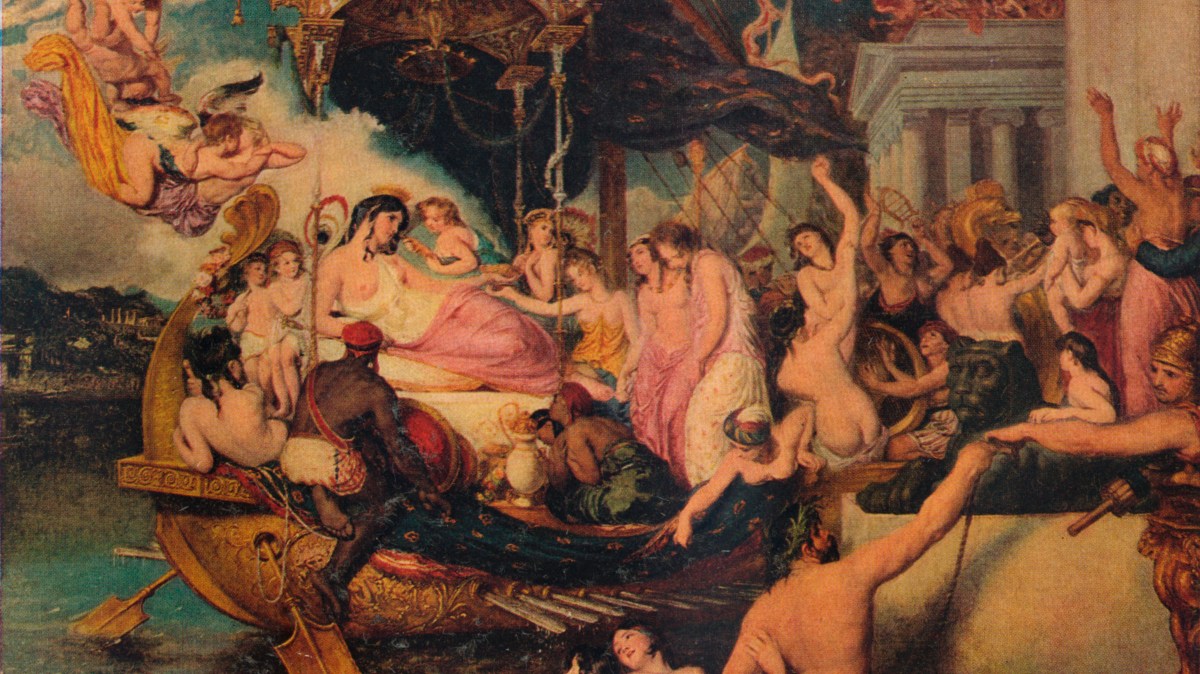
The distorted image of Cleopatra that persists in popular culture largely stems from Roman accounts written after her death in 30 BCE. These portrayals, crafted by writers loyal to Octavian (later Emperor Augustus), deliberately emphasized her alleged seductiveness and foreign excesses while downplaying her intelligence, political acumen, and administrative capabilities.
“What many people don’t realize is that our perception of Cleopatra comes primarily through the lens of her enemies,” explains Dr. Sarah Henderson, professor of ancient Mediterranean history at Cambridge University. “The Romans had every motivation to vilify her, particularly Octavian, who fought against her and Mark Antony for control of the Roman Republic.”
Historical evidence suggests Cleopatra was far more accomplished than Roman accounts indicate. She spoke at least nine languages and was educated in mathematics, astronomy, philosophy, and oratory—skills rarely acknowledged in Roman histories that prefer to focus on her romantic relationships with Julius Caesar and Mark Antony.
Archaeological discoveries over the past century have helped scholars reconstruct a more balanced view of the Egyptian queen. Coins bearing her image reveal a ruler who emphasized strength and authority rather than beauty. Contrary to Hollywood depictions, contemporary evidence suggests she presented herself as a powerful monarch first and foremost.
“The Romans were masters of propaganda,” says Dr. Miguel Fernandez of the Mediterranean Archaeological Institute. “They understood that controlling the narrative about their enemies was as important as military victories. In Cleopatra, they faced a formidable foreign woman who challenged male Roman authority—an ideal target for character assassination.”
Recent scholarship has highlighted Cleopatra’s economic policies and diplomatic skills. During her 21-year reign, she stabilized Egypt’s economy, secured grain production critical to the Mediterranean world, and navigated complex diplomatic relationships with surrounding powers. She maintained Egyptian independence longer than might have seemed possible as Rome expanded its influence throughout the region.
The queen’s portrayal as an exotic temptress particularly served Roman political needs. By characterizing Mark Antony’s relationship with Cleopatra as evidence he had been seduced by foreign luxury and abandoned Roman values, Octavian successfully positioned himself as Rome’s defender against Eastern corruption.
This narrative strategy proved remarkably effective and durable. Roman poets like Horace, Propertius, and later historians including Plutarch and Dio Cassius perpetuated these characterizations, which subsequently influenced European literature, art, and eventually film for centuries to follow.
Modern depictions, from Elizabeth Taylor’s iconic 1963 portrayal to more recent adaptations, continue to emphasize romance and seduction over statecraft and leadership, though some recent scholarly works have attempted to provide more balanced assessments.
Archaeologists continue searching for Cleopatra’s tomb, which may contain artifacts that could further revise our understanding of the queen. The Egyptian-Dominican archaeological mission led by Dr. Kathleen Martinez has been excavating at Taposiris Magna near Alexandria, where some experts believe Cleopatra and Mark Antony may have been buried.
“Finding Cleopatra’s tomb would be revolutionary for our understanding of her reign,” Martinez notes. “Physical evidence often tells a different story than written accounts, especially those written by political enemies.”
The persistence of Roman characterizations of Cleopatra demonstrates how effectively history can be shaped by those who control its narrative. As modern scholars work to reconstruct a more accurate picture of this complex ruler, they remind us that historical “truths” often reveal more about the biases of chroniclers than the actual figures they describe.
“The real Cleopatra was neither the seductress of Roman imagination nor the romantic tragic figure of modern entertainment,” concludes Dr. Henderson. “She was a pragmatic ruler navigating extraordinarily difficult political circumstances—and doing so with remarkable skill until the very end.”
Fact Checker
Verify the accuracy of this article using The Disinformation Commission analysis and real-time sources.

8 Comments
Interesting to consider how much of our popular perception of Cleopatra has been shaped by the biases of her Roman detractors. Sounds like an important area of research to uncover the truth about this influential ruler.
You’re right, the Romans had strong incentives to vilify Cleopatra. I’m glad historians are working to uncover the truth and present a more balanced, nuanced view of this influential figure from antiquity.
Absolutely, the Roman accounts were clearly shaped by political motivations. It will be interesting to see how our understanding of Cleopatra evolves as more evidence comes to light.
Fascinating how Roman propaganda has distorted Cleopatra’s legacy for centuries. It’s important to look beyond the biased accounts and try to understand her as a complex, capable ruler rather than just a seductress.
The article raises some good points about separating fact from fiction when it comes to Cleopatra. It’s a good reminder that historical narratives can be heavily skewed by the biases of the writers.
I’m curious to learn more about the administrative and political capabilities that Cleopatra displayed, beyond the seductive image that has persisted. Sounds like a fascinating figure whose true legacy deserves to be better understood.
Glad to see researchers continuing to challenge the distorted Roman propaganda about Cleopatra. Uncovering the complexities of her life and reign is important for gaining a more accurate historical perspective.
Agreed, the article highlights the need to be critical of historical sources, especially when they originate from political adversaries. Looking forward to seeing how the scholarly understanding of Cleopatra evolves.