


Listen to the article
Rome’s ancient propaganda campaign against Cleopatra VII, the last active ruler of Egypt’s Ptolemaic Kingdom, continues to shape modern perceptions of the Egyptian queen nearly two millennia after her death, according to historians and cultural experts.
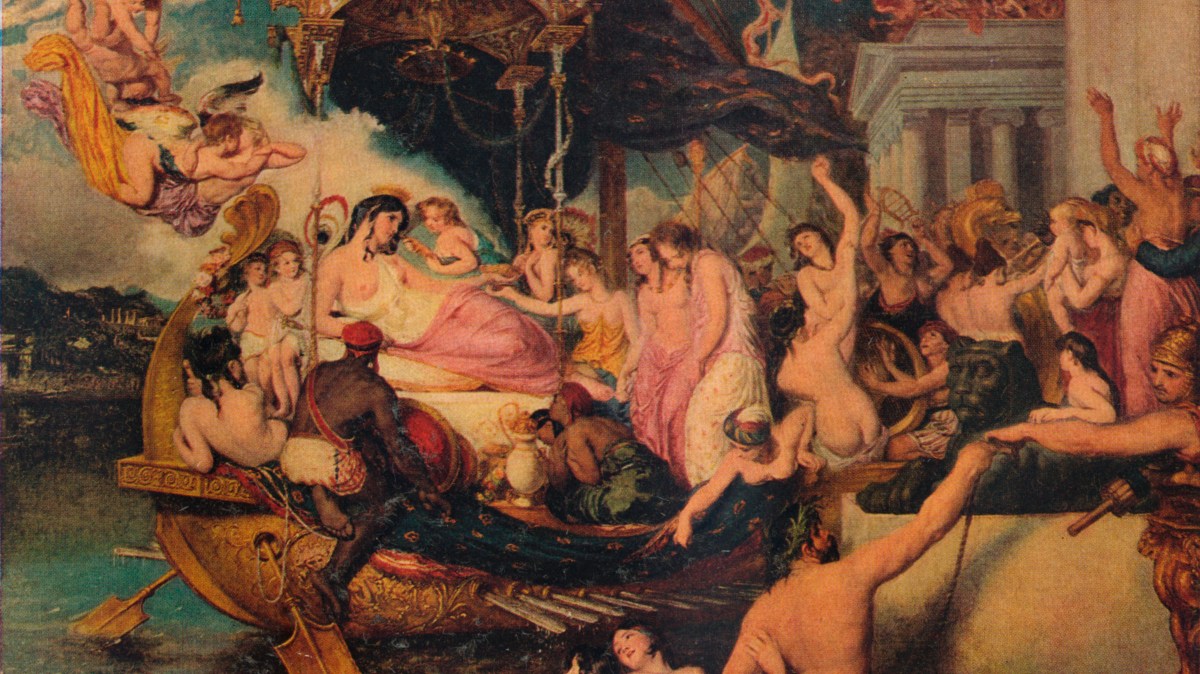
Cleopatra, who ruled Egypt from 51 BC until her death in 30 BC, has long been portrayed as a seductress who used her feminine wiles to manipulate powerful Roman men—a characterization that scholars argue stems directly from Roman propaganda efforts designed to justify her defeat and Egypt’s subsequent annexation.
Dr. Sarah Johnson, professor of ancient history at Oxford University, explains that much of what we think we know about Cleopatra comes from Roman sources with clear political motives. “The Romans, particularly Octavian—later Emperor Augustus—needed to justify their war against Egypt and Mark Antony. Painting Cleopatra as a foreign temptress who corrupted Roman virtue served their narrative perfectly,” Johnson said.
The propaganda campaign against Cleopatra began in earnest around 33 BC, when tensions between Octavian and Mark Antony reached a breaking point. Octavian portrayed his rival’s relationship with the Egyptian queen as evidence that Antony had abandoned Roman values in favor of “Eastern decadence,” a powerful accusation in Rome’s deeply traditional society.
Roman poets and writers, including Virgil, Horace, and later Plutarch, helped cement this characterization, depicting Cleopatra as a morally corrupt foreigner wielding unnatural influence over Roman leaders. This portrayal conveniently obscured the political and economic factors underlying Rome’s imperial ambitions in Egypt, which was one of the Mediterranean’s wealthiest kingdoms.
“What’s remarkable is how enduring these characterizations have proven to be,” notes Dr. Michael Ferrero, curator of Mediterranean antiquities at the British Museum. “From Shakespeare’s ‘Antony and Cleopatra’ to Elizabeth Taylor’s iconic film portrayal, the Roman version of Cleopatra has dominated Western imagination for centuries.”
Archaeological and textual evidence paints a dramatically different picture of the historical Cleopatra. Far from being merely seductive, she was highly educated, speaking as many as nine languages and demonstrating considerable political acumen in navigating Egypt’s precarious position amid Roman power struggles.
“Cleopatra was a Ptolemy, a dynasty of Macedonian Greek origin that had ruled Egypt since Alexander the Great’s general Ptolemy I established himself as pharaoh,” explains Dr. Yasmine Ahmed, Egyptologist at Cairo University. “She represented herself as a living goddess to her Egyptian subjects while engaging with Hellenistic and Roman political systems. Her intelligence and diplomatic skills kept Egypt independent decades longer than it might otherwise have remained.”
The queen’s relationships with Julius Caesar and Mark Antony, often framed as purely romantic or sexual, were strategic political alliances that temporarily secured Egypt’s sovereignty during a period of expanding Roman influence across the Mediterranean.
Recent scholarly work has attempted to rehabilitate Cleopatra’s historical reputation. The 2018 exhibition “Cleopatra: Beyond the Myth” at the National Museum of Egyptian Civilization in Cairo showcased artifacts from her reign, emphasizing her role as a capable administrator who maintained Egypt’s prosperity during challenging times.
Popular culture, however, has been slower to embrace a more nuanced view of the Egyptian queen. Hollywood continues to develop films focusing on her relationships with Roman leaders, though several announced projects claim to take a more historically accurate approach.
Dr. Patricia Williams, professor of classical studies at Princeton University, believes the persistent power of Roman propaganda reveals uncomfortable truths about contemporary attitudes. “The willingness to accept ancient Roman characterizations of a foreign, female ruler says as much about modern biases as it does about ancient ones,” Williams argues.
As historians continue to reexamine primary sources with a more critical eye, a fuller picture of Cleopatra emerges—one of a shrewd political leader navigating complex geopolitical challenges rather than the one-dimensional seductress of Roman imagination.
“Understanding how and why Romans distorted Cleopatra’s image helps us recognize similar propaganda techniques in modern contexts,” Johnson concludes. “It’s a powerful reminder that history is often written by the victors, and that questioning dominant narratives can reveal hidden truths about both past and present.”
Fact Checker
Verify the accuracy of this article using The Disinformation Commission analysis and real-time sources.

13 Comments
This article highlights the importance of seeking out diverse perspectives and primary sources when studying history. It’s easy for dominant narratives to become entrenched, even when they are rooted in political bias rather than objective facts.
Excellent point about the need to be critical of historical sources, especially when they come from the victors. It’s important to seek out diverse perspectives and constantly re-evaluate our understanding of the past.
Agreed. By examining the motivations and biases behind historical narratives, we can gain a more nuanced and accurate picture of events. This is crucial for understanding the true significance of figures like Cleopatra.
This article is a good reminder of the importance of historical context and critical thinking when studying the past. It’s fascinating to see how ancient power struggles still echo in our modern perceptions.
Fascinating insights into the lasting impact of ancient Roman propaganda. It’s a good reminder that we must always be vigilant about the biases and agendas that can influence our understanding of the past. Looking forward to seeing more research that sheds light on Cleopatra’s true legacy.
It’s troubling to see how political agendas can so heavily influence the historical record, even thousands of years later. Hopefully, continued research and analysis can help us move beyond the Roman propaganda and gain a more balanced understanding of Cleopatra and her rule.
Agreed. As we uncover more primary sources and re-examine existing evidence, I’m optimistic we can develop a more accurate and multifaceted portrait of this influential ancient ruler.
This is a fascinating look at how ancient propaganda can still shape our modern perceptions. It’s a good reminder to always be critical of historical narratives and seek out diverse perspectives.
Absolutely. Cleopatra was a complex historical figure, and we shouldn’t let Roman biases distort the full story. I’m curious to learn more about how scholars are working to uncover the nuances of her reign and legacy.
This is a great example of how ancient propaganda can continue to shape modern perceptions. I’m glad to see scholars working to uncover the truth behind the Roman accounts and give Cleopatra a more balanced historical treatment.
Fascinating read. The enduring impact of ancient Roman propaganda is a sobering reminder of how difficult it can be to overcome biased historical accounts. I’m glad scholars are working to uncover the fuller truth about Cleopatra’s reign and legacy.
Very interesting look at how historical narratives can be shaped by political propaganda. I’m curious to learn more about the specific techniques and strategies used by the Romans to discredit Cleopatra and justify their conquest of Egypt.
Me too. It would be valuable to understand the full scope of the Roman propaganda campaign and how it was disseminated to shape public opinion at the time.