


Listen to the article
Rising Hindu nationalist influence in Sri Lanka signals new ethnic tensions, report finds
Signs of increasing Hindu nationalist influence are emerging at the grassroots level across Sri Lanka, according to a new report by the Center for the Study of Organized Hate (CSOH). The comprehensive analysis reveals a concerning shift in the country’s religious landscape since the end of its civil war.
The report, “Contours of Emerging Hate in Sri Lanka,” documents how the post-war environment has fostered new forms of religious fundamentalism and extremism. This development has contributed to growing anti-Muslim rhetoric, with ultra-nationalist Sinhala-Buddhist groups like Bodu Bala Sena orchestrating coordinated misinformation campaigns both online and offline.
“These movements are underpinned by narratives that portray non-Buddhist minority communities—Muslims, Christians, and Hindus—as threats to the nation,” the report states, highlighting how religious identity has become increasingly politicized in the South Asian nation.
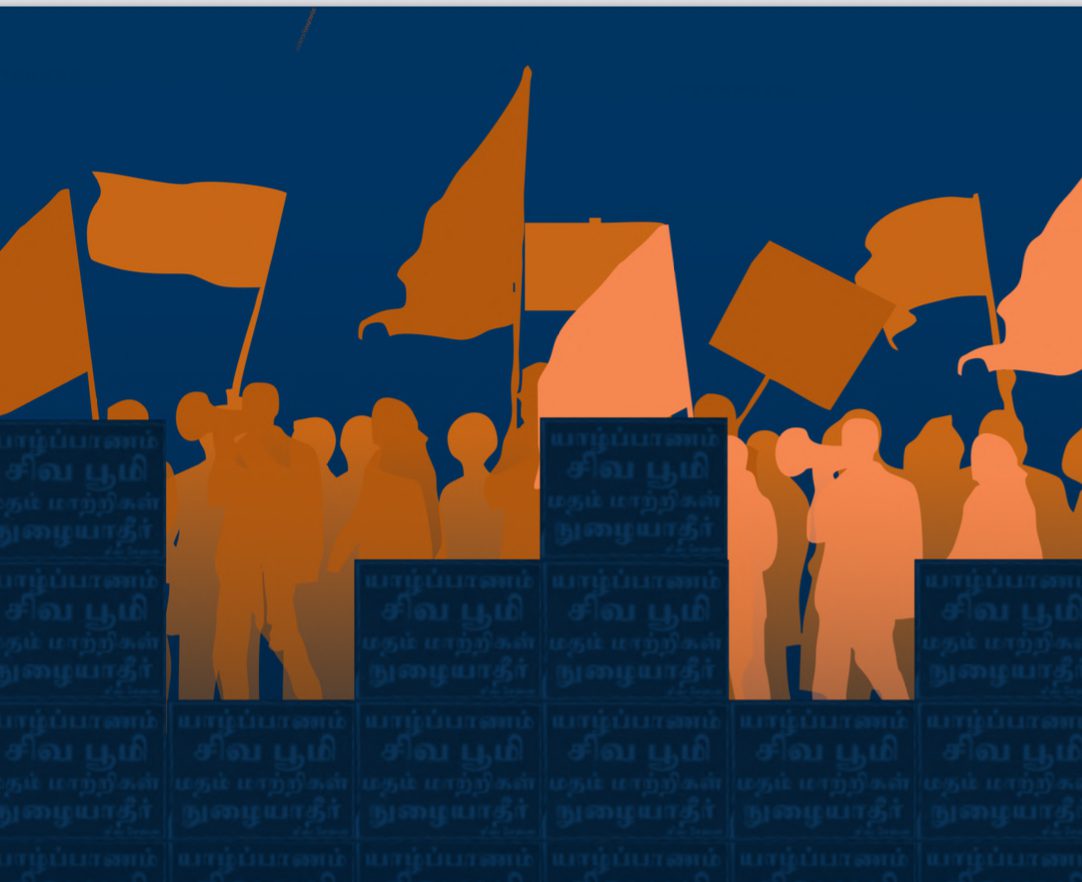
In the Northern Province, an organization called Siva Senai emerged in 2016, claiming to “protect Hindu heritage” and “communities in the North and East” from what it describes as “Sinhalization” and the growing influence of Christianity and Islam. Sinhalization refers to the perceived imposition of Sinhala-Buddhist ethno-religious identity through settlements, institutions, and religious sites in areas historically inhabited by Tamil and Muslim communities.
Sri Lanka’s religious composition has long been dominated by Buddhism, practiced by the majority Sinhalese population. Hinduism, Islam, and Christianity represent minority faiths, with the Tamil community—the country’s largest ethnic minority—comprising primarily Hindus and Christians. Muslims constitute a distinct ethnic group who mainly speak Tamil.
According to Christian religious leaders cited in the report, their communities have increasingly become targets of Hindu groups promoting ideologies such as Hindu nationalism or Hindutva, often maintaining connections to right-wing organizations in India. This transnational dimension adds complexity to the situation, suggesting potential cross-border influences on Sri Lanka’s religious dynamics.
The CSOH report mapped the activities of three Hindu nationalist groups: Siva Senai, Rudra Sena, and Ravana Sena. Their narratives predominantly focus on anti-Christian and anti-Muslim sentiment, specifically around issues like religious conversion, women’s attire, cattle slaughter, and interfaith marriages—themes that mirror Hindu nationalist rhetoric in neighboring India.
“Their activities also include attempts to influence electoral behavior through appeals to Saiva Hindu identity, mobilization around contested Hindu religious and archaeological sites, and the cultivation of transnational linkages with Indian Hindu nationalist digital platforms, politicians, and public figures,” the report elaborates. These groups have also engaged in “tactical collaborations with Sinhala-Buddhist actors,” creating unusual alliances across religious boundaries.
The growing prominence of these Hindu nationalist organizations reflects “a shifting political landscape in Sri Lanka, shaped in part by the weakening of both Tamil nationalist parties and Sinhala-Buddhist ultra-nationalist formations,” according to the researchers. This power vacuum has created space for new ideological actors to gain traction.
Indian journalist Sonia Faleiro, writing for The Guardian, notes that “the saffron robes of Buddhist monks have become a fearsome symbol for the country’s Muslim minority,” as monks lead movements that appear “driven not by a pursuit of nirvana, but by a quest for dominance.” Faleiro attributes these dynamics partly to colonial legacies that introduced racial hierarchies and religious preferences, compounded by economic inequality that has driven people toward religious solutions and empowered religious leaders.
The findings come at a sensitive time for Sri Lanka, which continues to grapple with ethnic reconciliation following decades of civil war that ended in 2009. Experts worry that the rise of Hindu nationalist groups could further complicate the country’s fragile peace and potentially trigger new intercommunal tensions in a nation still healing from its violent past.
Fact Checker
Verify the accuracy of this article using The Disinformation Commission analysis and real-time sources.

10 Comments
The rise of Hindu nationalist groups spreading anti-Muslim propaganda in Sri Lanka is alarming. This type of divisive rhetoric and misinformation can have serious impacts on minority communities. The government must take a strong stance against such hate-fueled propaganda.
Absolutely. Strengthening democratic institutions, upholding the rule of law, and protecting the rights of all citizens will be crucial to addressing this issue.
This is certainly concerning news. Religious extremism and ethnic tensions can have devastating consequences for social cohesion and stability. It’s critical that authorities take decisive action to address the underlying factors driving this concerning trend.
I agree. Promoting interfaith dialogue and inclusive governance will be key to defusing these tensions and preventing further escalation.
This report highlights the worrying emergence of religious extremism and ethnic tensions in post-war Sri Lanka. Concerted efforts to promote tolerance, diversity, and peaceful coexistence between communities will be essential to preventing further escalation.
Spot on. The government and civil society must work together to counter the spread of hateful propaganda and build a more inclusive, harmonious society.
The findings of this report are deeply concerning. Hate speech and religious intolerance can have devastating consequences for social cohesion and stability. Urgent action is needed to address the root causes of this problem and protect vulnerable minority communities.
I agree. This is a complex issue that requires a multi-faceted approach, including strengthening democratic institutions, promoting interfaith dialogue, and tackling the underlying drivers of extremism.
The rise of Hindu nationalist groups spreading anti-Muslim propaganda in Sri Lanka is a troubling development. This type of divisive rhetoric can fuel further violence and instability. The government must take decisive action to address this issue and promote religious tolerance and peaceful coexistence.
Absolutely. Protecting the rights of all citizens, regardless of their religious or ethnic background, should be a top priority for the government. Failure to do so could have serious consequences for the country’s long-term stability and development.