


Listen to the article
Propaganda Post Distorts Theses About the War in Ukraine
A recent analysis has uncovered how pro-Kremlin propaganda continues to spread false narratives about the war in Ukraine, with social media posts increasingly using manipulative terminology and distorted claims to shape public perception of the ongoing conflict.
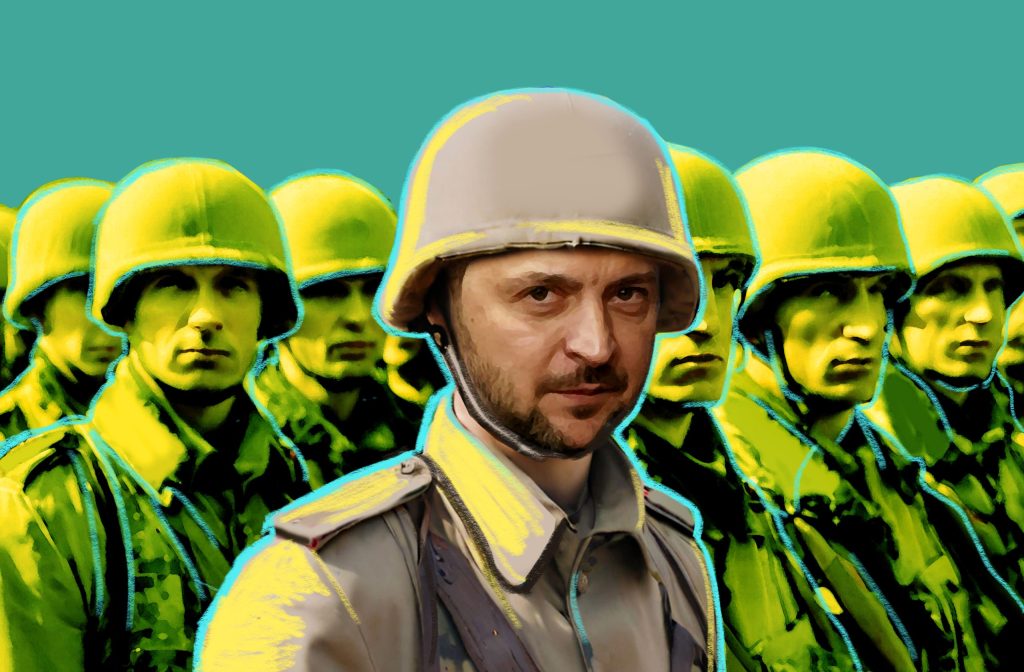
The term “UkroNazis,” which features prominently in these propaganda materials, has been systematically popularized by Russian state media outlets and pro-Kremlin sources since Russia’s full-scale invasion of Ukraine in February 2022. This language forms part of a broader disinformation campaign designed to justify the invasion by falsely portraying Ukraine as a country controlled by neo-Nazi elements.
Media experts point out the fundamental contradiction in this narrative: Ukraine is a democratic nation led by President Volodymyr Zelensky, who is Jewish and whose family members perished during the Holocaust. This fact directly undermines the Kremlin’s attempts to characterize the Ukrainian government as Nazi-sympathetic.
“This type of terminology is deliberately designed to dehumanize Ukrainians and build a false narrative that justifies military aggression,” explains Dr. Irina Sokolova, a disinformation researcher at the European Center for Information Resilience. “It’s a classic propaganda technique that distorts reality by associating a democratic government with an ideology it explicitly opposes.”
The propaganda posts frequently combine these false Nazi allegations with other misleading claims about Ukrainian leadership, particularly targeting President Zelensky. Contrary to claims in some social media posts, Zelensky has remained in Ukraine throughout the conflict, frequently appearing in public and addressing both domestic and international audiences.
These distortions come amid increased Russian military activity in eastern Ukraine, where fierce fighting continues in the Donbas region. International observers note that the timing of propaganda surges often correlates with key moments in the conflict or with Western decisions about military aid to Ukraine.
The European Union’s East StratCom Task Force, established specifically to address pro-Kremlin disinformation, has documented over 15,000 cases of disinformation since Russia’s initial incursion into Ukraine in 2014. Their analysis shows that narratives about supposed Ukrainian extremism have been consistent throughout this period but intensified dramatically after the 2022 invasion.
“What we’re seeing is a coordinated effort to rewrite the narrative about who is responsible for this war,” says Thomas Berger, a political analyst specializing in Eastern European affairs. “By portraying Ukrainians as extremists rather than as a sovereign nation defending itself against aggression, these propaganda posts attempt to shift moral responsibility for the conflict.”
The disinformation has spread beyond Russian-language sources into multiple European languages, with social media platforms struggling to contain the volume of misleading content. Recent analysis from the Atlantic Council’s Digital Forensic Research Lab found that such narratives gain particular traction during high-profile international events involving Ukraine, such as the Eurovision Song Contest or international diplomatic summits.
Ukraine’s strategic communications center has developed fact-checking resources to counter these narratives, emphasizing the country’s democratic institutions and diverse population. They note that ethnic Russians and Russian speakers throughout Ukraine have been among those most affected by Russia’s military actions, further undermining the Kremlin’s stated justifications for the invasion.
Media literacy experts recommend that readers approach content about the war with critical thinking, checking multiple reliable sources before accepting claims, particularly those using emotionally charged terminology like “UkroNazis” that has no basis in factual reporting.
As the conflict approaches its third year, the battle for accurate information remains as crucial as ever, with propaganda tactics evolving to exploit new platforms and target different audiences while recycling the same fundamental distortions about the nature and causes of the war.
Fact Checker
Verify the accuracy of this article using The Disinformation Commission analysis and real-time sources.

16 Comments
The use of inflammatory language like ‘UkroNazis’ is clearly part of a coordinated disinformation campaign by the Kremlin. It’s disturbing to see how they distort the facts to paint Ukraine as a Nazi-controlled state when the reality is quite the opposite.
Agreed. Zelensky, who is Jewish, leading a democratic Ukraine makes a mockery of Russia’s absurd Nazi claims. This is a desperate attempt to justify their unprovoked invasion.
The Kremlin’s reliance on inflammatory language like ‘UkroNazis’ is a clear sign of their propaganda machine at work. It’s a cynical attempt to dehumanize Ukrainians and rationalize their unprovoked aggression.
Absolutely. This is a shameless distortion of reality that reveals the weakness of Russia’s position. The world must see through these lies and hold them accountable for their actions.
The Kremlin’s use of terms like ‘UkroNazis’ is a transparent effort to rewrite history and deflect from their own actions. It’s a desperate ploy that reveals the weakness of their position and the hollowness of their arguments.
This ‘UkroNazi’ rhetoric is a transparent effort by Russia to dehumanize Ukrainians and rationalize their brutal invasion. It’s a deeply concerning tactic that we must call out and condemn.
You’re right. Distorting the truth in this way is a dangerous game that plays on people’s fears and prejudices. We must remain vigilant against such malicious propaganda.
The Kremlin’s reliance on loaded terms like ‘UkroNazis’ is a clear sign of their propaganda machine at work. It’s a cynical attempt to dehumanize Ukrainians and justify their illegal invasion, but the facts speak for themselves.
It’s deeply troubling to see how Russia is twisting the truth and spreading disinformation to justify their invasion of Ukraine. Equating the democratically-elected Ukrainian government with Nazis is a blatant falsehood that must be exposed.
It’s disheartening to see the lengths Russia will go to spread false narratives about the war in Ukraine. Accusing a democratically-elected Jewish leader of being a Nazi is the height of cynical propaganda.
Absolutely. This is a shameless attempt to rewrite history and demonize the Ukrainian people. The world can see through these blatant lies.
This propaganda campaign to label Ukrainians as Nazis is a cynical attempt to dehumanize the victims of Russia’s aggression. It’s a tactic straight out of the authoritarian playbook, and one that the world must roundly reject.
The use of loaded terms like ‘UkroNazis’ is a clear sign that Russia is desperately trying to reframe the narrative around the war in Ukraine. But the facts speak for themselves – this is an unprovoked aggression against a democratic nation.
It’s deeply concerning to see how Russia is manipulating language and facts to shape the narrative around the war in Ukraine. Labeling a democratically-elected Jewish leader as a Nazi is a blatant falsehood that must be condemned.
You’re right. This is a desperate attempt to rewrite history and demonize the Ukrainian people. We must remain vigilant and continue to expose these lies for what they are.
It’s deeply troubling to see how Russia is twisting the truth and spreading disinformation to justify their invasion of Ukraine. Equating the democratically-elected Ukrainian government with Nazis is a blatant falsehood that must be exposed.