


Listen to the article
Paresh Rawal Defends “The Taj Story” Against Propaganda Claims
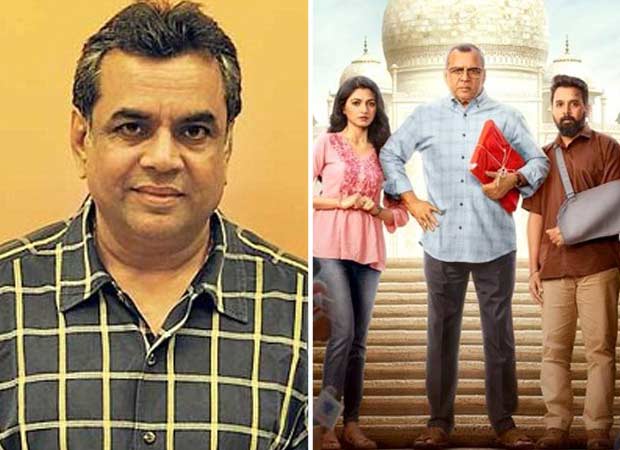
“The Taj Story,” featuring veteran actor Paresh Rawal, has defied box office expectations, delivering surprising commercial success despite initial skepticism from industry analysts. The film opened with modest returns of Rs. 90 lakhs but quickly gained momentum, jumping to Rs. 2 crores on Saturday and Rs. 3 crores on Sunday, with strong weekday retention continuing into its second weekend.
Industry projections now suggest the film could reach lifetime earnings of approximately Rs. 20 crores—a figure that seemed implausible prior to release. While audiences and critics have praised the film’s subject matter and performances, it has also faced criticism from some quarters, with allegations that it serves as right-wing propaganda.
In a recent interview with Mumbai Mirror, Rawal directly addressed these criticisms, firmly rejecting the propaganda label. “When this script came to me, I was zapped by the research. It was very meticulous,” Rawal explained. “The writer even provided me with all the primary resources… I don’t like doing anything for the sake of sensationalism.”
The controversy surrounding the film highlights the increasingly polarized reception of historical narratives in Indian cinema, where interpretations of events often become lightning rods for political debate. “The Taj Story” appears to have touched on sensitive historical themes that resonate differently across India’s diverse political spectrum.
In a rare joint media appearance, Paresh Rawal was accompanied by his son Aditya Rawal during the interview. The father-son duo discussed their respective projects, with Paresh expressing particular enthusiasm for Aditya’s directorial work on “The Queen,” which premiered at the recent Prithvi Theatre Festival.
“It was a thrilling experience,” the senior Rawal said of his son’s play. “I’d seen the play when it was first staged in America [Theatre for the New City in New York] back in 2016, but was keen to experience it again, because I knew he’d made several changes to make it tighter, more effective, and more impactful.”
The veteran actor’s support for his son extends beyond mere parental pride—he attended multiple performances of “The Queen,” noting that he was “very happy with the result” and believes Aditya is “on the right path” professionally.
Aditya Rawal, while making his mark as a director, has also established himself as an actor with roles in “Bamfaad” (2020) and a critically acclaimed performance in Hansal Mehta’s “Faraaz” (2023). His dual career path mirrors his father’s multifaceted involvement in Indian cinema and theater.
The commercial success of “The Taj Story” comes at a time when mid-budget, content-driven films have struggled at the Indian box office, which has increasingly favored either big-budget spectacles or small, highly targeted productions. The film’s performance suggests there remains an audience for thoughtful historical narratives, despite the contentious reception they may receive.
The controversy surrounding “The Taj Story” reflects broader tensions in Indian cinema, where historical subjects often become battlegrounds for competing interpretations of national identity and values. While some films are celebrated for illuminating neglected aspects of history, others face accusations of revisionism or political bias.
For Paresh Rawal, a National Award-winning actor with a career spanning decades, the film represents another chapter in a distinguished filmography that has included both commercial blockbusters and critically acclaimed work. His defense of “The Taj Story” emphasizes the research underpinning the project, suggesting his commitment to what he perceives as historical authenticity rather than sensationalism.
As “The Taj Story” continues its theatrical run, the conversation it has sparked about historical representation in Indian cinema seems likely to continue, reflecting the ongoing negotiation of national narratives in a diverse and complex society.
Fact Checker
Verify the accuracy of this article using The Disinformation Commission analysis and real-time sources.

7 Comments
The ability of a film to generate strong box office returns despite facing accusations of propaganda is intriguing. This highlights the complexities involved in determining what constitutes propaganda versus historical accuracy.
This film’s ability to find commercial success despite the propaganda accusations is intriguing. It highlights the complexities involved in interpreting historical narratives and their potential political implications.
It’s interesting to see how this film has stirred up controversy around the claims of propaganda. While the box office numbers are impressive, the debate over the accuracy and intent of the film’s content is clearly ongoing.
The director’s defense that the film is based on meticulous research is noteworthy. It will be interesting to see how this debate plays out and whether the film’s commercial success can overcome the propaganda allegations.
The director’s claim of meticulous research is an important point to consider in this debate. However, the allegations of propaganda cannot be dismissed easily, and the public discourse will likely continue.
The box office performance of ‘The Taj Story’ is impressive, but the ongoing controversy over its potential propaganda elements is a fascinating aspect of this story. It will be interesting to see how this plays out.
Paresh Rawal’s comments on the extensive research behind the film are thought-provoking. It’s clear that the debate over the film’s messaging will continue, even as it finds commercial success.