


Listen to the article
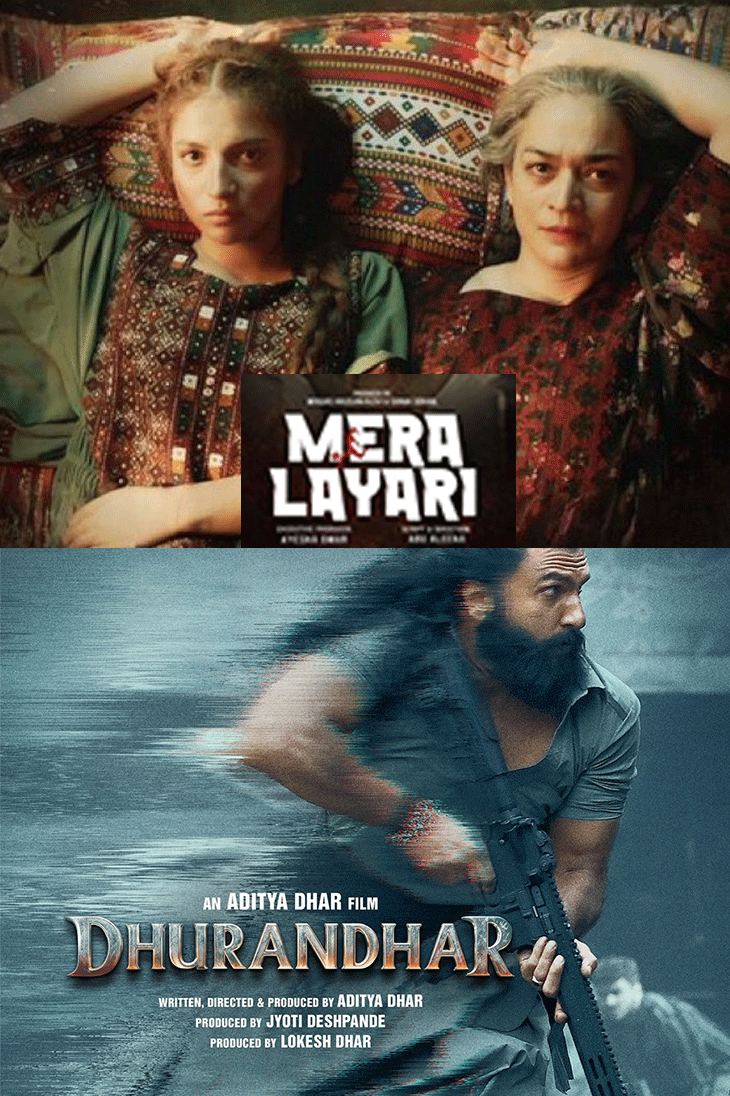
Pakistan Announces ‘Mera Lyari’ in Response to Ranveer Singh’s ‘Dhurandhar’
Ranveer Singh’s upcoming film ‘Dhurandhar’ has sparked significant controversy in Pakistan, with officials announcing a counter-production titled ‘Mera Lyari’ to challenge what they describe as India’s “propaganda” about the Lyari neighborhood in Karachi.
The controversy centers on ‘Dhurandhar’s’ portrayal of Lyari and the notorious gang wars that plagued the area between 1999 and 2009. The film, directed by Aditya Dhar, has generated more discussion in Pakistan than in India due to its depiction of this sensitive historical period in Karachi.
According to media reports, the Sindh Information Department has taken particular issue with how Lyari is portrayed in ‘Dhurandhar.’ Officials claim the Indian film misrepresents the neighborhood’s true character and history, prompting them to announce their own production, scheduled for release in January 2026.
“Misrepresentation cannot erase reality. Lyari is a symbol of culture, peace, and resilience, not violence,” stated an official announcement from the Sindh Information Department, which was accompanied by two promotional posters for ‘Mera Lyari.’ The statement continued: “While the stalwarts are spreading propaganda, Mera Lyari will soon tell the true story of glory and prosperity. India’s propaganda against Lyari will never succeed.”
‘Dhurandhar’ features an ensemble cast including Ranveer Singh in the role of an Indian undercover agent, alongside Akshaye Khanna, who portrays Lyari gangster Rehman Dakait. Actor Danish Pandor plays Uzair Baloch, another significant figure in the Lyari gang wars. The cast also includes Arjun Rampal, Rakesh Bedi, and Gaurav Gera in supporting roles.
The historical context of Lyari adds another layer to this cinematic dispute. Known as the “Mother of Karachi,” Lyari stands as one of the oldest inhabited areas in Pakistan’s largest city. The neighborhood was originally settled by Sindhi fishermen and Baloch nomads, with its name derived from the Sindhi word “Lyar”—a tree that once grew abundantly along the Lyari River.
During the decade depicted in ‘Dhurandhar,’ Lyari became notorious for intense gang warfare, with figures like Rehman Dakait emerging as powerful underworld leaders. The area’s complex history blends cultural significance with periods of violence and criminal activity, making any depiction politically sensitive.
This cross-border film controversy highlights the ongoing tensions between India and Pakistan, where cultural productions often become proxies for larger geopolitical disagreements. Historical narratives, especially those involving crime, terrorism, or intelligence operations, frequently trigger diplomatic sensitivities between the neighboring nations.
The Sindh government’s decision to produce ‘Mera Lyari’ represents an unusual direct response to an Indian film production. Rather than simply banning or criticizing the Indian film—tactics often employed in such situations—Pakistani authorities have chosen to counter the narrative with their own cinematic interpretation.
Film industries in both countries have previously used historical events as backdrops for nationalist narratives. However, the announcement of a specific counter-production in response to ‘Dhurandhar’ demonstrates how cinema continues to function as a battleground for competing national narratives in South Asia.
As ‘Dhurandhar’ approaches its release, the controversy will likely intensify, particularly if promotional materials further highlight the film’s portrayal of Lyari and Pakistani territorial settings. Meanwhile, Pakistani audiences will have to wait until 2026 to see their government’s version of events in ‘Mera Lyari.’
Fact Checker
Verify the accuracy of this article using The Disinformation Commission analysis and real-time sources.

10 Comments
The Pakistani government’s decision to produce a counter-film titled ‘Mera Lyari’ highlights the importance of accurately representing sensitive historical events and local perspectives. This could be an opportunity for greater cultural understanding.
It will be interesting to see how the two films approach the portrayal of Lyari and the gang violence that occurred there. Nuanced storytelling is crucial when dealing with complex sociopolitical issues.
While artistic expression is important, it’s also understandable that the Pakistani authorities want to ensure their own narrative about Lyari is represented. This back-and-forth over the film depictions could lead to a more balanced understanding of the region’s history.
The announcement of ‘Mera Lyari’ as a response to ‘Dhurandhar’ suggests that Pakistan is taking a proactive stance in shaping the narrative around this sensitive topic. It will be worth following the development of these competing films.
The Pakistani government’s response to ‘Dhurandhar’ by announcing ‘Mera Lyari’ demonstrates the importance of accurately depicting sensitive cultural and historical narratives in media. It will be interesting to see how the two films compare in their approaches.
This cross-border cultural exchange over film portrayals of Lyari is a thought-provoking development. It’s encouraging to see efforts to present multiple perspectives and promote a more comprehensive understanding of the region’s complexities.
Interesting controversy over the portrayal of Lyari in the film ‘Dhurandhar.’ It’s understandable that Pakistan wants to present their own perspective on this sensitive topic. Looks like an intriguing cultural exchange unfolding.
I’m curious to see how ‘Mera Lyari’ will depict the neighborhood and address the concerns raised about ‘Dhurandhar.’ Cultural films can be powerful in shaping narratives.
The controversy over the portrayal of Lyari in ‘Dhurandhar’ highlights the complexities of cultural representation in film. It’s positive to see Pakistan taking steps to present their own perspective through the production of ‘Mera Lyari.’
This exchange between the two films could foster a more nuanced understanding of Lyari’s history and the challenges faced by the community. Thoughtful cultural dialogue is essential in these situations.