


Listen to the article
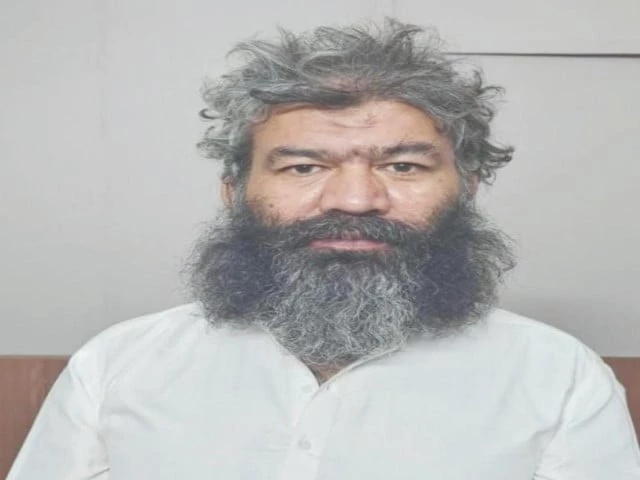
Pakistani intelligence agencies have dealt a significant blow to the Islamic State Khorasan (IS-K) with the arrest of Sultan Aziz Azzam, the group’s spokesperson and propaganda architect, in an operation near the Pakistan-Afghanistan border. Though the detention occurred months ago, authorities kept it confidential for operational security reasons until now.
The arrest has severely disrupted IS-K’s propaganda machine, leading to the suspension of key media platforms like Voice of Khorasan and Al-Azaim Foundation, which were central to the group’s recruitment, ideological dissemination, and operational communication. Security officials note that this development has significantly weakened the organization’s ability to coordinate narratives and communicate with followers.
Azzam, detained on May 16, 2025, was captured as part of Pakistan’s broader campaign against IS-K networks, which has included several high-profile arrests in recent weeks. The impact of these operations has received international recognition, with the United Nations Analytical Support and Sanctions Monitoring Team acknowledging in its 16th report that Pakistan’s actions have weakened IS-K’s organizational structure globally.
The UN report highlighted that Pakistani counterterrorism efforts have prevented several planned attacks and reduced the number of militants affiliated with the group. It specifically noted that Azzam’s arrest, along with that of senior IS-K leader Abu Yasir al-Turki in May 2025, has “significantly reduced the group’s operational strength.”
“Overall, the capability of IS-K has been degraded as a result of counter-terrorism operations,” the UN report stated. “Key IS-K commanders and ideologues have been neutralized, and the numbers of IS-K fighters have likely been reduced. Several plotted attacks have been disrupted.”
While IS-K’s ability to operate freely in the border regions has been curtailed, the UN report challenged the Afghan Taliban’s assertions that no militant groups operate from Afghan soil. “Member state reporting indicates that a range of terrorist groups still operate in the country, with varying degrees of autonomy and oversight from Taliban authorities,” the report said.
The document also revealed alarming recruitment practices, noting that in northern Afghanistan and areas near the Pakistani borders, IS-K “is reported to have indoctrinated children in madressahs, establishing a suicide training course for minors around 14 years of age.”
Pakistan’s Permanent Representative to the United Nations, Asim Iftikhar Ahmed, has formally requested that the report be circulated among UN Security Council members.
According to multiple sources, Azzam has been a central figure in IS-K since its emergence in Afghanistan in 2015. The Islamabad-based security platform The Khorasan Diary has described him as the group’s second-in-command, while the European Council identified him as the operator of IS-K’s media arm, Al-Azaim Media.
Analyst Shan A Zain, writing for the Jamestown Foundation’s Militant Leadership Monitor, reported that Azzam was born in Afghanistan’s Nangarhar province and worked for several local radio stations before becoming IS-K’s chief propagandist. His media background proved invaluable to the terrorist organization, allowing him to craft effective recruitment messages.
Azzam also authored books and poetry, including “Travellers of the Maze,” which recounts purported experiences of IS fighters in the Spin Ghar mountains. Excerpts from this work were distributed on Telegram platforms frequented by potential recruits.
“Sultan Aziz Azzam has been credited with recruiting IS members to carry out high-profile attacks in Afghanistan,” Zain wrote. “He has written several books and articles narrating stories about fighters in order to inspire people to join IS ranks.”
The UN Security Council has described Azzam as “instrumental in spreading ISIL’s violent ideology, glorifying and justifying terrorist acts.” He publicly claimed responsibility on behalf of IS-K for several major attacks, including the August 26, 2021 suicide bombing near Kabul’s Hamid Karzai International Airport, which killed 13 U.S. service members and dozens of Afghan civilians during evacuation operations.
Fact Checker
Verify the accuracy of this article using The Disinformation Commission analysis and real-time sources.

9 Comments
This is a significant development in the fight against IS-K. Disrupting their propaganda machine is crucial to weakening the group’s influence and recruitment efforts. Kudos to Pakistan’s intelligence agencies for this important arrest.
Arresting the IS-K propaganda chief is a major blow to the group’s ability to spread its extremist ideology. It’s good to see international recognition of Pakistan’s efforts to counter terrorism in the region.
The suspension of IS-K’s key propaganda outlets is an important step. It’s crucial that authorities remain vigilant and continue to disrupt the group’s activities on all fronts.
This arrest highlights the importance of international cooperation in counterterrorism. Sharing intelligence and coordinating actions can help disrupt global terrorist networks like IS-K.
Absolutely. Regional stability and security depend on effective collaboration between nations to counter the spread of extremism.
Dismantling the IS-K propaganda machine is a critical step, as their online presence is a key driver of radicalization and recruitment. This arrest could have far-reaching implications.
Targeting the terrorist group’s communication channels and media platforms is an effective tactic. This arrest could lead to valuable intelligence that helps further dismantle IS-K’s operations.
It’s concerning to see the rise of IS-K in the region, but this arrest shows that Pakistan is taking strong action to combat the threat. Maintaining this momentum will be crucial going forward.
I agree, Pakistan’s efforts are commendable. Sustained pressure on the group’s leadership and infrastructure is essential to prevent it from regaining strength.