


Listen to the article
India’s revered Jagannath Temple has become the center of controversy after a social media influencer was accused of spreading false information about the ancient shrine. Authorities in Odisha have launched an investigation following a formal complaint filed by a senior temple servitor.
Gourahari Pradhan, a servitor at the 12th-century Jagannath Temple in Puri, lodged an FIR (First Information Report) on Sunday against influencer Shubhankar Mishra. The complaint alleges that Mishra has been disseminating unfounded claims about the temple, which is considered one of Hinduism’s most sacred pilgrimage destinations.
“For the past few days, Shubhankar Mishra has been trying to mislead today’s youth by spreading propaganda in the name of Lord Jagannath’s temple, the spiritual centre of crores of Odias,” Pradhan stated in his complaint. He specifically took issue with Mishra’s references to a supposed “curse of Maa Radha Rani,” noting that the influencer failed to cite any scriptural sources such as the Puranas to support his claims.
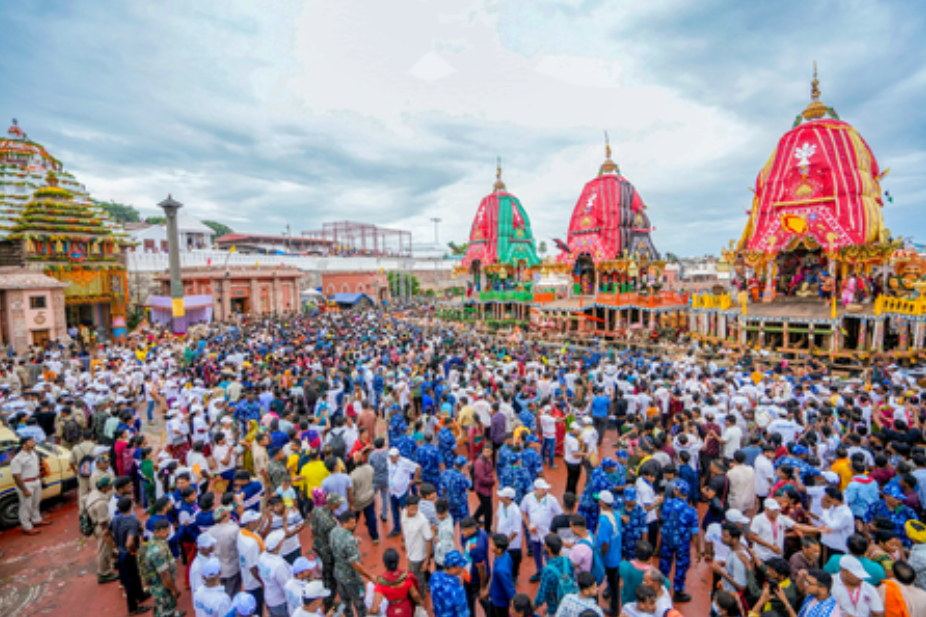
The temple, located in the coastal city of Puri, attracts millions of devotees annually and holds profound spiritual significance for Hindus, particularly those from Odisha. It is dedicated to Lord Jagannath, a form of Lord Krishna, and is renowned for its annual Rath Yatra festival that draws international attention.
At the heart of the controversy is Mishra’s recent social media post claiming that couples who visit the Jagannath Temple before marriage become “unable to enter into wedlock” due to a purported curse by Radha. According to Mishra’s unsourced narrative, Radha once attempted to visit the temple to see Lord Krishna in his Jagannath form but was denied entry by servitors, leading her to curse the temple in response.
Temple authorities have categorically rejected this narrative, stating it has no foundation in Hindu scriptures or the temple’s historical records. Pradhan described Mishra’s claims as a bid for “cheap publicity” that causes emotional harm and “plays with the sentiments of millions of Jagannath devotees.”
Puri Superintendent of Police Prateek Singh confirmed that an investigation is underway. “We will verify the statements, gather digital evidence, and proceed as per law,” Singh told reporters. The police are collecting relevant audio and video content posted by Mishra and plan to seek legal opinions while consulting with the Shree Jagannath Temple Administration before determining their course of action.
The case highlights the growing tension between social media content creation and religious sensitivities in India. With the proliferation of influencers seeking to build audiences through provocative content, traditional religious institutions increasingly find themselves defending against what they consider misinformation or disrespect.
Under Indian law, hurting religious sentiments can be prosecuted under various sections of the Indian Penal Code, particularly Section 295A, which addresses deliberate acts intended to outrage religious feelings. The investigation will likely examine whether Mishra’s statements meet the threshold for such violations.
The Jagannath Temple in Puri, constructed during the 12th century, is not only a religious landmark but also an architectural marvel and a symbol of Odia cultural identity. Its administration is governed by a special act of the Odisha legislature, reflecting its importance to the state and the nation.
As the investigation proceeds, devotees and religious scholars have emphasized the importance of verifying claims about sacred sites through authoritative sources rather than unsubstantiated social media posts. Temple authorities have urged followers to rely on established religious texts and recognized scholars for information about the temple’s traditions and history.
Fact Checker
Verify the accuracy of this article using The Disinformation Commission analysis and real-time sources.

6 Comments
Protecting the sanctity of important religious sites is crucial. The authorities must ensure that any false or misleading information about the Jagannath Temple is swiftly addressed and corrected.
While influencers have a right to express their views, they must be mindful of the impact their words can have, especially when it comes to sensitive cultural and religious matters. I hope this case serves as a lesson for responsible social media use.
Influencers hold a lot of sway, so they must be responsible with the information they share. Misrepresenting sacred traditions without citing credible sources is irresponsible and can be damaging. I hope the investigation uncovers the truth.
The Jagannath Temple holds deep spiritual significance for Hindus. Any attempt to spread misinformation or distort its traditions should be taken seriously. I hope the investigation leads to a fair and just outcome.
The Jagannath Temple is a cherished pilgrimage destination for Hindus. Spreading propaganda about it could undermine its spiritual significance. The authorities are right to look into this case and address any false or misleading claims.
This is a concerning situation. Spreading unsubstantiated claims about a revered religious site like the Jagannath Temple could mislead people and cause unnecessary controversy. The authorities should investigate the matter thoroughly to determine the facts.