


Listen to the article
Pope’s Visit to Türkiye Sparks Controversy Among Nationalist Leaders
The recent visit of Pope Leo XIV to Türkiye has ignited a political firestorm, with Nationalist Movement Party (MHP) leader Devlet Bahceli condemning the pontiff’s religious activities as “hidden propaganda” of Christianity.
During his four-day visit from November 27-30, Pope Leo XIV met with President Recep Tayyip Erdogan in Ankara before traveling to Iznik to commemorate the 1700th anniversary of the Council of Nicaea, a pivotal event in Christian history. The pope concluded his trip by conducting a mass for approximately 4,000 people at Istanbul’s Volkswagen Arena.
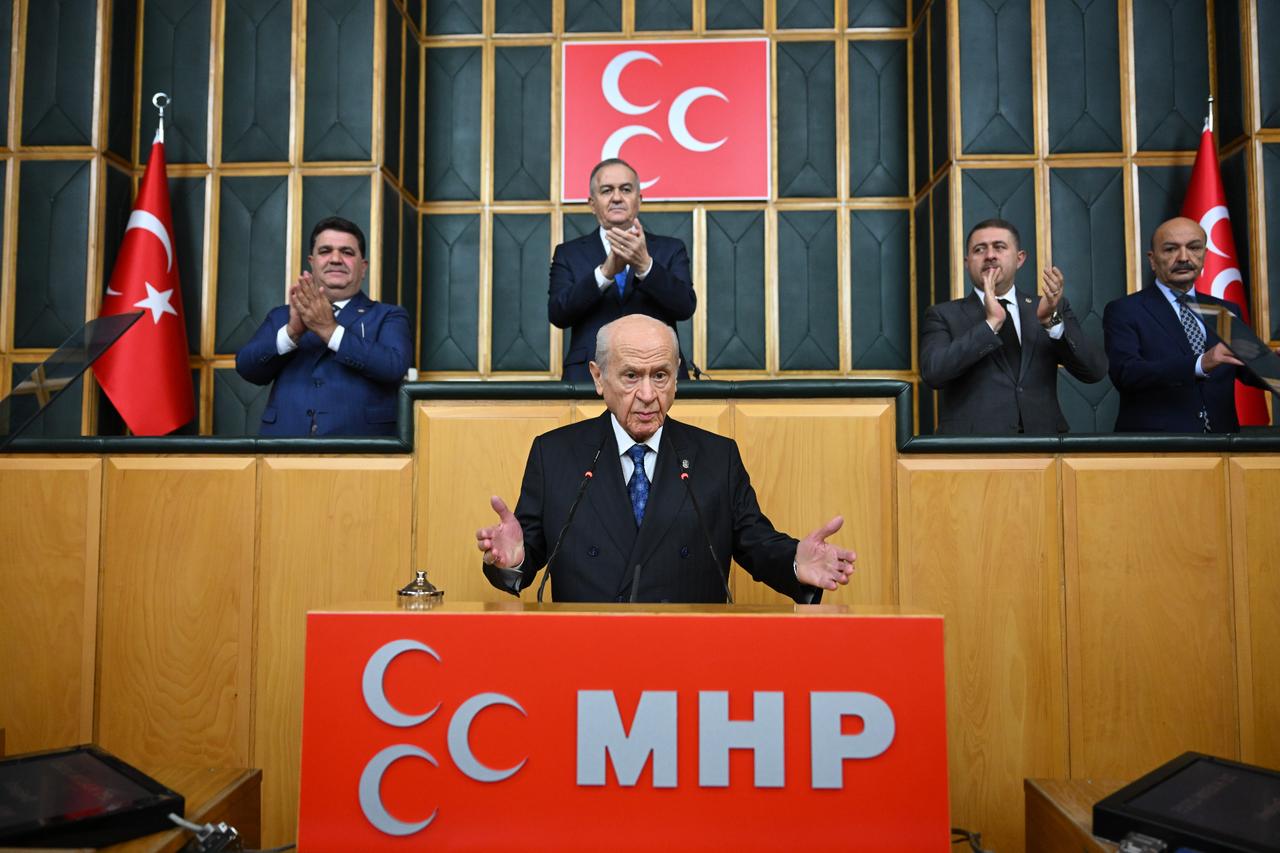
Speaking at his party’s parliamentary group meeting on Tuesday, Bahceli drew a sharp distinction between welcoming the pope as a head of state and objecting to his religious activities on Turkish soil.
“Our point of criticism is his disturbing our nation with religious and historical rituals based on showmanship,” Bahceli stated. “We have objections both in substance and procedure to the hidden propaganda staged from the Neophytos Basilica in Iznik to the mass at Volkswagen Arena in Istanbul.”
The nationalist leader employed a traditional Turkish idiom to express his disapproval, saying “there is no point in selling snails in a Muslim neighborhood,” suggesting the pope’s religious ceremonies were culturally inappropriate in a predominantly Muslim country.
Bahceli’s comments reflect long-standing tensions regarding religious expression and sovereignty in Türkiye, which straddles Europe and Asia and has a complex history as both the heartland of Ottoman Islamic civilization and the site of significant early Christian development. Iznik, formerly known as Nicaea, holds particular importance for Christianity as the location of the First Ecumenical Council in 325 CE, where core Christian doctrines were formalized.
The MHP leader accused external forces of attempting to use Iznik as a “jumping-off point” to spread Christianity throughout Asia while simultaneously sowing “seeds of discord” within the Islamic world. His comments highlight ongoing sensitivities about religious influence and national identity in Türkiye.
“We cannot tolerate the birth and rise of different sovereignty areas within the borders of the Republic of Türkiye, regardless of the name, purpose, or title,” Bahceli emphasized, framing the issue as one of territorial integrity rather than merely religious expression.
Bahceli’s criticisms extended beyond the papal visit to include U.S. Ambassador to Ankara Tom Barrack, who recently discussed efforts to reopen the Heybeliada Halki Seminary by 2026. The Greek Orthodox theological school was closed in 1971 under Turkish law that placed religious and military training under state control.
“If this is not overstepping authority, what is it? Is this ambassador going to make the decision, or is the Republic of Türkiye?” Bahceli questioned, suggesting foreign diplomatic interference in Turkish domestic affairs.
This controversy follows another diplomatic tension last week involving Bahceli, who criticized the armed bodyguards accompanying Kurdistan Democratic Party (KDP) leader Masoud Barzani during his visit to Cizre in southeastern Türkiye. President Erdogan later expressed support for Bahceli’s position on that matter.
The MHP, as a nationalist political party and coalition partner with Erdogan’s ruling Justice and Development Party (AKP), has consistently advocated for policies that prioritize Turkish sovereignty and Islamic identity, often viewing foreign religious influence with suspicion.
Pope Leo XIV’s visit represents the latest chapter in the complex relationship between the Vatican and Türkiye. Previous papal visits have also generated controversy, though they have sometimes served as opportunities for interfaith dialogue. The religious ceremonies at historically significant Christian sites like the Neophytos Basilica—a submerged church revealed in 2014 after water levels receded in Lake Iznik—have particular symbolic weight in this context.
As Türkiye continues to navigate its role as a bridge between East and West, such high-profile international religious events remain sensitive flashpoints in the nation’s ongoing discussion about identity, sovereignty, and religious pluralism.
Fact Checker
Verify the accuracy of this article using The Disinformation Commission analysis and real-time sources.

16 Comments
This debate over the Pope’s visit highlights the sensitive nature of religious and cultural exchanges, especially in regions with strong nationalist sentiments. Finding a way to balance diplomatic and religious interests will be crucial moving forward.
Ultimately, fostering mutual understanding and respect between diverse groups is key to resolving such complex and contentious issues.
The nationalist leader’s claims of ‘hidden propaganda’ during the Pope’s visit seem like an overreaction. Religious and cultural exchange can foster greater understanding, if approached respectfully by all sides.
Accusations of propaganda often stem from deep-seated political and ideological differences. Constructive dialogue is needed to address these concerns.
The Pope’s visit to Turkey has certainly stirred up strong reactions from nationalist leaders. It will be crucial for all parties to engage in constructive dialogue and find a way to accommodate both religious and political interests.
Maintaining a delicate balance between national identity and international diplomacy is an ongoing challenge for many countries dealing with diverse populations and competing ideologies.
While the nationalist leader’s criticism of the Pope’s religious activities in Turkey is understandable, it’s important to recognize the Vatican’s diplomatic role and the potential benefits of cultural exchange.
Ultimately, a balanced approach that respects both national sovereignty and religious freedom may be the best way forward in this complex situation.
The nationalist leader’s objections to the Pope’s religious rituals and events during the visit raise valid concerns about the separation of church and state. However, the Pope’s role as a head of state also needs to be respected.
Navigating the balance between religious and political diplomacy can be tricky, especially in a region with strong nationalist sentiments.
The nationalist leader’s criticism of the Pope’s religious activities during the visit seems to stem from deep-rooted concerns about preserving Turkish national identity. However, open and respectful dialogue may help find common ground.
Navigating the intersection of religion, politics, and national sovereignty is a complex task that requires nuance and compromise from all sides.
This debate over the Pope’s visit reflects the complex religious and political dynamics in Turkey. It will be interesting to see how the government responds to the nationalist criticism and manages this sensitive situation.
Maintaining religious harmony and national unity is an ongoing challenge for many countries dealing with diverse populations and political factions.
Interesting developments around the Pope’s visit to Turkey. Nationalist leaders seem concerned about the religious and historical aspects of the trip, viewing it as potential Christian propaganda. It will be worth watching how this situation unfolds.
Yes, the nationalist criticism of the Pope’s religious activities in Turkey highlights the sensitivity around religion and national identity in the region.