


Listen to the article
Russia’s Long History of Attempts to Influence Mexico Revealed
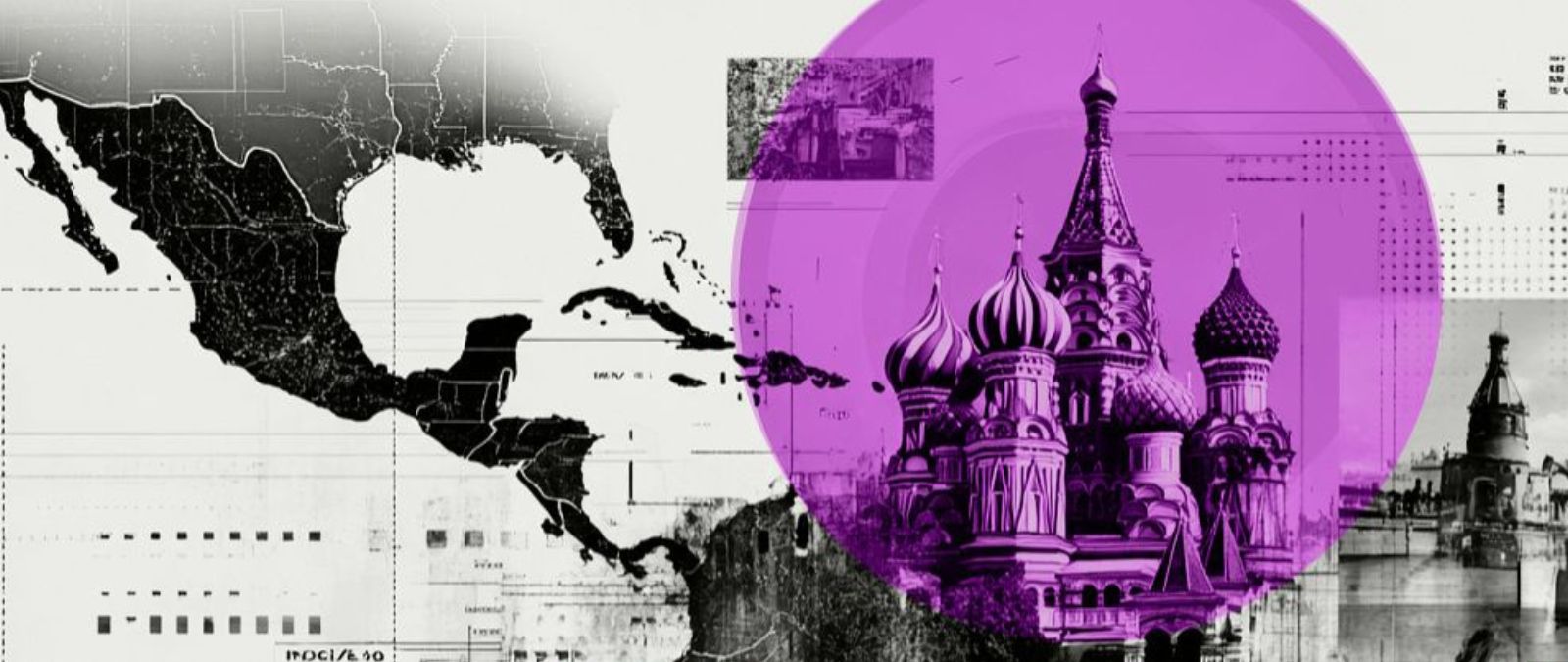
The historical pattern of Russian propaganda efforts aimed at Mexico has deep roots dating back to the Cold War era, according to evidence gathered in Factchequeado’s recent investigation “Putin’s Laundromat.” Documents from the former Soviet Union, obtained by the Wilson Center, demonstrate Moscow’s enduring strategic interest in Mexico – a nation that holds particular significance as the world’s largest Spanish-speaking country and shares a border with Russia’s primary geopolitical rival, the United States.
During the Cold War, this influence campaign was already well underway. In June 1985, The New York Times reported that Mexico had become a center of Soviet espionage according to U.S. officials. American counterintelligence specialists estimated that “at least 150 KGB officers” were operating under diplomatic cover at the Russian Embassy, working as supposed diplomats, administrative staff, drivers, and journalists – a claim that Mexican officials acknowledged at the time.
This pattern has continued into recent years. In March 2022, just one month after Russia’s invasion of Ukraine, U.S. Northern Command head General Glenn VanHerck testified to a Senate committee that “the largest portion of [Russian intelligence personnel] in the world is in Mexico right now,” noting that they “keep an eye very closely on their opportunities to have influence on U.S. opportunities and access.”
The extent of these efforts became even clearer in September 2024 when the U.S. Department of Justice (DOJ) announced a major operation targeting Russian influence activities. The DOJ shut down 32 internet domains linked to a Russian government-backed propaganda network designed to influence the 2024 U.S. presidential election.
Among the evidence revealed were internal documents from the Russian company Social Design Agency (SDA), identified as a key player in these propaganda operations. These files detailed a project titled “México No Perdona” (Mexico Does Not Forgive), which outlined a systematic campaign to stoke “anti-American sentiment” among Mexico’s “poor classes,” described in the documents as “the main group that supports the Morena party” currently governing Mexico.
The campaign’s explicit purpose was to “show the United States that it is under threat” by fueling nationalist and anti-American sentiment in Mexico. This discovery prompted Factchequeado to launch its investigation into Russian influence operations in the region.
The Russian plan was sophisticated and designed to exploit historical grievances. It included a proposed graphic showing a map of the U.S. states of Arizona, California, Colorado, Nevada, New Mexico, Texas, and Utah – territories that belonged to Mexico until the 1848 Treaty of Guadalupe Hidalgo – highlighted in white. “The pain over the loss of these vast border territories is still alive in the people’s minds,” SDA claimed in its project documents.
The agency proposed using imagery of the United States “depicted as shattered glass” with a label reading “Mexico Does Not Forgive” across the border, suggesting this messaging “could be used by some fringe political organization, whether far-right or far-left, or by a nationalist group.”
This technique of exploiting existing social divisions has historical precedent. As information security scholar Thomas Rid explains in his book “Active Measures: The Secret History of Disinformation and Political Warfare,” the KGB considered disinformation most effective when “it resonated with emotions, with collectively held views in the targeted community, and whether it managed to exacerbate existing tensions.”
SDA’s documents explicitly stated their strategic objective: “This type of project will show the world that a huge country of 130 million inhabitants, with the longest border with the United States, has finally awakened. Now is the moment to show the United States that it is under threat. And we can do it.”
The findings are part of Factchequeado’s broader investigation titled “Putin’s Laundromat,” which examines various aspects of Russian influence operations in Mexico and Latin America. The investigation has uncovered links between Russian propaganda efforts and various Mexican institutions, including the Club de Periodistas (Journalists’ Club) in Mexico City, which has reportedly served as a conduit for Russian state media messaging.
As tensions between Russia and Western democracies continue, these influence operations represent an important dimension of modern geopolitical competition, particularly in regions where historical grievances can be leveraged to create divisions that serve foreign strategic interests.
Fact Checker
Verify the accuracy of this article using The Disinformation Commission analysis and real-time sources.

8 Comments
This article provides a sobering reminder that Russia’s geopolitical ambitions extend far beyond the current Ukraine conflict. Their efforts to cultivate influence in Mexico, dating back to the Soviet era, highlight the Kremlin’s determination to project power and counter Western interests in the Americas.
This article highlights Russia’s long-standing efforts to influence Mexico, dating back to the Cold War era. It’s concerning to see how persistent Moscow’s propaganda campaigns have been, even after the fall of the Soviet Union. Maintaining influence in this strategically important country seems to be a key priority for the Kremlin.
Absolutely, Russia has clearly viewed Mexico as a vital piece on the geopolitical chessboard for decades. It will be crucial to closely monitor their ongoing influence operations in the region.
The details about Soviet-era espionage activities in Mexico are quite eye-opening. It’s alarming to think that Russia may still have such a significant intelligence presence there, even today. This speaks to the enduring nature of their interest in maintaining influence over their neighbor to the south.
You’re right, this is a longstanding pattern of behavior that predates the current Russia-Ukraine conflict. Mexico’s strategic location makes it an attractive target for Russian meddling, even if the specific tactics have evolved over time.
I’m curious to learn more about the specific propaganda techniques and narratives that Russia has employed in Mexico over the years. Have they focused on stoking anti-US sentiment, or tried to portray Russia as a more reliable partner? Understanding their playbook could help policymakers develop effective countermeasures.
That’s an excellent point. Gaining deeper insights into Russia’s propaganda playbook in Mexico would be invaluable. Analyzing their messaging and targeting strategies could shed light on their broader regional objectives.
It’s concerning to see how Russia has persistently tried to undermine US influence in Mexico, even decades after the Cold War. This speaks to the Kremlin’s desire to challenge American hegemony in its own backyard. Vigilance will be key to preventing further Russian meddling in this strategically important country.