


Listen to the article
In a major interfaith initiative, more than 1,000 American pastors are traveling to Israel this week as part of an unprecedented evangelical delegation designed to transform them into global advocates for the Jewish state amid ongoing regional tensions.
The delegation, described as the largest gathering of American evangelical leaders ever brought to Israel, aims to counter what organizers characterize as widespread misinformation about the Israel-Hamas conflict. Led by Mike Evans, founder of the Friends of Zion Heritage Center, and coordinated with Israel’s Foreign Ministry, the initiative represents a significant investment in strengthening Israel’s relationship with its evangelical Christian supporters in the United States.
Unlike traditional religious pilgrimages, this delegation has been structured as an intensive advocacy training program. Participants will visit sites of recent trauma, including the Nova music festival where Hamas militants killed hundreds of civilians on October 7. They will meet with former hostages and families of those still held captive in Gaza, pray at Jerusalem’s Western Wall, and visit soldiers’ graves at Mount Herzl, Israel’s national cemetery.
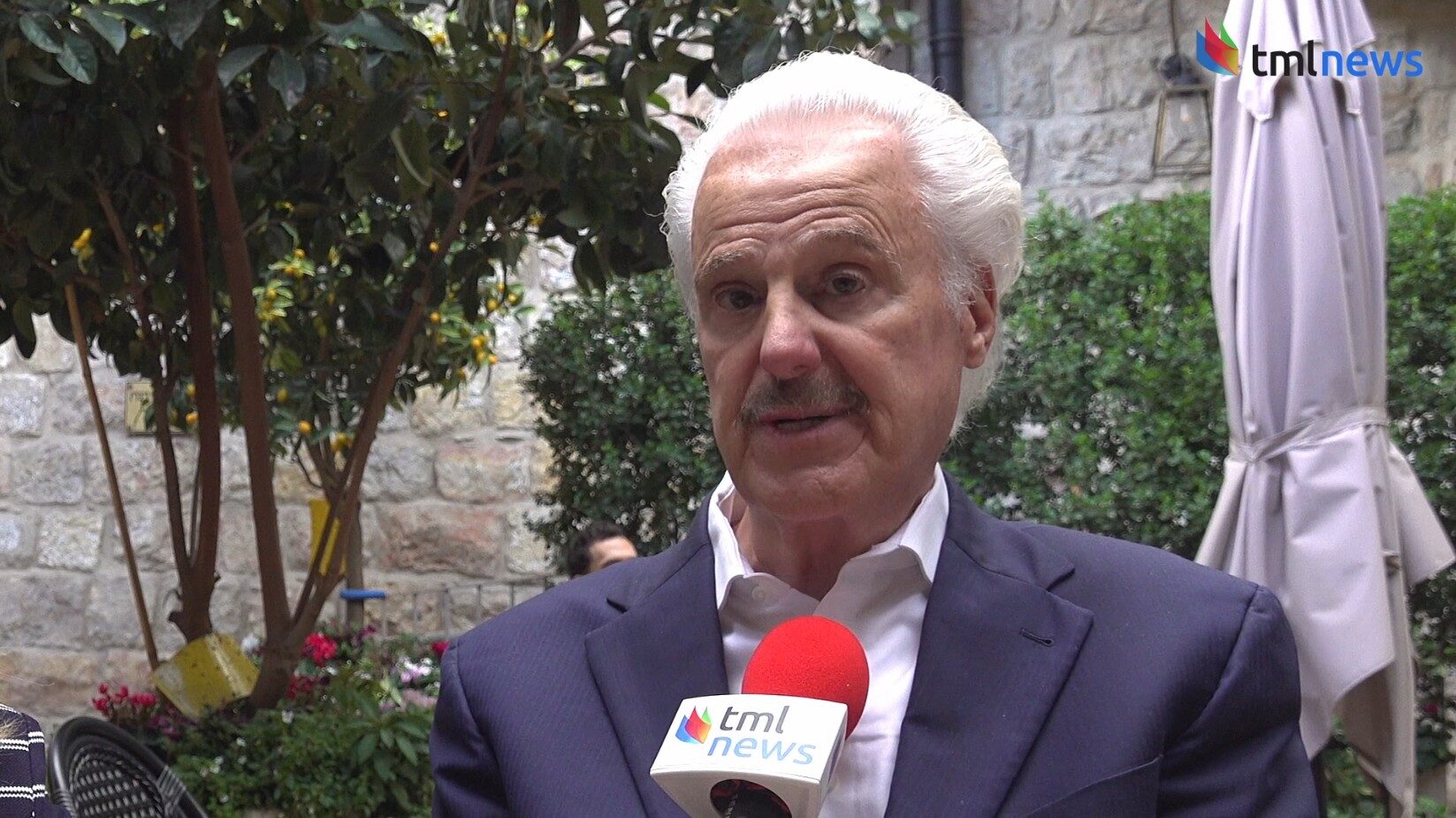
“These aren’t tourists – they’re future ambassadors,” said Evans in an interview about the program. “We’re bringing them to the frontlines of both physical and information warfare.”
The delegation highlights the deepening alliance between Israel and American evangelical Christians, a relationship that has grown significantly in recent decades. Evangelicals, who number approximately 80 million in the United States, have become one of Israel’s most reliable bases of support in American politics.
Evans, who maintains close ties with former President Donald Trump, frames the initiative in geopolitical terms, describing multiple “wars” against Israel – ideological, economic, media-driven, and through proxies. He expressed particular concern about social media algorithms and artificial intelligence systems that, in his view, spread anti-Israel messaging to younger audiences.
“Most of the Zionists in the world are not Jewish,” Evans claimed, underscoring his belief that evangelical Christians represent Israel’s largest bloc of international supporters.
The pastors will receive high-level security briefings from Israeli officials and participate in an “Ambassadors Summit” in Jerusalem featuring government representatives and regional experts. A mass gathering is also planned at the ancient biblical site of Shiloh in the West Bank, a location of religious significance to both Jewish and Christian traditions.
The delegation comes at a critical moment for Israel’s international standing. As the conflict in Gaza continues into its ninth month, Israel faces growing criticism over civilian casualties and humanitarian concerns, alongside increasing diplomatic pressure for a ceasefire agreement with Hamas.
For Israel’s government, evangelical support provides a crucial counterweight to eroding support in other quarters. American evangelicals have consistently advocated for policies favorable to Israel, including the Trump administration’s decision to move the U.S. embassy to Jerusalem in 2018.
The initiative’s ambitions extend well beyond this initial delegation. Organizers have outlined plans to eventually reach one million pastors worldwide, creating a vast network of pro-Israel voices in Christian communities across the globe.
Critics of evangelical support for Israel note that theological motivations sometimes diverge from Israeli interests, pointing to end-times prophecies that feature prominently in some evangelical traditions. Others question whether unconditional support serves the long-term goal of regional peace.
Nevertheless, the scale of this delegation demonstrates the enduring strength of the evangelical-Israel alliance, a relationship that continues to shape both American foreign policy and Israel’s global standing. As these pastors return to their congregations – which Evans claims collectively reach tens of millions through megachurches, television programs, and social media platforms – their experiences in Israel may significantly influence how American Christians perceive the ongoing conflict.
Fact Checker
Verify the accuracy of this article using The Disinformation Commission analysis and real-time sources.

12 Comments
Interesting initiative to mobilize evangelical pastors as advocates for Israel. Though religious tensions can be sensitive, an open dialogue may help foster better understanding between communities.
Indeed, building bridges through interfaith cooperation is often more constructive than perpetuating divisions. Hopefully this program can promote nuanced perspectives on a complex geopolitical situation.
Bringing evangelical leaders to Israel to counter ‘anti-Israel narratives’ seems like a strategic move to shore up political support. But I hope the program also fosters genuine interfaith dialogue and empathy.
Valid concern. Meaningful dialogue requires listening to diverse perspectives, not just promoting a single narrative. If this initiative can facilitate that, it could be a positive step.
While I appreciate the effort to address misinformation, I worry this delegation may reinforce partisan divisions rather than build bridges. Balanced, fact-based education is ideal, but easy to get wrong in such a charged context.
You raise an important point. The risk of further polarization is real if the program fails to acknowledge complexities and present multiple viewpoints objectively. Careful facilitation will be crucial.
I’m curious to see how this delegation will portray the Israel-Hamas tensions to their congregations back home. Evangelicals are a key political base for Israel, so their messaging will be influential.
That’s a good observation. The delegation’s ability to convey nuanced, contextual understandings will be crucial in shaping broader public opinion on this longstanding conflict.
Mobilizing 1,000 evangelical pastors as ‘global advocates for the Jewish state’ is a significant investment. I hope the initiative can move beyond political posturing to foster genuine interfaith understanding and peacebuilding.
I share your hope. If this program can provide nuanced education and create space for open, empathetic dialogue, it may prove a valuable contribution to resolving the Israel-Palestine conflict.
While the Israel-Hamas conflict is undoubtedly polarizing, it’s encouraging to see efforts to counter misinformation and extremist narratives from all sides. Balanced advocacy rooted in facts could be valuable.
You make a fair point. Providing evangelical leaders with first-hand experiences and diverse viewpoints may help them become more effective ambassadors for peace and reconciliation.