


Listen to the article
Investigation Reveals Mexican Journalists’ Club Acts as Hub for Russian Propaganda
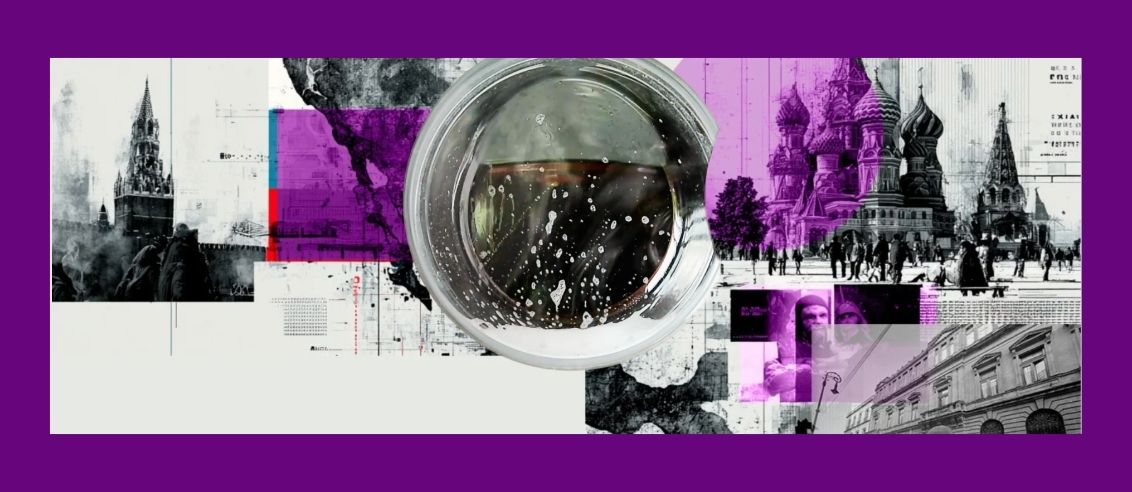
A months-long cross-border investigation has uncovered how the Mexican Journalists’ Club has evolved into a critical node for spreading Russian propaganda throughout Latin America, according to findings released by Factchequeado in collaboration with the International Center for Journalists’ (ICFJ) Disarming Disinformation program.
The investigation, titled “Putin’s Laundromat,” analyzed over 4,500 articles published on the Club’s website between March 2020 and September 2025, along with the organization’s magazine content, award recipients, and operational practices. Researchers also conducted an in-person visit to the Club’s headquarters in Mexico City.
“What we have managed to document is that Russia has a partner in Mexico that launders its content and narratives and has received Mexican public funds,” said Laura Zommer, CEO of Factchequeado. “The result is months of collaborative and cross-border work.”
The investigation revealed that while the Mexican Journalists’ Club presents itself as an “informative body” promoting “freedom of expression and journalistic rigor,” it primarily functions as a conduit for Kremlin messaging. According to technical analysis by the Alliance for Securing Democracy, since April 2025, 72% of the Club’s website content has been sourced directly from Russian state media outlets RT and Sputnik, as well as Cuba’s Prensa Latina.
Perhaps more concerning, the Club’s magazine—which received approximately $51,000 in advertising contracts from the Mexican Senate between 2020 and 2023—regularly publishes conspiracy theories and pro-Russian viewpoints. Half of the magazine covers examined in the investigation reinforced Russian foreign policy narratives, while content frequently featured known disinformation agents like Paul Craig Roberts and Thierry Meyssan without proper context or disclosure.
The Club’s international award program has come under particular scrutiny. Since Russia’s 2022 invasion of Ukraine, the majority of the Club’s international prizes have been bestowed upon Russian propagandists and controversial figures, including Moscow-funded media outlet Tsargrad, which is linked to Russian oligarch Konstantin Malofeev. Malofeev currently faces criminal charges in the United States. Other recipients include Alex Jones, who was convicted of defamation in 2022, and Jackson Hinkle, an influencer known for spreading pro-Russian disinformation.
Beyond digital content and awards, the investigation found that the Club’s physical facilities have hosted workshops led by senior officials from RT, Russia’s state-controlled international television network.
Rafael Olavarría, a journalist at Factchequeado and co-author of the investigation, emphasized the historical context: “The Journalists’ Club does not operate in a vacuum: it fits in with Moscow’s behavior, which, since the Cold War, has sought to influence Mexico through local actors to amplify its narratives and influence. Today, we are documenting the digital version of this historic strategy, which also impacts Latinos on both sides of the border.”
The findings align with broader concerns about Russian influence operations in Latin America. RT has conducted similar workshops in at least eight countries across the region and maintains a significant broadcasting presence in Mexico through more than 80 cable providers and one open channel.
U.S. officials have taken note of these activities. An April 2024 State Department cable obtained by The New York Times warned that “RT’s aggressive investment in Mexico and its strategy to build credibility and undermine the United States pose a threat to current popular perception.”
In September 2024, the U.S. Department of Justice seized 32 internet domains from two Russian companies involved in a “doppelganger” operation that cloned government websites as part of a manipulation campaign specifically targeting Mexico among other countries.
Factchequeado’s comprehensive investigation includes seven detailed reports examining various aspects of the Club’s operations, from its website content and magazine to its award recipients and physical facilities, as well as the broader context of Russian propaganda efforts in Latin America dating back to the Soviet era.
Fact Checker
Verify the accuracy of this article using The Disinformation Commission analysis and real-time sources.

7 Comments
This highlights the importance of scrutinizing the funding sources and motivations behind media organizations, especially those claiming to represent journalistic integrity. Careful analysis is required to separate fact from fiction.
This is quite concerning if true. We should be vigilant about foreign influence operations posing as legitimate media outlets. I hope the investigation provides more clarity on the extent of the propaganda network.
Agreed, transparency is crucial to maintain the integrity of journalism. Proper oversight and accountability are needed to root out hidden agendas.
If the investigation’s findings are accurate, it’s concerning to see a Mexican media group allegedly being used as a conduit for Russian propaganda. Maintaining trust in journalism is vital for a healthy democracy.
Interesting investigation, though I’d want to see more details before drawing firm conclusions. Are there any indications of how widespread or impactful this alleged propaganda network has been?
That’s a fair point. Understanding the scale and reach of the operation would help assess the real-world implications. Rigorous fact-checking will be key.
While the allegations are serious, I’d caution against jumping to conclusions without a thorough, independent review of the evidence. Geopolitical tensions can sometimes cloud objective analysis of complex media dynamics.