


Listen to the article
In a world where digital battlegrounds often precede physical ones, media experts are calling on students to arm themselves with critical thinking skills to combat false narratives. Speaking at a seminar in Lahore, government officials and academics emphasized the crucial role young people must play in an era dominated by digital misinformation.
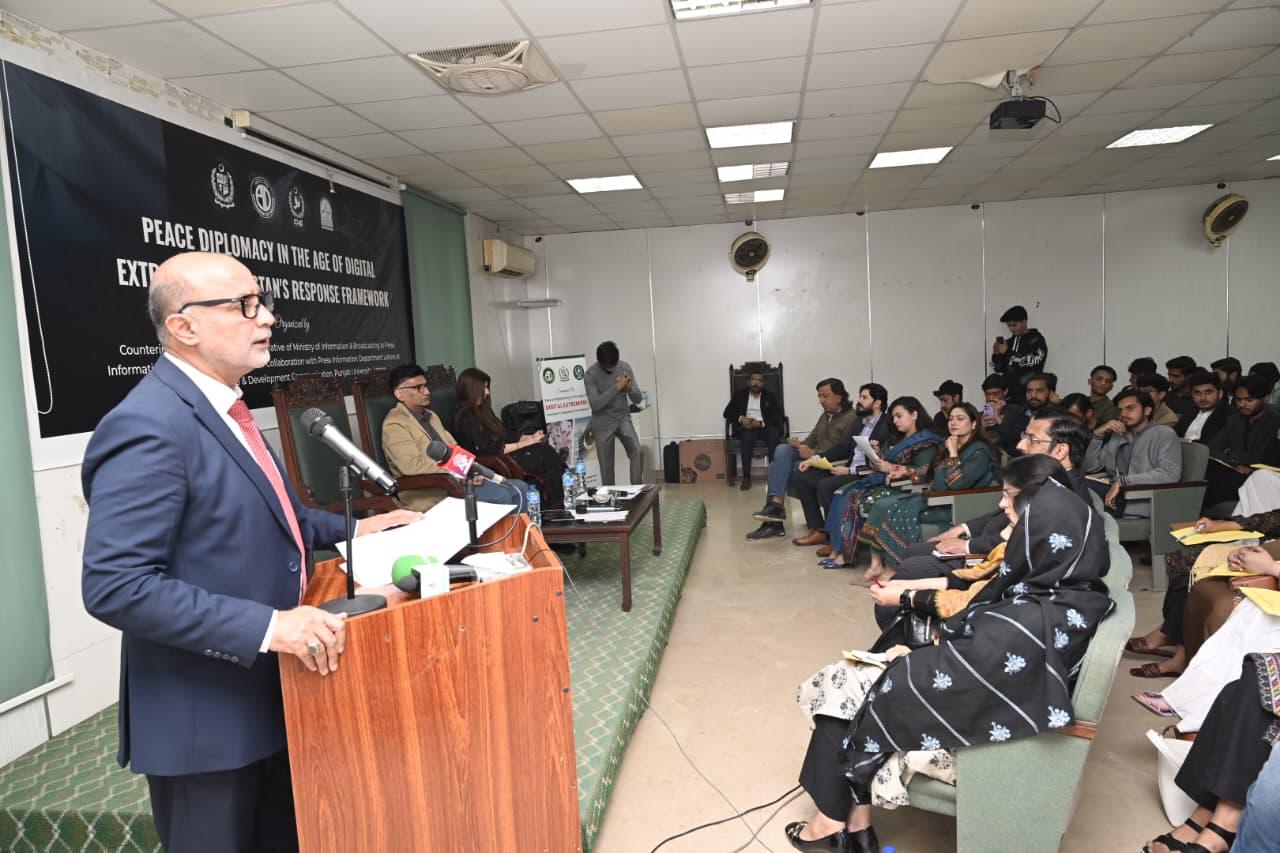
“Students can play a vital role in curbing the spread of false narratives and ensuring that truth prevails over propaganda,” said Shafqat Abbas, Director General of Pakistan Information Department (PID) Lahore, during the seminar titled “Peace Diplomacy in the Age of Digital Extremism.” The event, held at Punjab University’s Department of Media Development Communication, brought together students, academics, and media professionals to discuss emerging challenges in the digital information landscape.
Abbas highlighted how modern conflicts now begin in digital spaces rather than traditional battlefields. “Narratives are distorted, facts manipulated, and perceptions weaponized long before any physical conflict begins,” he noted, citing recent tensions between Pakistan and India as an example. Within minutes of the Pahalgam attack and during periods of heightened border tensions, coordinated digital propaganda campaigns were launched to shape international perceptions.
This rapid spread of misinformation presents unique challenges for Pakistan’s global messaging efforts. In environments where unverified content can circle the globe in minutes, Abbas stressed the importance of equipping youth with media literacy skills to ensure Pakistan’s perspective reaches international audiences in a timely and credible manner.
The growing dependence on social media platforms for news consumption further complicates the information ecosystem. Dr. Ayesha Ashfaq, Assistant Professor at the university, presented concerning statistics about Pakistan’s digital landscape. According to her research, 66.9 million Pakistanis use TikTok, 55.9 million use YouTube, and 49.4 million use Facebook – often relying on these platforms as primary news sources rather than traditional media outlets.
“Misinformation and disinformation have become more dangerous than conventional weapons in today’s world,” Dr. Ashfaq warned. Despite widespread smartphone adoption among young people, she identified a significant gap in digital literacy that leaves many vulnerable to manipulation and false information.
Senior journalist Muhammad Dilawar Chaudhry emphasized personal responsibility in the digital sphere, urging attendees to recognize that “extremism begins when people attempt to impose their ideas and beliefs on others by force.” He challenged students to verify information before sharing and to expand their knowledge base to resist propaganda efforts.
The seminar underscored the importance of educational institutions in fostering critical information consumption skills. Abbas called for universities and colleges to integrate digital awareness and ethical communication practices into their curricula, positioning media departments as frontline defenders against information warfare.
The event concluded with a robust question-and-answer session where students engaged directly with speakers, demonstrating the high level of interest in combating digital extremism among Pakistan’s youth. The organizers presented shields to the guest speakers in recognition of their contributions.
This seminar reflects growing concerns across Pakistan and globally about the weaponization of digital platforms. As social media continues to dominate information consumption patterns, particularly among younger demographics, education systems face increasing pressure to develop new approaches to media literacy that can keep pace with evolving technologies and tactics.
For a country like Pakistan, navigating complex regional relationships and international perceptions, developing a digitally literate population represents not just an educational priority but a matter of national security in an increasingly connected world.
Fact Checker
Verify the accuracy of this article using The Disinformation Commission analysis and real-time sources.

15 Comments
This is an important issue, as we’ve seen how digital propaganda can escalate tensions and even lead to real-world conflicts. Strengthening media literacy, especially among students, is a crucial step.
I agree, the ability to critically evaluate information online is becoming an essential life skill in the digital age. Glad to see this initiative in Pakistan focusing on this.
The point about narratives being distorted and facts manipulated online before any physical conflict is an important one. Cultivating media literacy is key to maintaining an informed citizenry.
Glad to see government officials and academics coming together to address the problem of digital misinformation. Equipping students with media literacy is a wise investment in the future.
Teaching students to think critically about the information they encounter online is a smart strategy. Equipping the next generation with media literacy skills will serve them well in the digital age.
Absolutely, this is a crucial life skill that should be incorporated into school curriculums. Kudos to the organizers for prioritizing this issue.
Promoting media literacy is a smart way to empower people and counter digital propaganda. By teaching critical thinking skills, we can help citizens discern truth from fiction and not be swayed by misleading narratives.
Absolutely, digital misinformation is a major threat that needs to be addressed. Equipping the younger generation with media literacy is a proactive solution.
The role of media literacy in countering digital propaganda is crucial. By empowering people to discern truth from fiction, we can build a more informed and resilient society.
It’s concerning how easily digital narratives can be manipulated and used as weapons these days. Developing media literacy to discern fact from fiction is a smart approach to combat this threat.
Yes, the weaponization of information is a serious challenge. Proactive education to build critical thinking skills is vital to maintain an informed and resilient public.
This initiative to promote media literacy in Pakistan is commendable. In an age of constant digital noise, the ability to discern truth from falsehood is an essential life skill.
I agree, media literacy is a crucial defense against the spread of digital propaganda. Kudos to the organizers for bringing together diverse stakeholders to address this challenge.
This seminar on media literacy and combating digital extremism is a timely and important initiative. Equipping students with critical thinking skills is essential in the modern information landscape.
Agreed, this is a vital issue that deserves more attention. Kudos to the organizers for bringing together experts to address this challenge.