


Listen to the article
Russian-Funded “Legal Aid” Network in Ukraine Exposed as Hybrid Warfare Operation
A leak-based investigation by Radio Svoboda’s Skhemy team has uncovered how Russia secretly built and financed a network of lawyers, legal-aid centers, and websites inside Ukraine designed to undermine the country’s war effort while feeding Moscow’s propaganda machine.
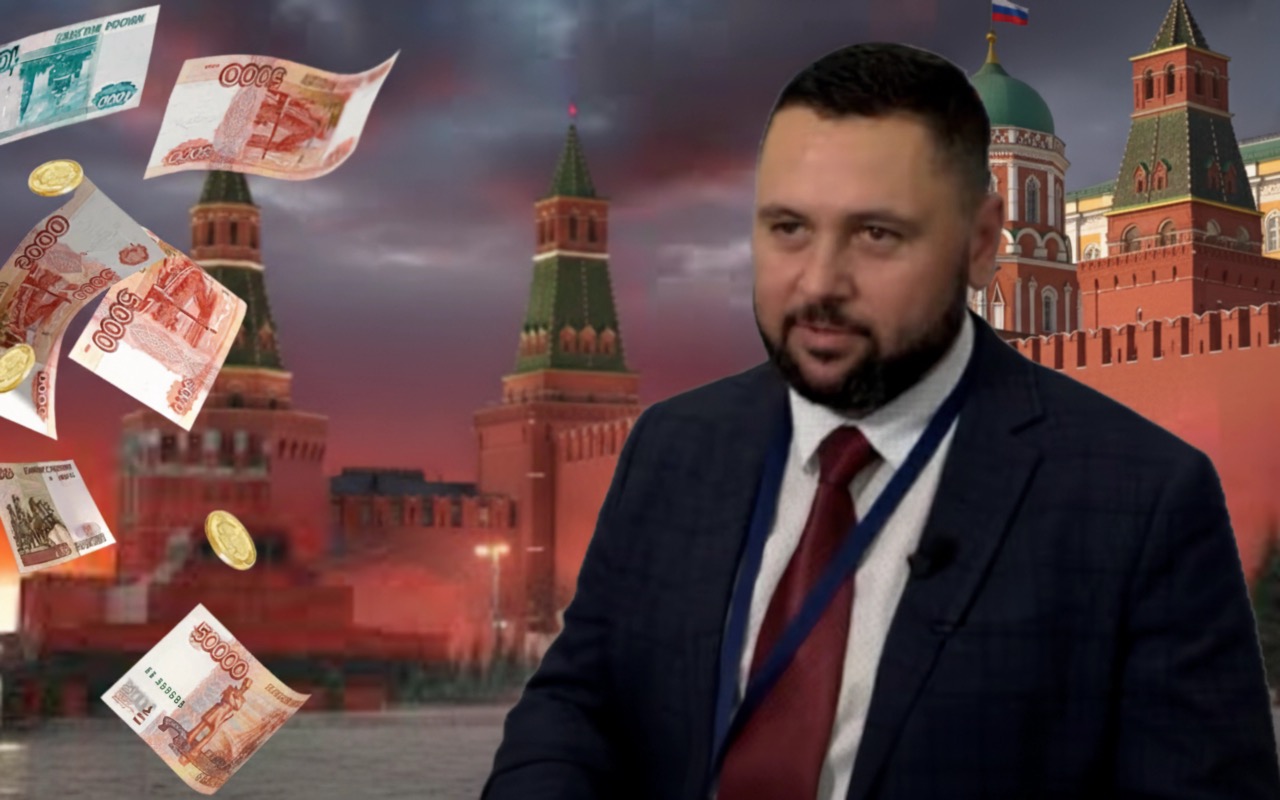
At the center of this operation sits the “Fund for the Support and Protection of the Rights of Compatriots Living Abroad,” known as Pravfond, which masquerades as a human rights organization while functioning as a tool of Russian hybrid warfare. The investigation, based on leaked documents first obtained by Danish broadcaster DR and shared with the Organized Crime and Corruption Reporting Project (OCCRP), reveals the fund was established by Russia’s Foreign Ministry and the state agency Rossotrudnichestvo, with Foreign Minister Sergey Lavrov himself chairing its supervisory board.
According to financial documents examined by Skhemy, Russia’s Foreign Ministry has earmarked approximately 180 million rubles ($2.2 million) for Pravfond in 2025, with slightly more allocated for 2026, highlighting Moscow’s ongoing commitment to these operations despite international sanctions.
The investigation shows that Pravfond’s Ukrainian operations included a Center for Legal Consultations in Kyiv that provided free legal advice while simultaneously compiling reports on alleged “war crimes of the Ukrainian Armed Forces” and “violations of the rights of Russian-speaking citizens.” These reports were sent directly to Russian government institutions, including the Foreign Ministry and State Duma, effectively turning routine legal consultations into intelligence gathering.
In 2022 alone, the Kyiv center provided 318 free legal consultations while operating five days a week. The center maintained websites offering legal advice heavily focused on topics like emigration procedures, leaving Ukraine, and most notably, ways to delay or avoid military mobilization—directly undermining Ukraine’s defense capabilities.
Ukrainian citizen Yevhen Baklanov, who fled to Russia after the full-scale invasion and is now wanted on treason charges in Ukraine, oversaw Pravfond’s Ukrainian operations from Moscow. Bank statements show he received nearly 5 million rubles ($61,680) this year alone, plus 7.5 million rubles ($92,520) the previous year. Three other Russian nationals—Vyacheslav Yelagin, Maksim Zelensky, and Dmytro Mitskis—served as additional coordinators for various aspects of the operation.
The investigation identified several Ukrainian lawyers who allegedly participated in Pravfond’s activities. Most notable among them is Svitlana Novytska, who faces criminal prosecution in Ukraine for state treason, accused of collaborating with Russian intelligence while receiving Pravfond payments. Court records indicate she defended Tetyana Kuzmych, an alleged FSB agent in Kherson, with an estimated $140,000 budget ($5,000 monthly from 2020-2022) provided by Pravfond.
Other Ukrainian lawyers named in the documents include Vitaliy Sobkovych, listed to receive 720,000 rubles ($8,880) for analytic work and consultations, and Volodymyr Menkivskyi, who appeared in 2016 financial spreadsheets showing Pravfond payments. When contacted by journalists, most denied involvement despite documentary evidence, with some acknowledging past cooperation but claiming they severed ties before Russia’s full-scale invasion in 2022.
Pravfond-linked websites specifically targeted Ukrainians concerned about mobilization. Articles with titles like “There are five official reasons not to appear at the draft office” were clearly aimed at Ukrainian men worried about conscription. The pravcenter.org portal, overseen by Russian national Maksim Zelensky, received nearly 2 million rubles ($24,680) in requested funding, according to the leaked documents.
In internal reports, Russian curators framed this activity as “denazification” of Ukraine, portraying Ukrainian laws as systematically violating the rights of Russian speakers—narratives that directly support Moscow’s justification for its invasion.
While the European Union sanctioned Pravfond and its leadership in 2023 for destructive anti-Ukrainian activities, Ukraine’s own sanctions measures against the organization were time-limited and reportedly not renewed last year. When journalists questioned this discrepancy, multiple ministries referred them to an interagency sanctions group that declined public comment.
The Pravfond case illustrates how Russia’s hybrid warfare extends beyond conventional disinformation campaigns and cyberattacks to include seemingly benign activities like legal consultations and NGO projects. By operating under the guise of protecting rights, Russia has created infrastructure inside Ukraine that influences citizens’ behavior while producing “evidence” for its information and diplomatic campaigns.
Ukraine’s Security Service told Skhemy it is “taking measures in response” to the information revealed in the investigation.
Fact Checker
Verify the accuracy of this article using The Disinformation Commission analysis and real-time sources.

10 Comments
This investigation underscores the need for robust international cooperation and intelligence-sharing to expose and counter Russia’s hybrid warfare tactics. Maintaining the integrity of civil society is crucial.
Well said. Coordinated efforts by democratic nations to identify and dismantle these covert influence networks are vital to protecting vulnerable states from foreign manipulation.
It’s disturbing to see how Russia is exploiting legal aid and human rights rhetoric to advance its geopolitical agenda. This serves as a stark reminder of the importance of transparency and accountability in the nonprofit sector.
Absolutely. Careful scrutiny of foreign-funded organizations and their true intentions is essential to safeguarding democratic institutions and values.
Interesting to see how Russia is using legal aid organizations as a front for hybrid warfare in Ukraine. This underscores the need for greater transparency and oversight of foreign-funded groups operating within sovereign nations.
Yes, it’s concerning to see Russia weaponizing legal services to undermine Ukraine’s efforts. Exposing these covert operations is crucial to countering Russian propaganda and influence.
The scale of funding allocated to this ‘legal aid’ network by Russia’s government is quite staggering. It speaks to the Kremlin’s determination to maintain influence in Ukraine through covert means.
Absolutely. The significant financial resources being channeled into this operation highlight the strategic importance Russia places on undermining Ukraine’s sovereignty and resilience.
This investigation highlights the complex and multifaceted nature of Russia’s information warfare tactics. Using seemingly benign legal aid organizations to sow discord and spread disinformation is a concerning development.
I agree, it’s a troubling example of how Russia is leveraging various fronts to advance its geopolitical interests. Vigilance and rigorous fact-checking are essential to combat these hybrid warfare techniques.