


Listen to the article
European broadcasters are grappling with an unprecedented crisis as the 2026 Eurovision Song Contest begins in Vienna this week, with five countries absent from the competition amid escalating controversy over Israel’s participation and voting practices.
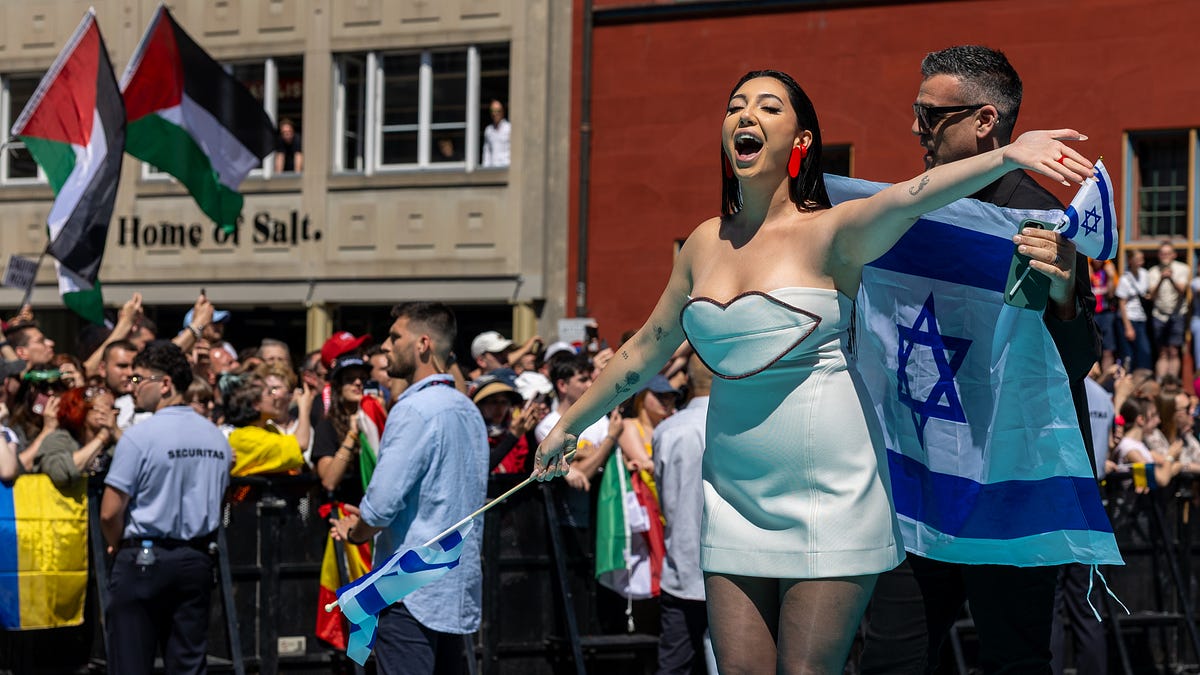
The turquoise carpet event today marks the official start of Eurovision Week, but the celebratory atmosphere has been dampened by the withdrawal of Spain, Ireland, Slovenia, Iceland, and the Netherlands – a situation that reflects deeper tensions within Europe’s premier music competition.
At the heart of the dispute lies concern over politically-motivated voting campaigns that have influenced recent contest results, particularly those supporting Israel’s entries. According to Eurovision News Spotlight, while most promotional campaigns are funded by artists or broadcasters, investigations found Israel’s advertisements were backed by government agencies and explicitly encouraged voting as a show of political support rather than appreciation for the music.
“There is a clear difference between advertising a song and mobilizing political support,” said one broadcaster representative who requested anonymity. “When the contest becomes a referendum on geopolitical issues rather than a music competition, we lose its essence.”
The controversy intensified following last year’s contest, when Israel topped the public vote despite what many critics described as a mediocre entry. The EBU’s investigation found no technical rule violations, but 15 national broadcasters demanded reforms to the voting system. The resulting compromise – reducing the maximum votes per person from 20 to 10 and introducing non-binding guidelines against government-sponsored campaigns – failed to satisfy the concerns of countries that ultimately withdrew.
Germany and Austria reportedly led opposition to more substantial reforms, with Austrian foreign ministry official Sepp Schellhorn describing the objections as “dumb and pointless.” Austrian Chancellor Karl Nehammer cited his country’s history as reason for supporting Israel’s continued participation.
The situation has forced a reckoning within the broadcasting community about Eurovision’s core identity. The contest, which typically draws more global viewers than the Super Bowl, Oscars and Grammys combined, has long positioned itself as non-political despite always existing in a political context.
Many trace the current crisis back to 2022, when Russia was excluded following its invasion of Ukraine. While that decision was broadly supported, it created a precedent that has complicated discussions about Israel’s participation amid its military operations in Gaza and Lebanon.
Eurovision analysts point to a disturbing pattern in recent contests where politically motivated voting campaigns have included Times Square billboards encouraging Americans to vote online for Israel, despite the show not broadcasting in the United States. The global voting system allows anyone with internet access to participate, regardless of whether they’ve watched the performances.
Market observers note that the fragmentation threatens Eurovision’s commercial viability. The contest generates substantial revenue through broadcast rights, sponsorships, and tourism for host cities. If current divisions persist, industry experts warn that competing formats could gain traction, such as Russia’s revived Intervision Song Contest, which has already attracted participation from Serbia and, surprisingly, the United States.
“What’s happening to Eurovision reflects broader European tensions around the Middle East conflict,” said media analyst Maria Kowalski. “Broadcasting organizations are caught between maintaining a cultural institution and responding to genuine concerns about fairness and neutrality.”
The European Broadcasting Union faces a delicate balancing act this week as it attempts to showcase musical talent while addressing the structural issues threatening the contest’s future. For many longtime fans, this year’s event represents a turning point that will determine whether Eurovision can reclaim its position as a celebration of European unity through music or whether its divisions signal a permanent fracture in one of Europe’s most enduring cultural institutions.
As contestants prepare for the semi-finals on Tuesday and Thursday ahead of Saturday’s grand finale, the question remains whether the competition can overcome its current controversies and return to its musical roots.
Fact Checker
Verify the accuracy of this article using The Disinformation Commission analysis and real-time sources.

18 Comments
Accusations of government-backed voting campaigns are troubling. Eurovision needs to address these concerns transparently to preserve the competition’s credibility.
Agreed. The organizers should investigate the claims thoroughly and implement reforms to ensure a level playing field for all participants.
This is a complex issue with valid concerns on both sides. While political tensions are understandable, Eurovision should strive to be a unifying cultural event, not a battleground for national agendas.
Well said. Maintaining the integrity and spirit of the competition should be the top priority for the organizers.
The Eurovision controversy highlights the fine line between celebrating music and enabling political posturing. An artistic competition should remain focused on the craft, not outside agendas.
I agree, the political influence is concerning. Eurovision should maintain its integrity as a cultural celebration, not a platform for propaganda.
This situation reflects the broader challenges of balancing politics and culture in major international events. Eurovision should strive to be a unifying celebration, not a battleground for national agendas.
Well said. Maintaining the integrity of the competition should be the top priority, not enabling political point-scoring.
While I understand the concerns over voting practices, I’m disappointed to see countries withdraw from Eurovision. This undermines the spirit of the event and deprives fans of the full cultural experience.
I agree. Boycotting the contest seems like a drastic measure that could backfire and further politicize the event.
The allegations of government-backed voting campaigns are troubling and need to be thoroughly investigated. However, Eurovision should remain a platform for cultural exchange, not political maneuvering.
Absolutely. The organizers must find a way to balance addressing the concerns while preserving the unifying spirit of the event.
It’s disappointing to see countries boycotting over this issue. While political tensions are understandable, Eurovision is meant to bring people together through shared love of music.
You make a good point. Withdrawing from the contest seems like an overreaction that undermines the spirit of Eurovision.
The Eurovision boycott is disappointing, as it deprives fans of the full cultural experience. While the voting concerns are valid, withdrawing from the contest seems like an overreaction that undermines the event’s purpose.
I agree. The organizers should address the issues transparently and implement reforms to ensure a fair competition, rather than allowing political tensions to overshadow the celebration of music.
The allegations of government-backed voting campaigns are concerning and need to be addressed. However, Eurovision should remain a celebration of music, not a platform for political maneuvering.
Absolutely. The organizers must find a way to ensure a fair and transparent voting process that preserves the cultural essence of Eurovision.