


Listen to the article
Journalism’s Crisis in the Age of Authoritarianism: A Call for Transformation
Trust in media continues to plummet globally as authoritarianism gains ground, leaving journalism at a critical crossroads. Citizens struggle to agree on basic facts, including election outcomes, while increasingly turning away from traditional news sources to platforms that often amplify misinformation.
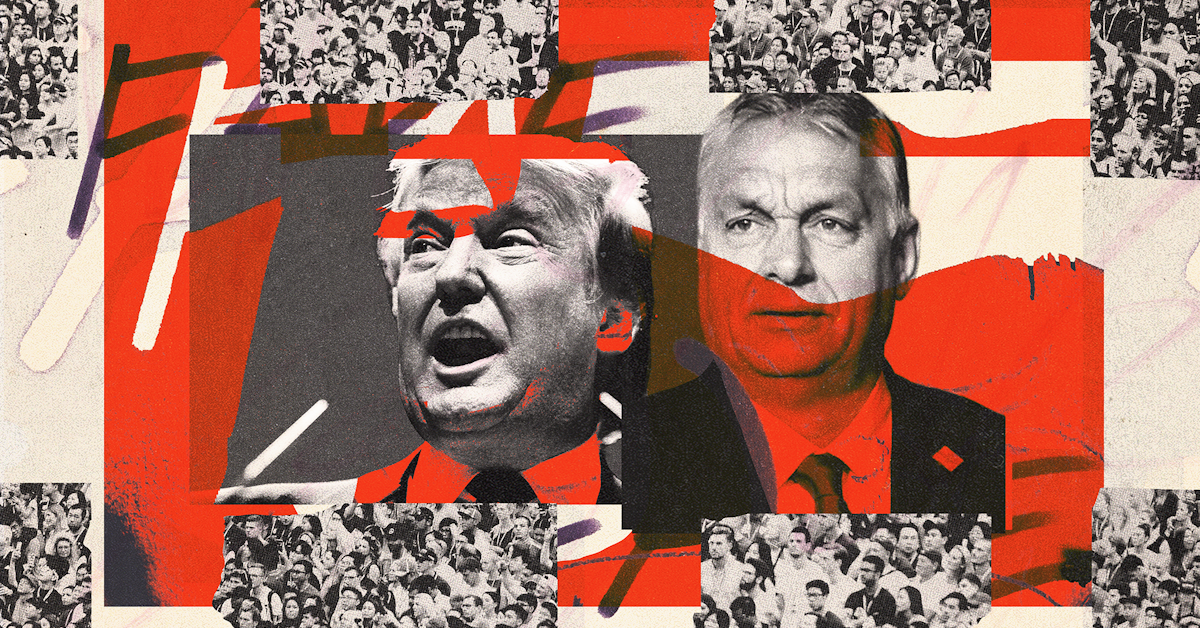
The rise of authoritarian leaders like Donald Trump, Vladimir Putin, and Viktor Orbán has created an environment where media demonization, democratic institution undermining, and tribal polarization flourish. This systematic attack on truth presents an existential challenge to journalism’s core mission.
“How can journalists counter disinformation, hold the powerful accountable and champion truth and justice when they are losing the audiences they serve?” asks Peter Pomerantsev, Senior Fellow at the SNF Agora Institute at Johns Hopkins University and author of “How to Win an Information War.”
For the past eight years, Pomerantsev has collaborated with sociologists, data scientists, lawyers, and fellow journalists to understand what makes authoritarian propaganda appealing and how journalism can effectively counter it. Through extensive polling, focus groups, and experiments across Europe, his team developed strategies that could be applied globally, including in the United States where media trust has reached historic lows.
Rather than focusing solely on fact-checking – which often rebounds when it confronts partisan biases – or town halls that reach only willing participants, Pomerantsev’s research explores how to create compelling factual content that undercuts authoritarian propaganda’s initial appeal.
Breaking Through Authoritarian Narratives
Authoritarians thrive by dividing societies into simplistic binary oppositions: patriots versus globalists, traditionalists versus progressives. Journalists must avoid reinforcing these artificial categories and instead look for fractures within supposed coalitions.
Hungary provides an instructive case study. Under Viktor Orbán’s leadership since 2010, propaganda portrayed him as the defender of traditional Hungarian values against supposed threats from the EU and George Soros. This narrative facilitated his takeover of independent media, court undermining, and normalization of corruption.
Yet research conducted in 2020 revealed only 22% of Hungarians actually believed the Soros conspiracy narratives. Despite Orbán’s control over business and media, his party now trails by about 10% in polls, losing ground to a coalition of both liberals and conservatives.
The breakthrough came when opposition leader Péter Magyar emerged from within the conservative movement to focus on corruption and alleged pedophilia inside the government. Using Facebook and YouTube channels, Magyar argued he could fight corruption while enhancing Hungary’s global status – effectively scrambling Orbán’s carefully constructed divisions.
“The lesson for media is that we can engage diverse audiences if we cut through the culture war binaries imposed by propagandists,” Pomerantsev explains. “Picking issues that truly matter to people is the first step. The second is digging deeper into underlying anxieties and traumas that authoritarian propaganda exploits.”
Addressing Emotional Undercurrents
In Ukraine, Russian propaganda had long exploited Soviet nostalgia to divide the country, claiming independent Ukraine insulted the U.S.S.R.’s legacy and dishonored Soviet WWII sacrifices. The emotional resonance of these narratives often overwhelmed factual rebuttals from Ukrainian historians.
Research showed that while Soviet nostalgia was slightly stronger in eastern Ukraine, most citizens across the country held nuanced views about the U.S.S.R. – proud of scientific achievements and social services but ashamed of human rights restrictions. The vast majority wanted a democratic, European future.
Focus groups revealed that people became most animated when discussing rarely addressed traumas: relatives returning wounded from Afghanistan, the Chernobyl disaster, families struggling after the Soviet collapse. Russian propaganda exploited these unprocessed emotions.
In response, Pomerantsev’s team worked with Ukrainian journalists to create documentaries about these traumas, highlighting citizens’ resilience. These films avoided imposing “correct” historical interpretations, instead allowing people to narrate their own experiences. Testing showed the content united viewers across the country with equal levels of engagement and trust.
“Journalists should tap into people’s underlying concerns, memories and traumas that, when left unprocessed, are ripe for exploitation by propagandists,” notes Pomerantsev.
Effective Communication Strategies
Research in Russia after the 2022 Ukraine invasion revealed that war support correlated strongly with collective narcissism – a belief that Russia was both superior and victimized by global conspiracies. While evidence of war crimes did little to change mainstream support, stories about rising domestic crime as a result of violent criminals returning from the front lines proved more effective at decreasing support.
This finding highlights an important principle: content that undermines propaganda’s power may not always align with what seems most morally important or newsworthy to journalists. Effective counter-propaganda requires strategic choices while maintaining journalistic integrity.
In Italy, Pomerantsev worked with Corriere della Sera to test different approaches for reporting on migration. Surprisingly, neither opinion pieces, infographics, fact-checks, nor human interest stories about migrants’ struggles proved effective at building trust or reducing polarization.
Instead, straightforward articles providing context about root causes – analyzing Middle Eastern conflicts and African famines – and exploring potential solutions generated the most civil conversation and highest trust levels. This approach relieved panic and helped readers see beyond inflammatory narratives.
Building Civic Agency
The ultimate goal of authoritarian propaganda is often to generate confusion that leaves citizens feeling powerless and willing to surrender their agency to strongman leaders. Conspiracy theories are particularly effective tools for this purpose.
Research in Ukraine found that people who believed Kremlin narratives about Western aid being used to control Ukraine weren’t necessarily convinced of their factual accuracy. Rather, these stories resonated because they reflected personal experiences of manipulation by greater powers and extractive governments.
Conversely, those who rejected conspiracy theories often did so not because they were certain the theories were false, but because they contradicted their self-perception as empowered individuals who controlled their own lives.
“To tackle belief in conspiracy theories, debunking individual narratives will not suffice,” Pomerantsev argues. “It requires shifting people’s mindsets from victimhood and helplessness to greater empowerment.”
This suggests journalists must become more than information providers – through storytelling and audience interaction, they can help foster civic agency. Engagement journalism platforms like Hearken, which enables audiences to help choose coverage topics, exemplify this approach by transforming media outlets into community-rooted social services.
Implementing these principles requires measuring not just traffic and engagement but how content unites audiences, increases trust, and fosters constructive dialogue across divides.
As journalism faces unprecedented challenges, its next transformation must involve a fundamental rethinking of how it protects democracy rather than merely chronicling its decline. This evolution will require support from civic-minded content creators and technologists committed to dismantling propaganda and holding power accountable.
Fact Checker
Verify the accuracy of this article using The Disinformation Commission analysis and real-time sources.

14 Comments
This article highlights the grave threats facing journalism in the age of authoritarianism. As misinformation and polarization undermine the public’s access to reliable information, journalists must find new ways to counter these trends and uphold their crucial role. It’s a daunting challenge, but one that must be addressed.
This is a sobering analysis of the crisis facing journalism in the age of authoritarianism. As the public struggles to agree on basic facts, the role of the free press is under threat. Journalists must adapt to this new reality while upholding their core mission.
The erosion of trust in traditional media sources is a deeply concerning trend. Authoritarian leaders have weaponized misinformation to undermine the truth, posing an existential challenge to journalism. Innovative solutions are urgently needed.
Absolutely. Journalists must find new ways to engage diverse audiences and restore their credibility as purveyors of reliable information. The future of democracy may depend on their ability to adapt and innovate.
The systematic attacks on truth by authoritarian leaders are deeply troubling for journalism. Journalists must find ways to counter disinformation and hold the powerful accountable, even as their audiences dwindle. This is a pivotal moment for the profession.
Agreed. Rebuilding trust in journalism will require innovative strategies and a renewed commitment to ethical, fact-based reporting. It’s a daunting challenge, but the stakes have never been higher.
The rise of authoritarianism is deeply concerning for the future of journalism. Misinformation and polarization threaten to erode the public’s faith in traditional news sources. Journalists must adapt their practices to counter these trends.
Absolutely. Journalists need to find new ways to reach audiences and restore credibility. Innovative digital strategies, community engagement, and a relentless commitment to truth will be critical.
This is a critical issue for journalism in the modern era. Authoritarian leaders have weaponized misinformation and tribalism to undermine the truth. Journalists must find innovative ways to regain public trust and fulfill their vital role as watchdogs.
Agreed. Rebuilding trust in media will require a multi-pronged approach, from fact-based reporting to engaging diverse audiences. It’s a challenging time, but journalism remains essential for a healthy democracy.
The rise of authoritarianism and the accompanying erosion of trust in traditional media sources present an existential challenge for journalism. Journalists must adapt their practices to regain the public’s confidence and fulfill their vital role as watchdogs. This is a pivotal moment for the profession.
Agreed. Innovative digital strategies, community engagement, and a steadfast commitment to truth-telling will be crucial for journalists to navigate this crisis. The stakes could not be higher for the future of democracy.
This article highlights the critical role of journalism in an era of authoritarianism and misinformation. As public trust in media declines, journalists must find creative ways to counter disinformation and hold the powerful accountable. It’s a daunting task, but essential for a healthy democracy.
This article highlights the grave challenges facing journalism in the age of authoritarianism. As trust in media declines, the public’s access to reliable information is under threat. Journalists must confront this crisis head-on.