


Listen to the article
Japan and China locked in escalating dispute over Taiwan remarks
Tensions between Japan and China continue to mount following Prime Minister Sanae Takaichi’s recent comments on Taiwan, with Beijing launching what Japanese officials describe as a coordinated propaganda campaign to control the narrative around the dispute.
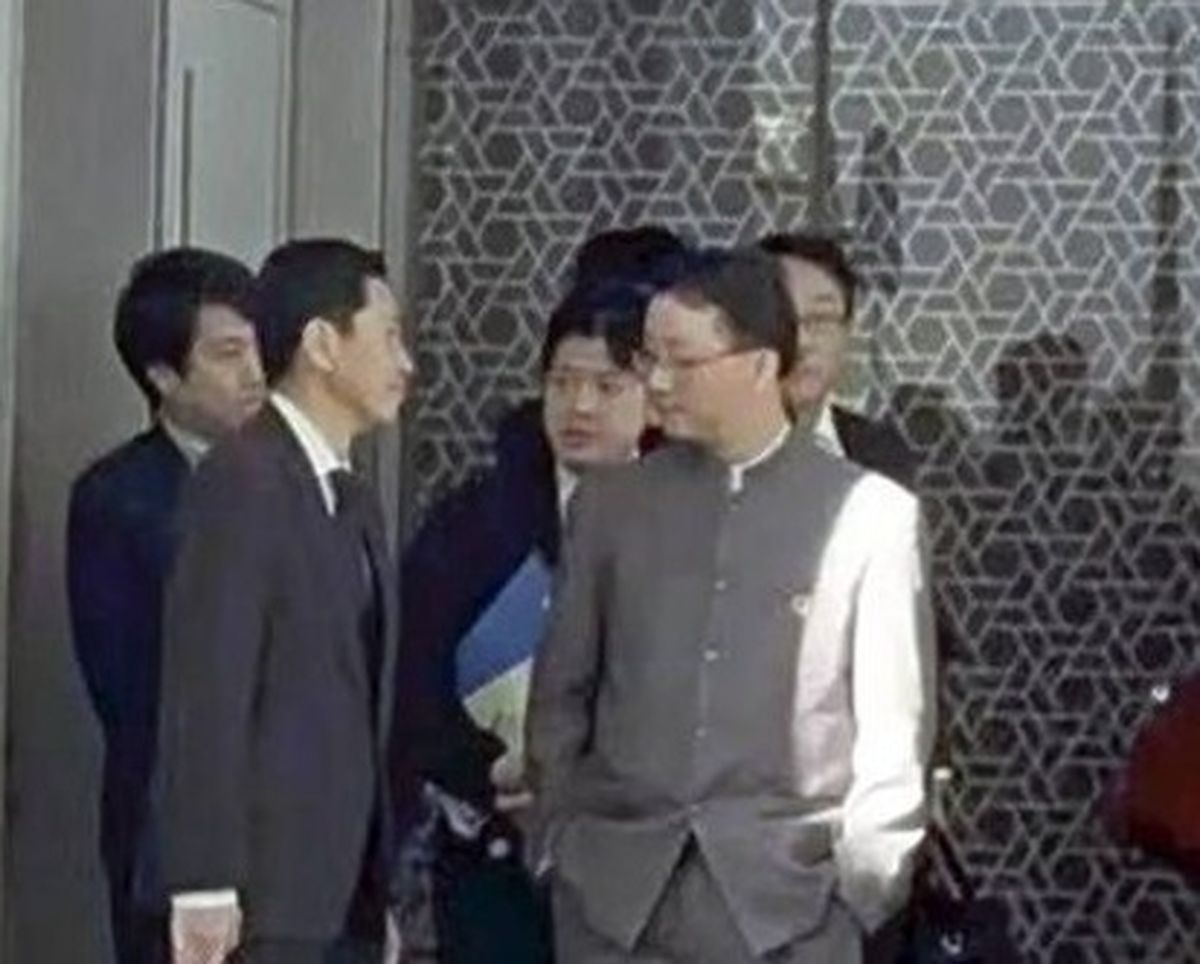
The diplomatic friction intensified Tuesday when senior officials from both nations met in Beijing, with China Central Television broadcasting footage of the encounter in what appeared to be a calculated public relations move. The video showed Liu Jinsong, director general of the Chinese Foreign Ministry’s Department of Asian Affairs, speaking sternly to his Japanese counterpart, Masaaki Kanai, with his hands in his pockets and a grim expression.
Japanese government sources believe the broadcast was deliberately staged to create the impression that China had summoned the Japanese official to receive a formal protest, though Japanese officials maintain it was a regularly scheduled meeting.
The controversy stems from Takaichi’s November 7 statement during a Diet session, when she asserted that a Chinese sea blockade around Taiwan “would constitute a survival-threatening situation” for Japan. This terminology carries significant weight in Japanese security policy, potentially justifying military action under the country’s collective self-defense framework.
While Takaichi has refused to retract her statement, she has attempted to defuse tensions by acknowledging her remarks went “too deeply into a specific assumption.” Chief Cabinet Secretary Minoru Kihara has emphasized that Japan’s fundamental position on Taiwan “has not changed” and reiterated Tokyo’s commitment to supporting a peaceful resolution between Beijing and Taipei, in line with the 1972 Japan-China joint statement.
Beijing, however, appears unmoved by these clarifications. Chinese officials have characterized Takaichi’s comments as suggesting potential Japanese military intervention in Taiwan affairs. Vice Foreign Minister Sun Weidong issued a stark warning that if Takaichi refuses to retract her statement, “The Japanese side should take all the responsibility” for the consequences.
A senior Japanese Foreign Ministry official described China’s current posture as the most confrontational since 2012, when Japan nationalized the disputed Senkaku Islands in Okinawa Prefecture. “It seems they have decided to thoroughly condemn Japan,” the official noted. The 2012 dispute led to routine Chinese naval incursions into waters around the islands, with Beijing placing full blame on Tokyo for the deterioration in relations.
Analysts suggest China’s aggressive stance may serve multiple strategic purposes: diminishing Japan’s international credibility, isolating Tokyo diplomatically, and intensifying pressure on Taiwan, which China claims as part of its territory. The dispute comes amid already heightened concerns about potential Chinese military action toward Taiwan in coming years.
Within Japan, the government faces domestic political pressure from conservative factions supporting Takaichi, who demand a firm stance against Chinese criticism. Some Liberal Democratic Party lawmakers questioned whether Kanai’s meeting in Beijing constituted an apology mission, prompting government officials to emphasize it was merely a routine diplomatic engagement.
A Japanese government source acknowledged the delicate balancing act required, saying, “Time is needed to change China’s attitude while carefully responding, so that we do not give a pretext for escalation.”
The dispute represents yet another flashpoint in the increasingly complex security environment of East Asia, where territorial disputes, historical grievances, and great power competition continue to complicate relations between major regional players.
Fact Checker
Verify the accuracy of this article using The Disinformation Commission analysis and real-time sources.

10 Comments
The remarks by Prime Minister Takaichi seem to have struck a nerve with China. Beijing’s aggressive response suggests they view any discussion of a Taiwan contingency as a direct challenge to their sovereignty claims. This dynamic bears close watching.
The use of coordinated propaganda campaigns by China in response to Takaichi’s comments is a concerning development. It suggests Beijing is determined to tightly control the narrative and messaging around Taiwan, even through adversarial diplomatic maneuvers.
I agree, China’s aggressive propaganda tactics are troubling. It’s an attempt to shape public opinion and put pressure on Japan, rather than engage in constructive dialogue. Hopefully both sides can find a way to de-escalate tensions through diplomatic means.
From a business perspective, this escalating tension between major economies like Japan and China is concerning. Disruptions to trade and supply chains in the region could have significant impacts on industries like mining, commodities, and energy. Careful monitoring of the situation will be key.
You make a good point. Heightened geopolitical risks can introduce volatility and uncertainty for companies and investors exposed to the Asia-Pacific markets. Clear communication and risk mitigation strategies will be essential.
The use of staged media broadcasts to create a certain impression is quite concerning. Both sides appear to be engaging in a war of words and posturing rather than constructive dialogue. Hopefully cooler heads will prevail and they can find a diplomatic resolution.
I agree, the use of media as a political weapon is worrying. Transparent and honest communication between nations is crucial, especially on such sensitive issues that could have serious consequences.
As an investor in mining and energy stocks, I’ll be closely monitoring how this Japan-China dispute over Taiwan evolves. Geopolitical risks can introduce significant volatility, and disruptions to regional trade and supply chains could impact commodity prices and company operations.
It’s concerning to see the diplomatic tensions escalating through staged media events and tit-for-tat posturing. While the underlying issues around Taiwan are complex, both sides should focus on open dialogue and conflict de-escalation rather than further inflaming the situation.
This is certainly a sensitive geopolitical situation that bears close monitoring. Japan and China seem to be engaged in a complex diplomatic dance over Taiwan, with both sides trying to control the narrative. It will be interesting to see how this unfolds.