


Listen to the article
Israeli General Reveals Bibas Family Abducted by Faction Outside Hamas, Contradicting Earlier Claims
A senior Israeli military official has disclosed that the Bibas family, whose captivity became a prominent symbol in the Israel-Gaza conflict, was not abducted by Hamas as previously claimed, but by a separate Palestinian militant group.
Major-General Nitzan Alon, the outgoing head of Israel’s Hostages and Missing Persons Headquarters, revealed in an interview with Israeli newspaper Yedioth Ahronoth that the family was actually seized by the Mujahideen Brigades, a smaller faction unaffiliated with Hamas.
“Take the Bibas family, for example. We knew who abducted them,” Alon stated in the interview. “We informed Hamas who the kidnappers were so they could locate the bodies and return them.”
This revelation directly contradicts previous Israeli government claims that Hamas was responsible for the family’s captivity and death. The Israeli government had earlier accused Hamas of killing the family “by hand,” a narrative that was widely circulated in both domestic and international media.
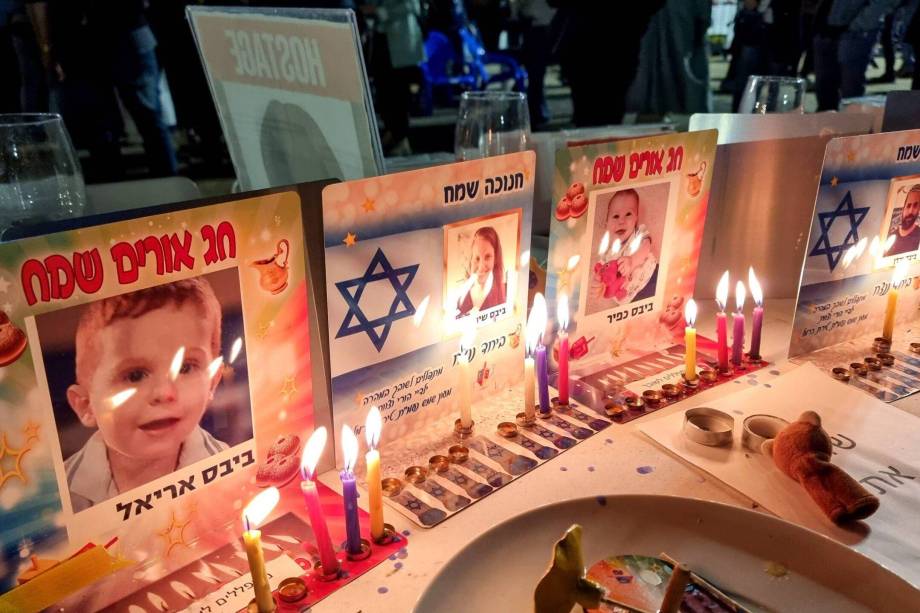
Shiri Bibas, 32, and her two young sons—four-year-old Ariel and nine-month-old Kfir—died while in captivity. The infant Kfir was the youngest hostage taken during the October 7 attacks. The family’s father, Yarden Bibas, was also held captive. The bodies of Shiri and her sons, along with Yarden, were returned during a prisoner exchange in February.
Hamas had consistently maintained that the Bibas family perished in Israeli air strikes rather than at the hands of their captors, a claim that now gains credibility in light of Alon’s statement. No forensic evidence has been publicly presented to substantiate the Israeli government’s earlier accusations against Hamas regarding the family’s deaths.
The Bibas case gained significant attention internationally, with images of the red-haired infant Kfir and his brother becoming powerful symbols in Israel’s public messaging about the conflict. Their story featured prominently in government communications and media coverage, helping to rally public support for the military campaign in Gaza.
This disclosure comes amid growing international concern about the humanitarian situation in Gaza, where more than 70,000 Palestinians have reportedly been killed since October 2023. According to health authorities in Gaza, the majority of casualties have been women and children. The United Nations and numerous humanitarian organizations have repeatedly raised alarms about the scale of civilian suffering.
The hostage situation has been a central component of the ongoing conflict. Of the 251 people taken captive during the October 7 attacks, 168 have been returned alive, primarily through negotiated exchanges or during temporary ceasefires. Another 87 captives were either killed while being held or returned deceased, with reports suggesting some died in Israeli military operations.
The prisoner exchanges have resulted in the release of 3,985 Palestinians from Israeli detention facilities. Currently, approximately 9,250 Palestinians remain in Israeli custody, including thousands detained since October. Human rights organizations note that nearly half of these detainees are being held under administrative detention orders, which allow imprisonment without formal charges or trials—a practice that has drawn criticism from international human rights monitors.
Major-General Alon’s disclosure has reignited debate about the accuracy of information being presented to the Israeli public and international community regarding the conflict. Critics argue that the misattribution of responsibility in the Bibas case raises questions about other narratives that have been used to justify military operations.
The revelation comes at a sensitive time as regional mediators continue efforts to broker a more comprehensive ceasefire and hostage release agreement, with the fate of remaining captives still a critical point of contention in negotiations.
Fact Checker
Verify the accuracy of this article using The Disinformation Commission analysis and real-time sources.

10 Comments
This new information from the Israeli general seems to contradict the official narrative. It will be important to see how this development is received and whether it leads to a re-evaluation of the government’s position on the Bibas family incident.
This development underscores the complexity of the Israel-Gaza conflict and the importance of verifying information, especially when it relates to high-profile incidents. The public deserves an accurate understanding of the facts.
Absolutely. Contradictory accounts like this can erode public trust, so it’s critical that authorities provide clear and consistent information to the best of their knowledge.
This is a concerning revelation that raises questions about the reliability of official statements on the Israel-Gaza conflict. Transparent and accountable investigations are crucial to building public trust.
Interesting to see this new information come to light about the Bibas family abduction. It raises questions about the official narrative and the reliability of government claims in such politically charged situations.
Yes, this revelation by the Israeli military official casts doubt on the previous account. It highlights the need for careful investigation and transparency when dealing with complex security issues.
The discrepancy between the government’s claims and the military official’s account is troubling. It underscores the importance of independent, impartial reporting to uncover the truth in such complex, politically charged situations.
Absolutely. Maintaining credibility and public confidence requires authorities to acknowledge mistakes and provide accurate, up-to-date information to the best of their knowledge.
The disclosure by the Israeli general seems to challenge the government’s initial narrative. It will be interesting to see how this new information is received and what implications it may have for the overall conflict dynamics.
Indeed, this development could have significant political ramifications. It highlights the need for rigorous fact-checking and open dialogue, even on sensitive security matters.