


Listen to the article
British Broadcaster Interviews “Mr Explosive,” Creator of Pro-Iran AI Propaganda
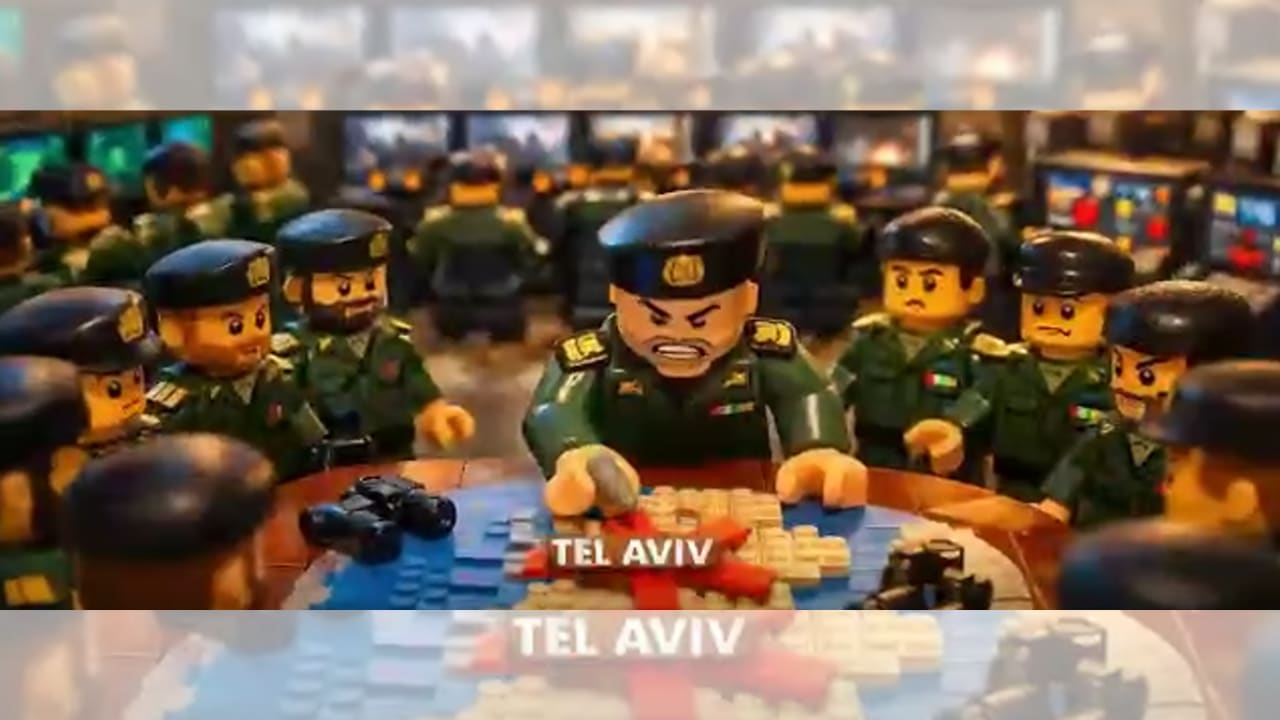
In a revealing interview published Saturday, the BBC spoke with the enigmatic figure behind a growing stream of pro-Iranian propaganda videos that have been circulating across social media platforms. The individual, who calls himself “Mr Explosive,” creates AI-generated propaganda videos featuring Lego figures that promote pro-Iran narratives.
During the interview, “Mr Explosive,” who represents an entity called Explosive Media, admitted for the first time that the Iranian regime is a “customer” of his company. This acknowledgment came only after persistent questioning by BBC reporters, as he had previously claimed in other interviews to be “totally independent” with no connection to the Iranian government.
The interview setting was highly theatrical, with “Mr Explosive” appearing silhouetted against a backdrop of red and green lighting—deliberately mirroring the colors of the Iranian flag. A green-feathered helmet, symbolically associated with Husayn ibn Ali (a revered figure in Shia Islam frequently featured in pro-Iranian propaganda), was prominently displayed on his desk.
According to “Mr Explosive,” his team comprises fewer than ten individuals who deliberately chose to use Lego-style graphics “because it is a world language”—an approach that has proven effective. These videos have gained significant traction and are regularly shared by Iranian and Russian state media accounts on X (formerly Twitter).
The propaganda videos consistently push false narratives related to current geopolitical tensions. Among the most prominent fabrications is the claim that U.S. President Donald Trump launched “Operation Epic Fury” specifically to distract public attention from alleged connections to Jeffrey Epstein. When questioned about this narrative, “Mr Explosive” justified it as showing viewers the “kind of confrontation they are witnessing” between Iran, which he claims represents “truth and freedom,” and “those who associate themselves with cannibals”—referencing an unfounded conspiracy theory linking the Trump administration to cannibalism, for which the BBC noted there is no credible evidence.
Other significant fabrications in the videos include fictional accounts of Iranian military forces capturing a downed U.S. fighter jet pilot and successful Iranian strikes on targets across Israel, Gulf States, and U.S. military deployments in the region. When the BBC cited U.S. officials who confirmed that the airman was actually receiving treatment in Kuwait, “Mr Explosive” dismissed this by claiming that “Only 13% of what Trump says is based on facts.”
The propagandist also characterized the widespread anti-regime protests that swept across Iran from December 2025 to February 2026 as nothing more than a “Trump-funded coup,” defending his relationship with Tehran by stating it was “honorable to work for the homeland.”
When confronted about the antisemitic nature of his content, “Mr Explosive” insisted that his “videos are not antisemitic; our videos are anti-Zionist,” despite the recurring antisemitic tropes evident in most of his productions. One particularly disturbing image depicts Israeli Prime Minister Benjamin Netanyahu drinking blood, which “Mr Explosive” defended as merely highlighting Netanyahu’s “atrocities.”
The emergence of these sophisticated AI-generated propaganda videos represents a new frontier in information warfare, where advanced technology makes it increasingly difficult for viewers to distinguish fact from fiction. Media analysts have expressed growing concern about how these convincing fabrications can spread rapidly across social media platforms, potentially influencing public perception of complex geopolitical conflicts.
The BBC interview offers rare insight into the operations behind state-sponsored disinformation campaigns that leverage cutting-edge technology to advance political narratives while maintaining a veneer of independence from their government backers.
Fact Checker
Verify the accuracy of this article using The Disinformation Commission analysis and real-time sources.

7 Comments
This news is concerning for anyone interested in mining, commodities, and energy. Propaganda campaigns can distort market information and undermine informed decision-making in these critical sectors.
The theatrical interview setting and the symbolic Iranian imagery suggest this is a sophisticated propaganda effort designed to manipulate public opinion. We must remain vigilant against such deception campaigns.
Agreed. Fact-checking and media literacy are crucial to combat the spread of disinformation like this.
I’m curious to learn more about the technical details of this AI propaganda system and how it works. Understanding the mechanics behind it could help develop better countermeasures.
That’s a great point. Detailed analysis of the AI models and algorithms used could provide valuable insights to combat this threat.
This is quite concerning. Iran using AI to spread propaganda is a serious threat to truth and democracy. I appreciate the BBC exposing this shady operation and shedding light on the regime’s tactics.
While I’m not surprised to see Iran engaging in such tactics, it’s disheartening to see how advanced their propaganda capabilities have become. We must stay vigilant and call out these attempts to mislead the public.