


Listen to the article
Hungary’s New Leader Vows to Suspend State Media, Calling It “Propaganda Machine”
Hungary’s prime minister-elect Péter Magyar has announced plans to suspend state media news coverage when his government takes office around mid-May, describing the current operation as a “propaganda machine” that requires fundamental reform.
Magyar, whose surprise election victory on Sunday ended Viktor Orbán’s 16-year grip on power, made the declaration following his first appearances on state media in 18 months. During tense interviews with public radio and television on Wednesday, he directly confronted the outlets over their coverage practices.
“Every Hungarian deserves a public service media that broadcasts the truth,” Magyar told Kossuth state radio, accusing the state-run outlets of spreading fear and lies. He compared their coverage to propaganda from North Korea and Nazi-era Germany, illustrating the severity of his concerns about the current media landscape.
Following the interviews, Magyar reinforced his position on social media: “We have just witnessed the last days of a propaganda machine. After the formation of the Tisza government, we will suspend the news services of the ‘public’ media until its public service character is restored.”
His plans include passing new press legislation and creating a reformed media authority with the aim of restoring state media to “actually do what it is meant to do.” This represents one of the first major policy announcements since his landslide victory.
The state media authority has pushed back against Magyar’s claims of being shut out during the campaign, stating it had extended multiple invitations to him and his party. However, media watchdogs have long documented concerns about Hungary’s press freedom under Orbán’s rule.
Reporters Without Borders has consistently highlighted problems with Hungary’s media landscape, noting that an estimated 80% of the country’s media outlets are controlled by loyalists to Orbán’s Fidesz party. State media has functioned as a government mouthpiece throughout Orbán’s tenure, giving the outgoing prime minister regular platforms while opposition voices were largely excluded.
The incoming leader’s confrontation with state media offers a glimpse into the challenges ahead as he attempts to dismantle Orbán’s self-described “illiberal democracy.” During his lengthy rule, Orbán systematically placed loyalists throughout Hungarian institutions, including the state apparatus, judiciary, and media organizations.
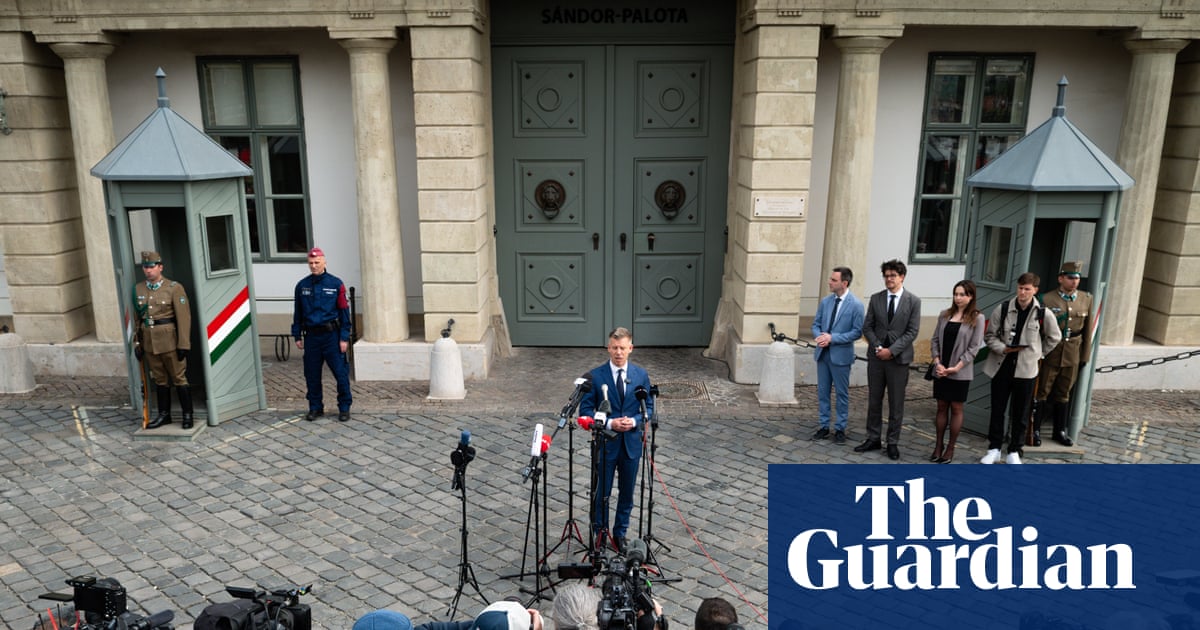
Magyar also met with Hungarian President Tamás Sulyok on Wednesday, reiterating his call for the Orbán supporter to resign. “I repeated to him that, in my eyes and in the eyes of the Hungarian people, he is unworthy of embodying the unity of the Hungarian nation, incapable of ensuring respect for the law,” Magyar told reporters after the meeting.
According to Magyar, Sulyok indicated the new parliament would likely convene around May 6 or 7, which would allow Magyar’s government to take office by mid-May.
The political shift in Hungary has caught the attention of international figures, including former U.S. President Donald Trump, who was one of Orbán’s most prominent global allies. Despite having openly endorsed Orbán and promised to bring U.S. “economic might” to Hungary if the incumbent won, Trump has quickly pivoted to supporting Magyar.
“I think the new man’s going to do a good job – he’s a good man,” Trump told ABC News, noting that Magyar was formerly part of Orbán’s Fidesz party and shares similar views on migration issues.
Trump’s running mate JD Vance, who traveled to Budapest just days before the election to rally behind Orbán, has described the outgoing leader’s legacy as “transformational” despite widespread criticism of his authoritarian tendencies. During Vance’s visit, Trump had called in to offer a glowing endorsement of Orbán, telling the crowd: “I love Hungary and I love that Viktor. He’s done a fantastic job.”
As Magyar prepares to take office, his ability to reform state institutions while navigating the complex web of Orbán loyalists will be closely watched by European and international observers, many of whom are hopeful for Hungary’s potential return to more democratic principles after years of democratic backsliding.
Fact Checker
Verify the accuracy of this article using The Disinformation Commission analysis and real-time sources.

10 Comments
This is a bold move by the new Hungarian leader. Reforming state media to be more balanced and truthful is crucial for a healthy democracy. I’m curious to see how he goes about implementing this change and what the public reaction will be.
Agreed, the public media should serve the people, not the government. I hope the reforms can restore trust and integrity in Hungary’s news landscape.
Calling state media a ‘propaganda machine’ is a strong condemnation. I wonder if the new government has a clear plan to rebuild public trust and reshape the media landscape in Hungary. Reforms of this scale are never easy, but they could be transformative if done right.
Agreed, the proof will be in the execution. Suspending state media coverage is a bold first step, but the new government will need to follow through with substantive reforms to restore integrity.
Suspending state media and calling it a ‘propaganda machine’ is a drastic step. I wonder if this will face pushback or legal challenges. It will be interesting to see how the new government handles the transition and how it impacts the broader media landscape in Hungary.
You raise a fair point. Maintaining media freedom and independence is crucial, so the new government will need to tread carefully as they implement these reforms.
Suspending state media coverage is a drastic measure, but it seems the new Hungarian leader feels it’s necessary to address longstanding issues of bias and misinformation. I’m curious to learn more about the specific reforms he plans to implement and how they will impact the media landscape.
Agreed, the reforms will be closely watched both domestically and internationally. Restoring transparency and trust in Hungary’s public media will be crucial for the new government’s credibility.
This is a significant shift in Hungary’s political dynamics. I’m curious to see if the new leader can deliver on his promise of a more truthful and balanced public media, or if there will be continued challenges from entrenched interests.
This is a fascinating development in Hungarian politics. I’m intrigued to see how the new leader will follow through on his promise to overhaul the state media. Tackling ingrained propaganda and rebuilding public trust in news outlets will be a major challenge.