


Listen to the article
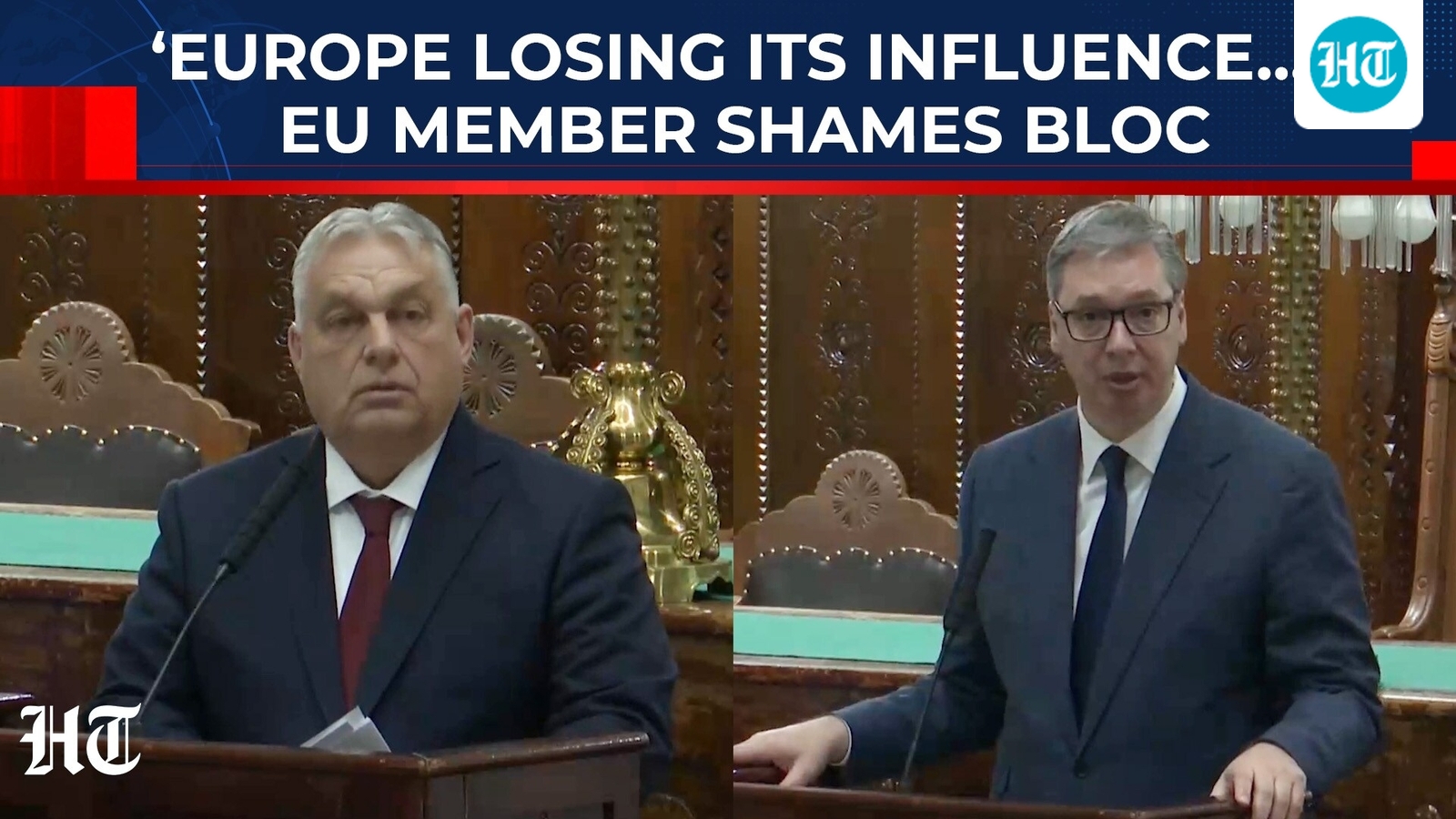
Hungarian Prime Minister Viktor Orbán has issued a stark warning about what he describes as Europe’s “war propaganda,” declaring that the “old world is collapsing” during a ceremony in Subotica where he and Serbian President Aleksandar Vučić received the István Pásztor Award.
The award ceremony, honoring the legacy of István Pásztor, celebrated the late statesman’s role as a bridge between Serbian and Hungarian communities. Both leaders used the platform to emphasize the historically close ties between their nations while positioning their alliance as a counterweight to broader European policies.
In his address, Orbán framed Serbian-Hungarian cooperation as essential for stability in the Balkans, particularly as he sees traditional European structures faltering. “What we are witnessing is the collapse of an old world order,” Orbán stated, “while Brussels remains fixated on war rather than peace and cooperation.”
The Hungarian Prime Minister, known for his Eurosceptic stance and friendly relations with Russia, has consistently challenged EU consensus on various issues, particularly regarding the bloc’s support for Ukraine following Russia’s invasion. His comments align with his government’s frequent criticism that European leaders are excessively focused on military solutions rather than diplomatic ones.
Vučić, for his part, highlighted tangible benefits of the bilateral relationship, including joint energy initiatives that have helped Serbia navigate challenging geopolitical circumstances. He specifically mentioned Hungary’s support during the sanctions affecting Serbia’s NIS refinery, demonstrating how the partnership provides practical advantages during times of international pressure.
“When many turned their backs on us, Hungary extended a hand,” Vučić remarked. “This cooperation has proven invaluable for maintaining our energy security and economic stability.”
The Serbian President also expressed optimism about the incoming Trump administration in the United States, suggesting it might shield Serbia from what he described as the worst effects of European policies. This reflects a calculation made by several European leaders with strained EU relationships that the Trump presidency might offer alternative alignments.
Energy cooperation stands at the center of their partnership, with both countries working on diversifying supply routes to reduce dependence on traditional channels. The Hungarian-Serbian relationship has grown particularly significant as both nations have sought to maintain economic ties with Russia despite broader European opposition.
Regional analysts note that this relationship serves both leaders’ domestic political narratives. For Orbán, it reinforces his image as a defender of Hungarian interests against what he portrays as Brussels overreach. For Vučić, the partnership provides economic benefits while helping Serbia maintain its balancing act between EU aspirations and historic ties with Russia.
The ceremony in Subotica, a city with significant Hungarian minority population in northern Serbia, symbolically underscored the cross-border cultural ties that underpin the political relationship. István Pásztor, for whom the award is named, was widely respected for his work protecting minority rights and fostering intercommunal understanding.
“Pásztor showed us that borders need not divide peoples with shared histories,” Orbán said, “a lesson that Brussels would do well to learn as it pushes policies that divide rather than unite.”
This rhetoric comes at a time of heightened tension in Europe, with the war in Ukraine entering its third year and growing concerns about economic challenges facing the continent. Both Hungary and Serbia have maintained more neutral positions regarding the Russia-Ukraine conflict compared to most European nations.
As the EU contemplates further integration steps and continues to navigate complex relationships with candidate countries like Serbia, the Hungarian-Serbian axis represents an alternative vision of regional cooperation—one that both Orbán and Vučić argue is more pragmatic and better suited to the interests of their citizens.
Fact Checker
Verify the accuracy of this article using The Disinformation Commission analysis and real-time sources.
