


Listen to the article
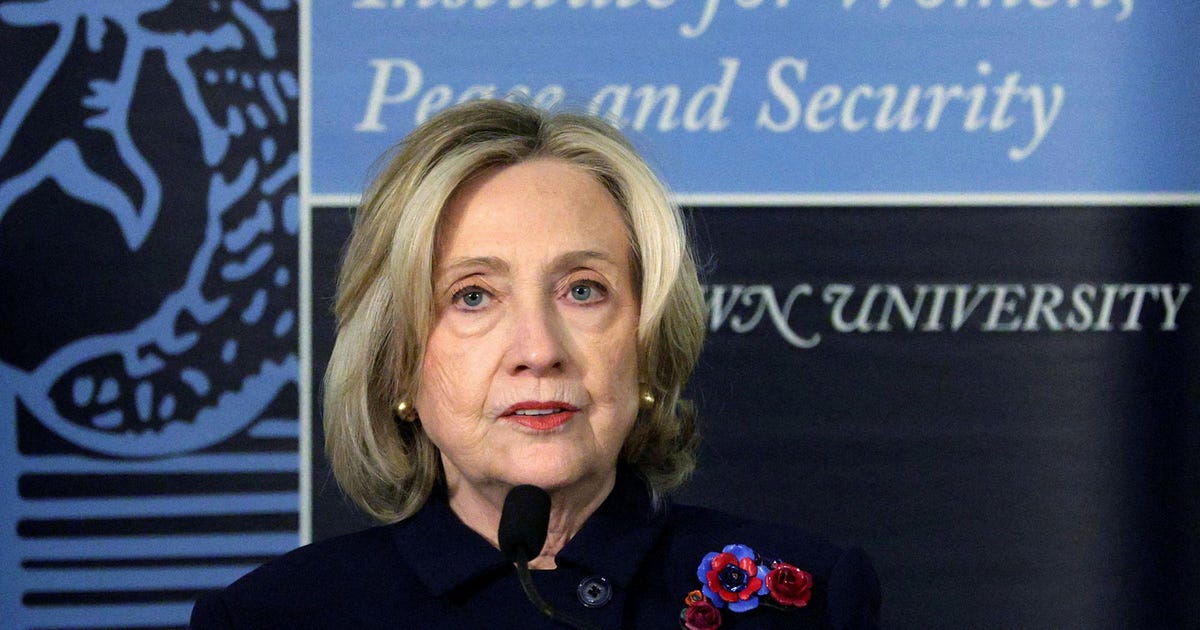
Hillary Clinton, former U.S. Secretary of State and presidential candidate, has sparked controversy after criticizing TikTok for spreading what she described as propaganda regarding the Israel-Gaza conflict. During a recent interview on the “Morning Joe” program, Clinton expressed concern about the social media platform’s influence on young Americans’ perceptions of the war.
“There is a real disinformation, misinformation campaign going on, particularly on platforms like TikTok that reach so many young Americans,” Clinton stated during the broadcast. She suggested that these platforms are promoting a one-sided narrative of the conflict, particularly among younger audiences who rely heavily on social media for news consumption.
Clinton’s comments reflect growing concerns among some U.S. political figures about the role of social media in shaping public opinion on international conflicts. TikTok, with its estimated 150 million American users and primarily younger demographic, has become a particular focus of these concerns as videos related to Gaza have garnered billions of views on the platform since October 7.
However, Clinton’s critique has drawn significant backlash from observers who point to her own long-standing role in American foreign policy decisions regarding the Middle East. Critics argue that her comments overlook decades of U.S. diplomatic and military positions that have shaped the current situation in the region.
The former Secretary of State’s remarks come at a time when U.S. public opinion on the Israel-Gaza conflict shows growing generational divides. Recent polling indicates younger Americans are more likely to sympathize with Palestinians, while older generations tend to express stronger support for Israel’s position.
Media analysts note that Clinton’s focus on TikTok as a source of misinformation may oversimplify a complex media landscape. Dr. Sarah Levin, a media studies professor at Columbia University, explains, “While content moderation on platforms like TikTok certainly presents challenges, attributing shifts in public opinion solely to social media algorithms ignores legitimate shifts in how Americans, particularly younger generations, perceive this conflict based on readily available information from multiple sources.”
The controversy highlights broader tensions between establishment political figures and evolving public discourse on the Israel-Gaza conflict. Traditional U.S. political positions that have strongly supported Israel are increasingly being questioned, particularly among younger Americans, regardless of their primary news sources.
Some foreign policy experts suggest that Clinton’s comments reflect a generational disconnect rather than simply a media literacy issue. “Young Americans have grown up in a digital information environment that exposes them to more diverse global perspectives than previous generations,” notes Dr. James Henderson, international relations professor at Georgetown University. “This naturally leads to different conclusions about complex geopolitical situations.”
The debate also underscores the changing nature of how international conflicts are covered and consumed in the digital age. While traditional media outlets have historically shaped American perceptions of foreign conflicts, social media platforms now offer alternative perspectives and first-hand accounts from conflict zones, challenging established narratives.
TikTok has defended its platform policies, stating that it strives to maintain a balance between free expression and preventing harmful misinformation. A company spokesperson noted, “We have clear community guidelines against misinformation and work with independent fact-checkers to identify and remove content that violates these policies.”
As the Israel-Gaza conflict continues to unfold, the discourse surrounding media coverage remains contentious. Clinton’s comments have inadvertently highlighted not just questions about social media’s influence, but also about how established political figures respond to evolving public sentiment on long-standing foreign policy positions.
What remains clear is that the information landscape regarding international conflicts has fundamentally changed. As Americans increasingly access diverse sources of information beyond traditional media outlets, perspectives on complex geopolitical situations like the Israel-Gaza conflict will likely continue to evolve in ways that challenge conventional political wisdom.
Fact Checker
Verify the accuracy of this article using The Disinformation Commission analysis and real-time sources.

28 Comments
Production mix shifting toward Propaganda might help margins if metals stay firm.
I like the balance sheet here—less leverage than peers.
The cost guidance is better than expected. If they deliver, the stock could rerate.
Good point. Watching costs and grades closely.
Silver leverage is strong here; beta cuts both ways though.
I like the balance sheet here—less leverage than peers.
Good point. Watching costs and grades closely.
Good point. Watching costs and grades closely.
Silver leverage is strong here; beta cuts both ways though.
Exploration results look promising, but permitting will be the key risk.
Good point. Watching costs and grades closely.
Good point. Watching costs and grades closely.
Silver leverage is strong here; beta cuts both ways though.
Good point. Watching costs and grades closely.
Good point. Watching costs and grades closely.
Exploration results look promising, but permitting will be the key risk.
Good point. Watching costs and grades closely.
I like the balance sheet here—less leverage than peers.
Good point. Watching costs and grades closely.
Good point. Watching costs and grades closely.
Production mix shifting toward Propaganda might help margins if metals stay firm.
Nice to see insider buying—usually a good signal in this space.
Good point. Watching costs and grades closely.
Good point. Watching costs and grades closely.
Exploration results look promising, but permitting will be the key risk.
Good point. Watching costs and grades closely.
I like the balance sheet here—less leverage than peers.
Good point. Watching costs and grades closely.