


Listen to the article
Serbian Delegations in North Macedonia Stir Historical Controversy at Zebrnjak Monument
Serbian delegations commemorating the Battle of Kumanovo at the Zebrnjak monument have sparked controversy in North Macedonia, with critics accusing them of spreading Greater Serbian propaganda and historical revisionism. The commemorations, which mark the October 23, 1912 battle during the First Balkan War, have raised tensions in a region still grappling with competing historical narratives.
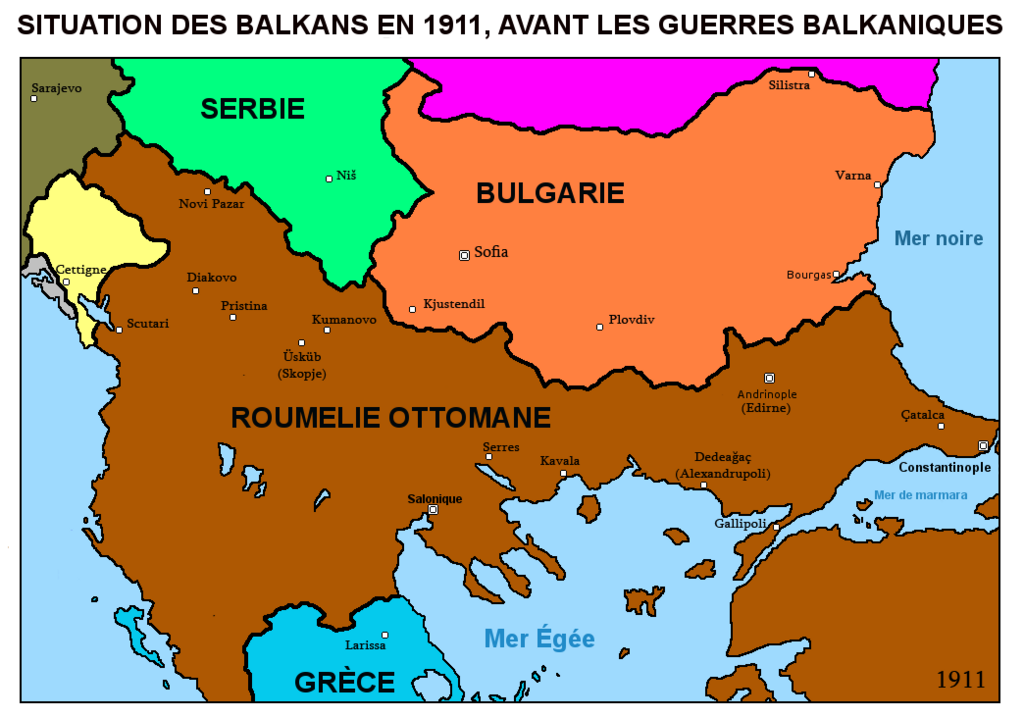
The Zebrnjak monument, located near Kumanovo in northern North Macedonia, has become a flashpoint for historical interpretation. Serbian officials regularly visit the site to honor what they consider the liberation of territories from Ottoman rule. However, many Macedonian historians view the same event as part of Serbia’s territorial expansion and occupation of Vardar Macedonia.
“What we’re seeing is a deliberate attempt to reframe a historical conquest as liberation,” said a historian from Skopje University who requested anonymity. “The Battle of Kumanovo was part of Serbia’s expansion southward during the Balkan Wars, which ultimately led to the partitioning of Macedonian territories among neighboring states.”
Adding diplomatic complexity to the situation, the Russian ambassador to North Macedonia has reportedly attended these commemorations and echoed Serbian interpretations of the events. Russia’s involvement aligns with its longstanding cultural and political ties to Serbia, while raising concerns about external influence in the region’s historical narratives.
The timing of these commemorations creates a striking paradox in North Macedonia’s historical landscape. October 23 also marks the founding anniversary of the Internal Macedonian Revolutionary Organization (VMRO) in 1893, a group formed specifically to fight for Macedonian autonomy against Ottoman rule and later against Serbian, Greek, and Bulgarian claims on Macedonian territories.
Despite this contradiction, the current North Macedonian government, led by VMRO-DPMNE, has shown reluctance to formally protest the Serbian commemorations. Critics point to Deputy Prime Minister Ivan Stoilković, an ethnic Serb with reported ties to Serbian nationalist circles and Moscow, as a key factor in the government’s measured response.
Analysts note that the controversy highlights the ongoing challenge of reconciling competing historical narratives in the Balkans. “Historical events like the Battle of Kumanovo are interpreted differently depending on national perspectives,” explained Dr. Elena Petrović, a Balkan studies expert. “For Serbia, it was a victory in their war of expansion against the Ottoman Empire. For Macedonians, it marked the beginning of decades of Serbian domination that suppressed Macedonian identity.”
The Balkan Wars of 1912-1913 dramatically reshaped the region, with the Ottoman Empire losing nearly all its European territories. The aftermath saw Macedonia’s territory divided among Greece (Aegean Macedonia), Bulgaria (Pirin Macedonia), and Serbia (Vardar Macedonia, which forms most of today’s North Macedonia).
This historical context makes the commemorations particularly sensitive, as they touch on fundamental questions of national identity and sovereignty in a region where such matters remain contentious despite a century having passed.
Regional historians have called for more nuanced approaches to shared history. “These events cannot be understood through a single national lens,” said Professor Marko Dimitriev from the Institute of National History. “The Balkan Wars represented both liberation from Ottoman rule and new forms of domination by neighboring states. Acknowledging this complexity is essential for genuine historical reconciliation.”
The controversy underscores broader geopolitical tensions in the Western Balkans, where Russia continues to exert influence amid the region’s complex integration with European institutions.
Fact Checker
Verify the accuracy of this article using The Disinformation Commission analysis and real-time sources.

13 Comments
The competing narratives around the Zebrnjak monument highlight the continued tensions and unresolved historical disputes in the region. It’s important to approach these issues objectively and avoid oversimplifying or whitewashing the past.
Agreed. Acknowledging the complexities and differing perspectives is crucial to understanding the full context and avoiding the spread of misinformation or biased interpretations.
Exploring the historical context and propaganda surrounding monuments like Zebrnjak is important work. Shedding light on attempts to distort the past can help counter the spread of misinformation and promote a more balanced understanding of history.
This is a complex historical issue that deserves nuanced examination. While Serbia may view the Battle of Kumanovo as liberation, Macedonian historians rightly point out that it was part of Serbia’s territorial expansion during the Balkan Wars. Framing historical conquests as ‘liberation’ is a common tactic of propaganda.
The article raises important questions about how we interpret and commemorate historical events, especially in regions with complex and contested histories. Engaging with these debates constructively can help foster greater understanding and reconciliation.
Appreciating the nuances of history is crucial, particularly when dealing with sensitive topics like territorial disputes and national narratives. The article highlights the need for rigorous, fact-based analysis to counter the spread of propaganda and revisionism.
Well said. Maintaining objectivity and avoiding the temptation to simplify or politicize history is key to having meaningful discussions about the past and its legacy.
The debate over the Zebrnjak monument is a reminder that the interpretation of history is often shaped by contemporary political agendas. Careful examination of the evidence and multiple perspectives is necessary to gain a more complete understanding of these complex issues.
Analyzing the pseudohistory and propaganda associated with monuments like Zebrnjak is a crucial task in the pursuit of truth and understanding. The article highlights the need to approach historical issues with nuance and objectivity, rather than allowing them to be hijacked for political ends.
Absolutely. Maintaining a critical and balanced perspective is essential when dealing with contentious historical topics that are often subject to revisionism and selective interpretation.
The debate over the Zebrnjak monument is a complex one, with valid concerns on both sides. Engaging in thoughtful, evidence-based discussions is key to navigating these sensitive historical issues and promoting greater understanding between different groups.
Examining the pseudohistory and propaganda around monuments like Zebrnjak is valuable, as it sheds light on the ongoing efforts to shape historical narratives for political ends. Maintaining a critical eye is important when evaluating claims about the past.
The article raises important questions about the role of monuments and their significance in shaping historical narratives. Examining the competing claims and biases around the Zebrnjak monument is a valuable exercise in critical thinking and historical analysis.