


Listen to the article
Anti-Israeli Groups Accused of Weaponizing Claims of Anti-Palestinian Racism
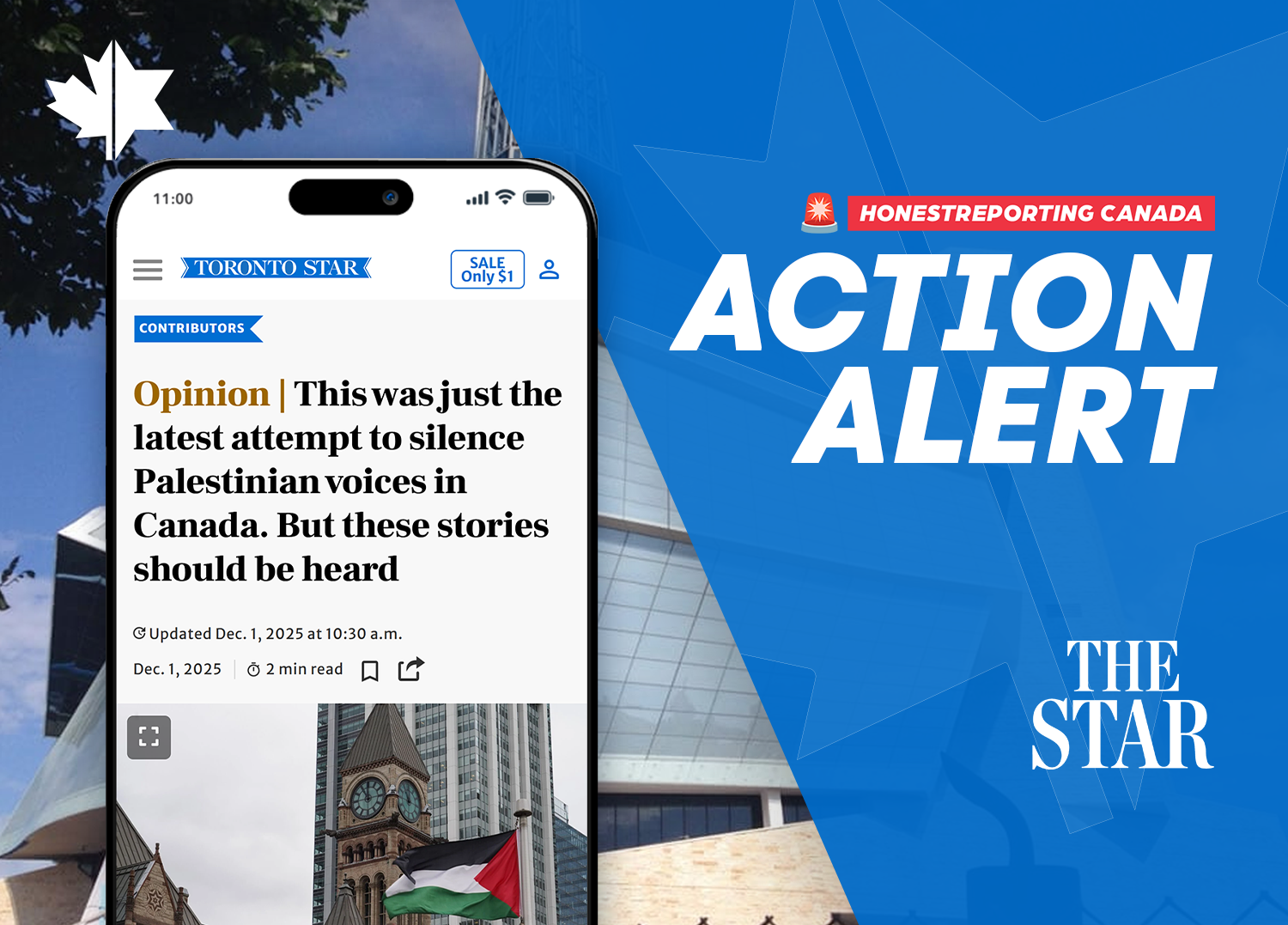
A recent opinion piece in The Toronto Star has ignited controversy over what critics call a misleading portrayal of Palestinian advocacy efforts in Canada. The December 1 column by former Canadian envoy to Israel Jon Allen and Mary Mouammar, a former Immigration and Refugee Board member, claims that opposition to Palestinian-focused exhibitions and events constitutes systematic silencing of Palestinian voices in Canadian society.
Critics argue that Allen and Mouammar’s piece fundamentally mischaracterizes legitimate concerns about historical accuracy and rising antisemitism in Canada. At the center of the debate is an upcoming “nakba” exhibit at Winnipeg’s Canadian Museum for Human Rights, which has drawn significant criticism from Jewish community organizations and historians.
The term “nakba,” meaning “catastrophe” in Arabic, refers to the displacement of Palestinians during Israel’s 1948 War of Independence. However, many historians note that the standard nakba narrative often omits crucial context, including the role Arab leaders played in encouraging Palestinian exodus and the simultaneous expulsion of Jews from Arab countries.
Jewish community leaders have expressed frustration that their perspectives were reportedly not adequately consulted during the development of the museum exhibit. This omission is particularly concerning given the sensitive historical nature of the content and its potential impact on intercommunity relations.
Another flashpoint mentioned in Allen and Mouammar’s column was opposition to the City of Toronto’s Palestinian flag-raising ceremony. The authors characterized this opposition as divisive, but critics counter that the Palestinian flag has increasingly become associated with anti-Israel demonstrations across Canada, some of which have featured antisemitic rhetoric.
The controversy highlights a broader tension in Canadian society regarding how to address the Israeli-Palestinian conflict while preventing the spread of antisemitism. Since the October 7, 2023 Hamas attack on Israel and the subsequent conflict in Gaza, Canada has seen a troubling rise in antisemitic incidents, according to data from B’nai Brith Canada and other monitoring organizations.
While Allen and Mouammar acknowledge that “real antisemitism, the hatred of Jews for being Jewish, is dangerous and growing and should be fought head on,” their critics argue that they fail to recognize how certain pro-Palestinian advocacy efforts have contributed to this problem.
The debate comes at a time when Canadian universities, community centers, and public spaces have become increasingly polarized around issues related to Israel and Palestine. Jewish students on several campuses have reported feeling unsafe amid protests that sometimes blur criticism of Israeli government policies with antisemitic tropes.
Community relations experts point out that creating mutual understanding requires honest engagement with history and genuine dialogue that acknowledges the complexities of the conflict. This includes recognizing both Palestinian suffering and legitimate Jewish connections to the land of Israel, which spans thousands of years.
Political scientists also note that conflating criticism of political propaganda with racism represents a troubling rhetorical strategy that can shut down legitimate debate. By framing opposition to certain narratives as inherently racist, this approach may actually hinder rather than facilitate meaningful discourse on sensitive issues.
As Canada continues to grapple with these tensions, community leaders from various backgrounds have called for more nuanced conversations that reject extremism, acknowledge historical complexities, and prioritize combating hate in all its forms.
Fact Checker
Verify the accuracy of this article using The Disinformation Commission analysis and real-time sources.

11 Comments
I’m curious to learn more about the specific criticisms leveled against the upcoming ‘nakba’ exhibit. What are the key points of contention, and how can they be addressed to ensure a fair and accurate portrayal of this historical event?
That’s a good question. Understanding the precise nature of the criticisms and addressing them constructively will be crucial to finding a resolution that satisfies all stakeholders and avoids further polarization.
The article highlights the complex dynamics at play, with both sides accusing the other of mischaracterizing their positions. Maintaining open dialogue and a commitment to factual accuracy is essential for making progress on this sensitive issue.
Accusations of censorship are serious and should not be made lightly. At the same time, concerns about the potential for anti-Semitism or historical inaccuracies in Palestinian advocacy efforts also warrant consideration. This issue requires a thoughtful, evidence-based approach from all sides.
The ‘nakba’ exhibit is a contentious topic, as the displacement of Palestinians in 1948 is a central part of the conflict’s history. However, as the article notes, the standard narrative can sometimes lack important context. Historians should strive for objectivity and nuance when addressing such sensitive issues.
You make a fair point. Exhibits on historical events like the nakba should aim to present a balanced, well-researched perspective rather than pushing a particular agenda, whether pro-Israeli or pro-Palestinian.
This is a complex and sensitive issue. While free speech is important, we must be careful not to enable the spread of misinformation or propaganda, whether pro-Israeli or pro-Palestinian. A nuanced, fact-based discussion is needed to address the concerns of all parties.
I agree, it’s crucial to find the right balance between free expression and responsible reporting of historical events. Oversimplified narratives often fail to capture the full context and complexity of the Israeli-Palestinian conflict.
As a matter of principle, I believe in the importance of free speech and the open exchange of ideas. However, in cases involving historical events and contentious political issues, it’s critical that information be presented as objectively and accurately as possible, without undue bias or agenda-pushing.
Well said. Upholding the principles of free speech while also ensuring factual integrity is a delicate balance that requires nuance and good-faith engagement from all parties involved.
This debate underscores the need for greater media literacy and critical thinking when it comes to reporting on complex, politically charged topics. Readers should be encouraged to seek out multiple perspectives and authoritative sources to form their own informed opinions.