


Listen to the article
Russian Red Cross Subverted for Kremlin’s War Efforts, Investigation Reveals
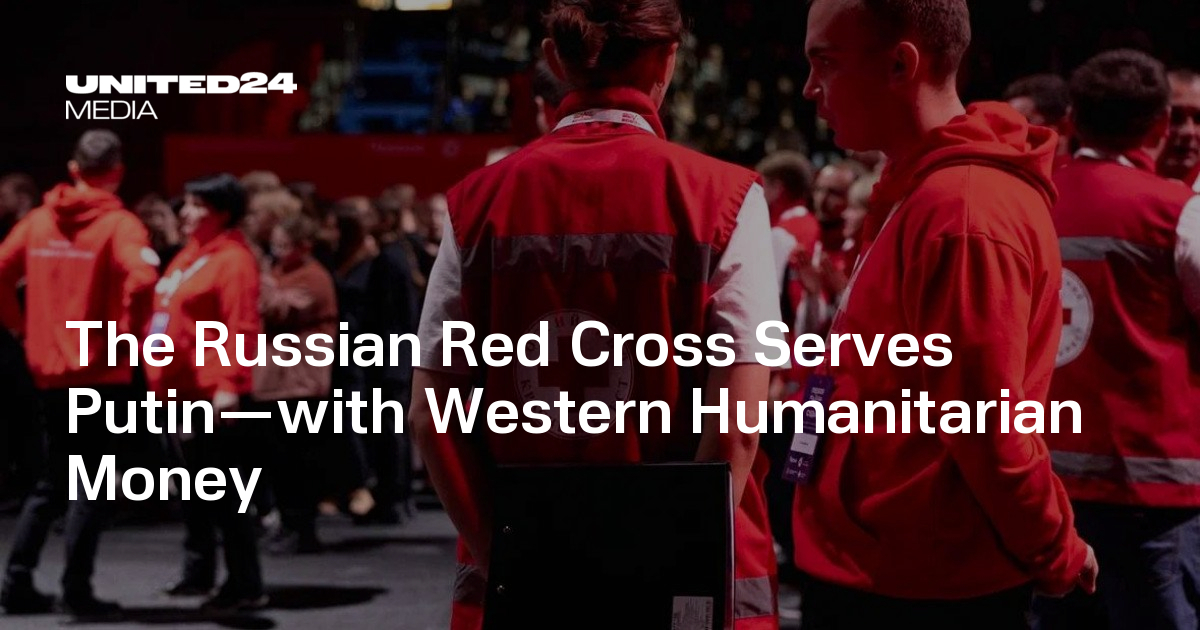
A major cross-European media investigation has uncovered alarming evidence that the Russian Red Cross (RRC) has abandoned its humanitarian mission to serve the Kremlin’s war agenda, while continuing to receive millions in Western humanitarian funding.
The investigation, conducted by Follow the Money, Trail Media, DER STANDARD, Delfi, Expressen, and Meduza, reveals that the organization is actively promoting Russian propaganda, collaborating with militarized youth groups, and operating illegally in occupied Ukrainian territories.
Under international humanitarian norms, the Red Cross movement’s complex structure mandates that national societies maintain strict neutrality in conflicts. The International Committee of the Red Cross (ICRC) operates in conflict zones and monitors prisoner treatment, while the International Federation of Red Cross and Red Crescent Societies (IFRC) coordinates 191 national societies worldwide, including the Russian Red Cross.
However, the RRC’s actions show a clear departure from these principles. Its strategic documents through 2028 outline collaboration with “Movement of the First,” a Kremlin-backed youth organization led by Artur Orlov—a man personally awarded by Vladimir Putin for his role in Russia’s 2022 assault on Luhansk, Ukraine.
This partnership features a joint educational initiative called “First Aid,” which consumed 8% of the RRC’s total expenditures in 2024. Investigators found these training sessions were conducted in Russian-occupied regions of Ukraine, sometimes with the participation of Russian special police units, further undermining any claim of neutrality.
Perhaps most troubling is the RRC’s establishment of unauthorized “Donetsk Red Cross” and “Luhansk Red Cross” branches in occupied Ukrainian territories. International protocol dictates that only the ICRC or Ukrainian Red Cross should operate in these regions. Yet journalists documented ICRC staff working alongside these unauthorized entities, which openly declare their subordination to the Russian Red Cross.
“These activities suggest the Russian Red Cross is serving as an extension of the Kremlin’s war apparatus rather than fulfilling its humanitarian mandate,” said one of the investigation’s lead researchers, who requested anonymity due to security concerns.
The financial trail reveals equally disturbing patterns. Despite mounting evidence of its compromised neutrality, the RRC’s funding from international Red Cross organizations doubled between 2022 and 2024, reaching €13.5 million ($15.6 million). This year, it received €6.5 million from the ICRC and €7 million from the IFRC, comprising approximately 25% of its annual budget. The Moscow city government contributed an additional €6.7 million.
During this period, the IFRC publicly praised the RRC’s “life-saving efforts,” though investigators found little evidence of genuinely neutral humanitarian work.
Meanwhile, Ukrainian prisoners of war report receiving no Red Cross assistance during captivity. Serhii Rotchuk, an Azov combat medic, told reporters: “We saw them only when we were surrendering.” Illia Samoilenko, an Azov staff officer, confirmed he never encountered Red Cross personnel during his time in Russian custody.
The RRC’s participation in Kremlin propaganda has become increasingly blatant. In November 2025, it co-organized the “First Aid” competition with participants allegedly from “89 Russian regions”—despite Russia officially having only 85 regions. The additional four territories referenced are Ukrainian regions illegally annexed during the war, highlighting the RRC’s implicit recognition of Russia’s territorial claims.
International humanitarian experts have expressed alarm at these revelations. “The fundamental principles of the Red Cross movement—neutrality, impartiality, and independence—appear to have been completely abandoned by the Russian national society,” said Dr. Elena Kovalenko, a specialist in international humanitarian law at the Geneva Institute.
Despite mounting evidence, neither the IFRC, the European Commission, nor other international funders have taken meaningful action against the Russian Red Cross. This inaction raises serious questions about accountability within the international humanitarian system and how Western aid money continues to flow into an organization that appears increasingly integrated into Russia’s war machine.
Fact Checker
Verify the accuracy of this article using The Disinformation Commission analysis and real-time sources.

8 Comments
This is deeply troubling if true. The Red Cross should remain neutral and focused on humanitarian aid, not propaganda. I hope the investigation reveals the full extent of the RRC’s involvement with the Kremlin’s war efforts.
Agreed, the Red Cross must maintain strict impartiality to continue its vital work. Diversion of funds and resources for political ends is a serious breach of trust.
If these allegations are true, it’s a shameful abuse of the Red Cross brand and its humanitarian mandate. The RRC’s actions undermine the credibility and effectiveness of the entire Red Cross movement. Decisive action is needed to address this betrayal of trust.
Absolutely, the RRC’s complicity in the Kremlin’s propaganda efforts is unacceptable. The ICRC and IFRC must hold the RRC accountable and ensure its operations are brought back in line with Red Cross principles.
This is a deeply troubling development. The Red Cross must remain a beacon of neutrality, providing aid and support without regard for political allegiances. I hope the international community can intervene to restore the RRC’s integrity.
It’s concerning to see the Russian Red Cross straying so far from its core principles. Propagandizing and collaborating with militarized groups is a serious betrayal of the Red Cross mission. This requires a thorough investigation and swift action.
This report highlights the urgent need to ensure that aid and humanitarian organizations are not being exploited for political gain, especially in the context of this devastating conflict. Robust oversight and accountability measures are crucial.
You’re right, the integrity of these organizations must be protected. I’m curious to know what specific actions the ICRC and IFRC plan to take in response to these allegations.