


Listen to the article
Serbia’s Fixed Exchange Rate Debate: Economic Reality or Political Illusion?
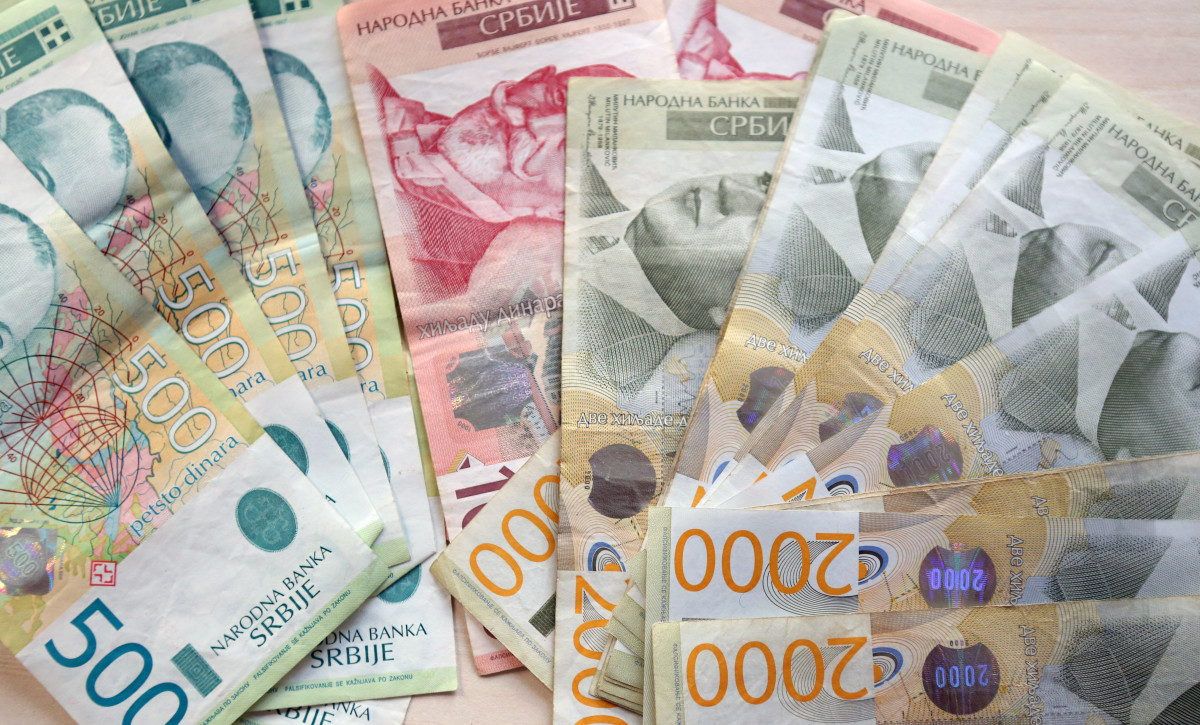
A fierce debate continues to simmer among economists and politicians in Serbia regarding the country’s exchange rate policy, with critics arguing that the Serbian dinar is significantly overvalued against the euro. Despite officially operating under a managed floating exchange rate regime, the dinar has remained remarkably stable for over a decade, prompting accusations of political manipulation.
Critics, including former National Bank of Serbia (NBS) governor Dejan Šoškić, assert that the dinar is artificially maintained at its current level, distorting key economic indicators and hampering the country’s export competitiveness. Some opposition figures claim the “true” value of the dinar should be approximately 30 percent weaker, which would drastically reduce Serbia’s average salary from the current 930 euros to around 714 euros when converted.
“It is plainly visible that the dinar is overvalued,” Šoškić told NIN magazine. “The exchange rate depends on the inflow of foreign currency into the country, in other words on how strong the national economy is, so it would be normal for it to reflect the strength of the economy. That is not the case here.”
Šoškić argues this policy has serious economic consequences: “The rate is de facto fixed, and inflation effects are simply piled on top of it, so practically all products and services from Serbia are becoming more expensive in euro terms, both abroad and at home. That means they are harder to sell, which is bad for the economy.”
Critics also point to Serbia’s persistent current account deficit at a time when other Central and Eastern European countries have achieved surpluses, suggesting the fixed exchange rate serves political rather than economic purposes. Dušan Nikezić, vice-president of the Freedom and Justice Party, claims the policy “harms domestic businesses and helps foreign ones” by making imports artificially cheap while making exports economically unviable.
The controversy is further fueled by comments from NBS Governor Jorgovanka Tabaković, who has stated, “I am the governor as long as Vučić is in power,” leading opponents to question the central bank’s independence.
However, the NBS strongly rejects these criticisms. In a statement to NIN, the central bank insisted that “claims about an overvalued dinar lack any rational economic basis.” The NBS emphasized that since 2017, there have been strong appreciation pressures on the dinar due to improved macroeconomic fundamentals and increased foreign currency inflows from investments, exports, remittances, and tourism.
“From 2017 to the end of October this year, the NBS was a net buyer of foreign currency in its interventions on the FX market in every year except the ‘pandemic’ year of 2020, with total net purchases over this period exceeding 12.2 billion euros,” the statement noted. “Had the NBS not been purchasing foreign currency to prevent excessive appreciation of the dinar, the exchange rate would now be significantly lower.”
Some economists support the NBS position. Ivan Nikolić, director of development projects at the Economic Institute, has praised the stability of the dinar, noting that “the exchange-rate column, once a staple of the daily press, disappeared long ago – and many never even noticed.”
The practical impact of the exchange rate policy can be observed in consumer prices. Professor Goran Radosavljević from FEFA points out that a 300-gram Milka chocolate bar costs about 4 euros (460 dinars) in Germany but around 650 dinars in Serbia. “Serbian consumers, with significantly lower incomes, pay more for this sweet. That shows that, loosely speaking, the fixed-like exchange rate is not realistic,” he argues.
The NBS maintains that its current approach brings “multiple benefits” to the Serbian economy by enabling “easier planning and greater predictability” for all market participants. With foreign exchange reserves reaching a record 29.4 billion euros at the end of October, the central bank appears determined to continue its policy of maintaining what it calls the “relative stability” of the dinar.
As the debate continues, the underlying question remains whether Serbia’s exchange rate policy serves the long-term economic interests of its citizens or merely creates an illusion of prosperity that masks deeper structural challenges in the economy.
Fact Checker
Verify the accuracy of this article using The Disinformation Commission analysis and real-time sources.

7 Comments
It’s not surprising that there are differing views on the appropriate exchange rate for the Serbian dinar. Balancing exchange rate stability with economic competitiveness is a constant challenge for policymakers. Objective analysis will be key in resolving this dispute.
Managed exchange rate regimes can be a delicate balance between economic stability and competitiveness. It’s understandable that there would be differing views on the appropriate valuation of the dinar. This seems like a complex issue that deserves a careful, fact-based analysis.
This is an interesting debate on the valuation of the Serbian dinar. It seems there are valid economic arguments on both sides, but also potential political factors at play. I’m curious to see how this plays out and what the long-term implications could be for Serbia’s economy and trade.
The potential 30% overvaluation of the dinar is quite substantial. If accurate, that could pose significant challenges for Serbia’s export industries and overall economic performance. This debate seems to warrant further investigation and transparency from policymakers.
This dispute highlights the ongoing tensions between economic reality and political rhetoric when it comes to exchange rate policy. It will be interesting to see if any objective, independent assessments can help shed light on the true value of the Serbian dinar.
The claim that the dinar is overvalued by 30% is quite significant. If true, that could have major impacts on Serbia’s exports, cost of living, and overall economic competitiveness. It will be important to closely examine the evidence and rationale behind these assertions.
Agreed. An artificially inflated currency can distort key economic indicators and create challenges for businesses and consumers. Transparency around the exchange rate policy will be crucial in resolving this debate.