


Listen to the article
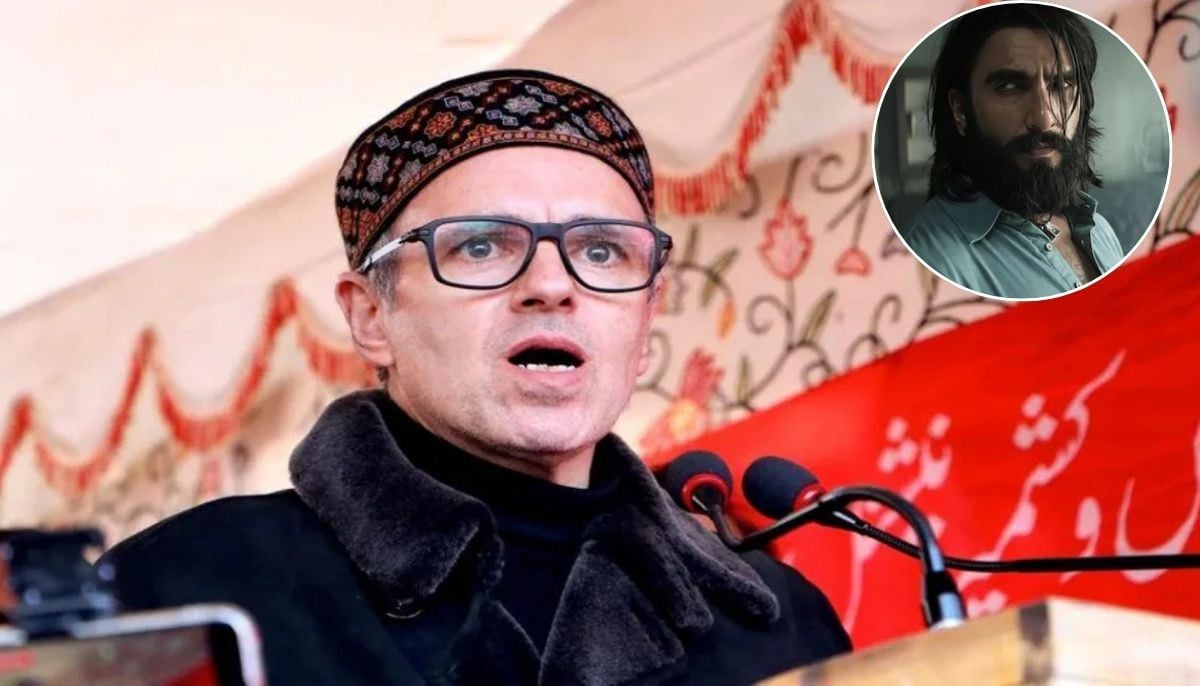
In a surprising turn of events, former Jammu and Kashmir Chief Minister Omar Abdullah has revealed that audiences across the Kashmir Valley have been flocking to see the controversial film “Dhurandhar” despite its characterization as propaganda by some critics.
Speaking during a candid interaction at the Express Adda, Abdullah shared his observations about the film’s reception while maintaining his personal distance from the content. “I haven’t seen either film, and truth be told, I don’t intend to see them,” he remarked, referring to both “Dhurandhar” and its thematic predecessor “The Kashmir Files.”
The significant difference in local reception between the two films appears noteworthy. While “The Kashmir Files” reportedly struggled to attract audiences in the Valley, “Dhurandhar” has achieved considerable commercial success in the region. “The second one seems to be doing roaring business,” Abdullah observed.
To validate his claims, Abdullah pointed out a multiplex owner from Kashmir who was present in the audience. “He has the only multiplex in the Valley, and he is nodding and saying that business is doing well,” Abdullah noted, adding: “So clearly, the audience in Kashmir, even if it is a propaganda movie, is quite happy to be entertained.”
This audience enthusiasm extends beyond Srinagar’s urban center. According to Indian media reports, “Dhurandhar” has achieved sold-out screenings not only in the capital but also in smaller, historically sensitive towns such as Pulwama and Shopian – areas that have experienced significant conflict in recent decades. The continued strong attendance across the region contradicts expectations that such content might face resistance in Kashmir.
Film industry analysts suggest this phenomenon reflects changing attitudes in the Valley, where audiences appear increasingly willing to engage with mainstream Indian cinema even when it portrays sensitive geopolitical narratives. The film’s commercial success in Kashmir may also indicate a growing separation between entertainment consumption and political sentiment among local viewers.
“Dhurandhar” features Bollywood star Ranveer Singh in the lead role as an Indian intelligence operative who infiltrates terrorist networks in Pakistan’s Lyari district. The film boasts an ensemble cast of veteran actors including Akshaye Khanna, Sanjay Dutt, Arjun Rampal, R. Madhavan, and Rakesh Bedi in pivotal roles.
The spy thriller’s portrayal of cross-border intelligence operations touches on the complex India-Pakistan relationship, a particularly sensitive topic in Kashmir given its contested status and history of conflict. While specific plot details weren’t shared by Abdullah, films in this genre typically present patriotic narratives that align with India’s national security perspectives.
The commercial success of “Dhurandhar” has already prompted producers to announce a sequel, scheduled for release on March 19, 2026. This planned continuation suggests confidence in the franchise’s commercial viability across India, including regions like Kashmir where political sensitivities might otherwise impact viewership.
Abdullah’s comments highlight the complex relationship between entertainment, politics, and public perception in Kashmir. His observation that audiences are “quite happy to be entertained” despite potential propaganda elements raises questions about changing cultural dynamics in a region that has experienced decades of political turmoil.
The film’s reception may offer insights into evolving attitudes in Kashmir, where entertainment choices might increasingly be divorced from political positions – a potential sign of normalization in a region that has long operated under exceptional circumstances.
Fact Checker
Verify the accuracy of this article using The Disinformation Commission analysis and real-time sources.

11 Comments
Interesting to see the contrast in local reception between the two films. It speaks to the nuanced perspectives within Kashmir on these complex issues. Curious to hear more about the reasons behind the differing audience responses.
Agree, the multiplex owner’s insights provide a valuable on-the-ground perspective. It will be insightful to understand the factors driving the commercial success of ‘Dhurandhar’ in the Valley.
Abdullah’s neutral stance on the films is understandable, given the charged nature of the subject matter. However, his insights into the local audience’s reception of ‘Dhurandhar’ provide an intriguing counterpoint to the narrative of the film being dismissed as propaganda.
Agreed, the commercial success of ‘Dhurandhar’ in Kashmir, as noted by the multiplex owner, is a significant data point that merits further exploration. It suggests the need for a more nuanced understanding of the local dynamics at play.
Omar Abdullah’s neutrality on the films is understandable given the sensitive nature of the subject matter. However, his observations about the local audience’s engagement with ‘Dhurandhar’ are thought-provoking. It suggests a more nuanced reality on the ground.
Indeed, the box office performance of ‘Dhurandhar’ in Kashmir, in contrast to ‘The Kashmir Files’, deserves further exploration. There may be important socio-political dynamics at play that shape the local reception of these films.
The differing responses to ‘The Kashmir Files’ and ‘Dhurandhar’ in Kashmir highlight the complexities of navigating sensitive political and social issues through the medium of film. It will be valuable to analyze the factors behind the local audience’s engagement with these works.
The contrasting audience responses to ‘The Kashmir Files’ and ‘Dhurandhar’ in Kashmir highlight the complexities involved in depicting sensitive historical and political narratives through the medium of film. It will be valuable to analyze the factors shaping these differing perceptions.
Abdullah’s observations on the local audience’s engagement with ‘Dhurandhar’ provide an interesting counterpoint to the narrative of the film being dismissed as propaganda. It suggests the need to approach these issues with nuance and an openness to diverse perspectives within Kashmir.
Absolutely, the multiplex owner’s insights underscore the importance of grounding our understanding of these complex issues in the realities on the ground, rather than relying solely on external narratives or assumptions.
The fact that ‘Dhurandhar’ is attracting significant audiences in Kashmir, despite concerns over propaganda, is an intriguing development. It underscores the need to understand the diverse perspectives and experiences within the region, rather than relying on broad generalizations.