


Listen to the article
Pakistan Army’s ISPR Director General Engages with Students at Quaid-e-Azam University
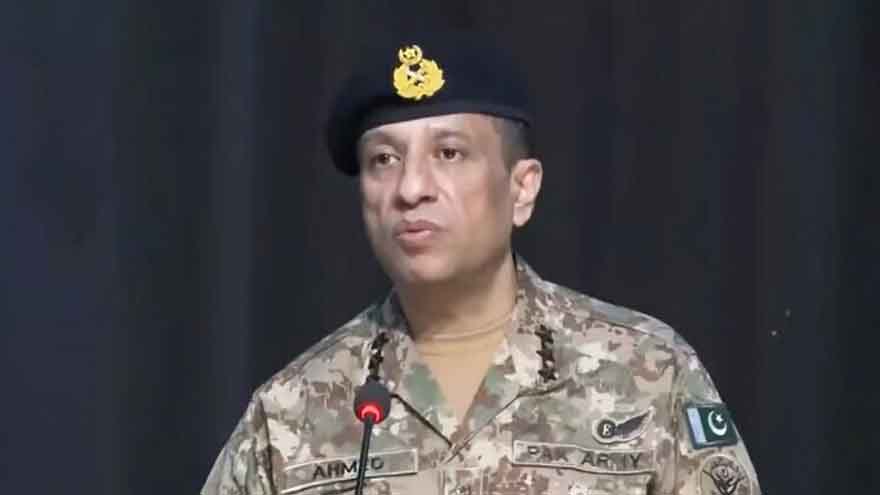
Lieutenant General Ahmed Sharif Chaudhry, Director General of Inter-Services Public Relations (ISPR), visited Quaid-e-Azam University in Islamabad on Wednesday, where he participated in an interactive session with students and faculty members.
During the special session, Lt Gen Chaudhry addressed several critical topics, including Pakistan’s current internal situation, national defense matters, and the professional responsibilities of the Pakistan Army. The ISPR chief placed particular emphasis on educating students about the distinction between social media propaganda and factual information, a growing concern in today’s digital landscape.
The visit comes at a time when Pakistan faces numerous security challenges, both domestic and international, amid rising regional tensions and ongoing concerns about misinformation campaigns targeting national institutions.
The Vice Chancellor of Quaid-e-Azam University, speaking at the event, highlighted the accuracy of the ISPR’s previous statements regarding India. He noted that recent events had validated Pakistan’s military assertions on the international stage, adding that Pakistan’s armed forces had demonstrated capabilities that surpassed Indian military technology in certain areas.
This reference likely alludes to recent border incidents and military standoffs between the two nuclear-armed neighbors, whose relations have remained strained since 2019 following airspace violations and subsequent military engagements. Pakistan has consistently maintained that its armed forces possess the capability to effectively counter Indian military threats despite the latter’s larger defense budget.
Students and faculty members described the session as highly informative and productive. Many acknowledged that the interaction had helped clarify misconceptions they previously held regarding military operations and national security matters.
In their feedback, students emphasized their primary identity as Pakistanis and recognized that the Pakistan Army’s personnel come from within their own communities. This sentiment reflects efforts by military leadership to strengthen civil-military relations, particularly among the educated youth who represent the country’s future leadership.
The university audience also expressed appreciation for Lt Gen Chaudhry’s detailed and well-reasoned responses to their questions, especially those concerning misinformation campaigns that have proliferated on various media platforms in recent years.
Quaid-e-Azam University, named after Pakistan’s founding father Muhammad Ali Jinnah, is one of the country’s premier educational institutions and has produced numerous diplomats, civil servants, scientists, and policy makers. The military’s engagement with this influential academic community signals a strategic approach to fostering understanding between civilian and military spheres.
This outreach initiative aligns with the Pakistan Army’s broader communications strategy, which has evolved in recent years to address challenges posed by digital media and to counter narratives that military officials describe as harmful to national interests.
The ISPR, as the military’s media wing, has been increasingly active in public engagement, particularly with younger Pakistanis. Such interactions provide military leadership with direct communication channels to address concerns, explain policies, and present their perspective on issues related to national security and defense.
Military analysts note that such university visits serve multiple purposes: they humanize the armed forces, create opportunities for candid dialogue, and help identify and address misconceptions before they become entrenched in public discourse.
As Pakistan navigates complex geopolitical realities and internal challenges, the military’s outreach to academic institutions may represent an important component of its broader strategy to maintain public trust and support for its role in national defense and security.
Fact Checker
Verify the accuracy of this article using The Disinformation Commission analysis and real-time sources.

11 Comments
While it’s concerning to hear about the security challenges Pakistan faces, I’m encouraged to see the ISPR proactively engaging with university students on these important issues. Transparency and dialogue are key.
It’s good to see the ISPR engaging with university students on national security and social media propaganda. Educating the youth about distinguishing facts from misinformation is crucial in today’s digital age.
Absolutely. Developing critical thinking skills to navigate online content is an important life skill for students.
The ISPR chief’s emphasis on educating students about the distinction between social media propaganda and factual information is a prudent move. In today’s digital landscape, developing media literacy is crucial.
I agree. Equipping the youth with the skills to discern truth from fiction online is an important step in combating the spread of misinformation.
The ISPR’s visit to Quaid-e-Azam University is a commendable effort to engage with the next generation on these pressing national issues. Educating students about the dangers of misinformation campaigns is a valuable investment in Pakistan’s future.
Absolutely. Empowering students to navigate the digital landscape and identify propaganda is a crucial step in strengthening national resilience.
The ISPR’s focus on clarifying the difference between social media propaganda and factual information is timely. With rising regional tensions, it’s essential that the public has access to reliable, fact-based reporting.
Agreed. Arming students with the ability to identify and counter misinformation campaigns targeting national institutions is a valuable initiative.
It’s heartening to see the ISPR taking the initiative to brief university students on national security and social media propaganda. Fostering open dialogue and critical thinking is essential for a well-informed citizenry.
The ISPR’s focus on clarifying the distinction between social media propaganda and factual information is a timely and necessary initiative. In an era of heightened regional tensions, fostering media literacy is paramount.