


Listen to the article
In an unprecedented move that has sparked controversy across religious communities, more than 1,000 American pastors—predominantly white, conservative evangelicals—traveled to Israel this week. The visit, fully funded by Israel’s Ministry of Foreign Affairs, was designed to train the religious leaders in “hasbara,” Israel’s strategic communications efforts, during an ongoing military campaign in Gaza that has drawn international scrutiny.
The Israeli government has been transparent about its objectives for the gathering. Officials from the Ministry of Foreign Affairs publicly stated they brought “over 1,000 pastors” to Jerusalem specifically to train them in spreading pro-Israel messaging throughout their congregations in the United States.
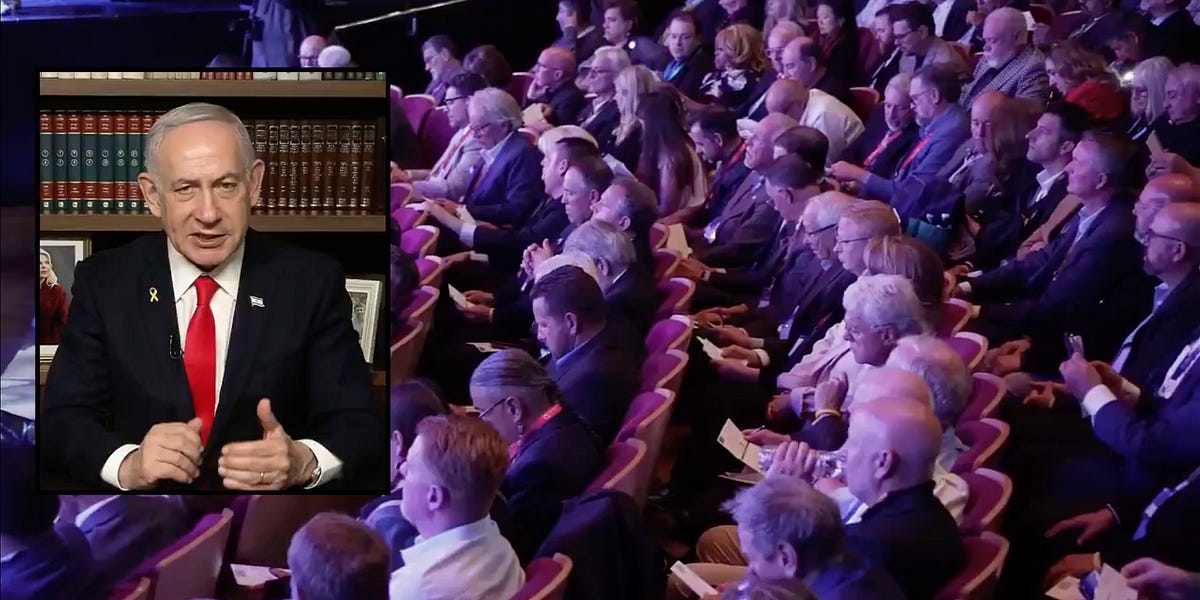
Israeli Prime Minister Benjamin Netanyahu, who is currently facing charges at the International Criminal Court related to the Gaza conflict, addressed the assembled pastors directly. In recorded remarks, he urged them to recruit an additional 10,000 religious leaders to the cause, stating: “I’m counting on you. I know you’ll do what has to be done.”
Former Arkansas Governor Mike Huckabee, who has been named as a potential U.S. Ambassador in the incoming Trump administration, framed the initiative in stark terms. “It’s an extraordinary time for pastors to go to their pulpits… and push back on the bigotry being pushed toward Israel,” Huckabee told attendees. He further characterized criticism of Israeli policies as “a growing cancer in the evangelical movement.”
The delegation has drawn sharp criticism from Palestinian Christian leaders, who noted that the visiting pastors did not engage with local Christian communities during their stay in the Holy Land. Palestinian pastor Jack Sara issued a public rebuke: “You walked where Jesus walked—but refused to walk beside His followers who are struggling to survive here.”
Reverend Munther Isaac, another prominent Palestinian Christian leader, added: “Tens of thousands of Palestinian children have been killed or traumatized, and you stayed silent.”
The initiative highlights the deep entanglement of American evangelical Christianity with Middle Eastern geopolitics. For decades, certain evangelical denominations have maintained strong ties with Israel, rooted in theological interpretations that connect modern Israel to biblical prophecy. This relationship has evolved into significant political support, with evangelical voters becoming one of Israel’s most reliable constituencies in American politics.
Religious scholars note that this latest effort represents a more direct approach to mobilizing American churches. Rather than working through intermediary organizations, Israel’s government is now explicitly recruiting pastors as advocates, asking them to use their pulpits to shape public opinion on the conflict.
Critics within the Christian community have raised concerns about the ethical implications of religious leaders accepting foreign government training to promote political positions. Some theological voices have questioned whether such advocacy aligns with core Christian principles of justice, compassion, and peacemaking.
The pastors’ visit comes at a particularly sensitive moment in the Israeli-Palestinian conflict. The International Court of Justice is currently considering allegations of serious violations of international law, and humanitarian organizations continue to report grave conditions in Gaza, including widespread civilian casualties and severe shortages of essential supplies.
As these American religious leaders return to their congregations, their experience in Jerusalem raises significant questions about the intersection of faith, politics, and international relations. The Israeli government’s investment in this initiative demonstrates its recognition of American churches as influential shapers of public opinion on Middle Eastern policy.
For congregants in these pastors’ churches, this development may prompt deeper reflection on the relationship between their faith commitments and positions on complex international conflicts, particularly when religious leaders have been explicitly recruited to advocate for a specific political perspective.
Fact Checker
Verify the accuracy of this article using The Disinformation Commission analysis and real-time sources.

7 Comments
This seems like a concerning development, using religious leaders to advance a geopolitical agenda. While pastors should be free to visit Israel, government-funded training for ‘hasbara’ propaganda raises red flags. I hope the pastors can approach this with an open, nuanced perspective.
I’m curious to learn more about the motivations and intentions behind this program. Bringing over 1,000 American pastors to Israel for strategic communications training seems like a bold move that could have significant implications, both for the region and for religious communities back home.
Agreed, the optics of this are quite troubling. Blurring the line between religion and politics in this way deserves careful scrutiny. I hope the pastors are able to think critically and form their own views, rather than simply parroting pro-Israel talking points.
This is a concerning development that raises questions about the appropriate role of religion in geopolitics. While religious leaders should be free to visit Israel, government-funded training for ‘hasbara’ propaganda is worrying. I hope the pastors can maintain independence and nuance in their perspectives.
I’m intrigued by the potential dynamics at play here. On one hand, the Israeli government’s transparency about its objectives for this program is commendable. But the idea of training over 1,000 American pastors to spread pro-Israel messaging raises concerns about the blending of religion and politics.
Well said. This program seems to be a calculated effort to leverage religious influence for political ends. While the pastors should be free to visit Israel, the government-funded training component is highly problematic and deserves scrutiny from both religious and political leaders.
This is a complex issue that touches on sensitive questions about the appropriate relationship between religion and the state. While the Israeli government’s transparency is noted, the optics of training American pastors in ‘hasbara’ propaganda are quite troubling. I hope this controversy leads to a thoughtful public dialogue.