


Listen to the article
South Korea’s Defense Ministry Probes Secret Anti-North Korean Leaflet Campaign
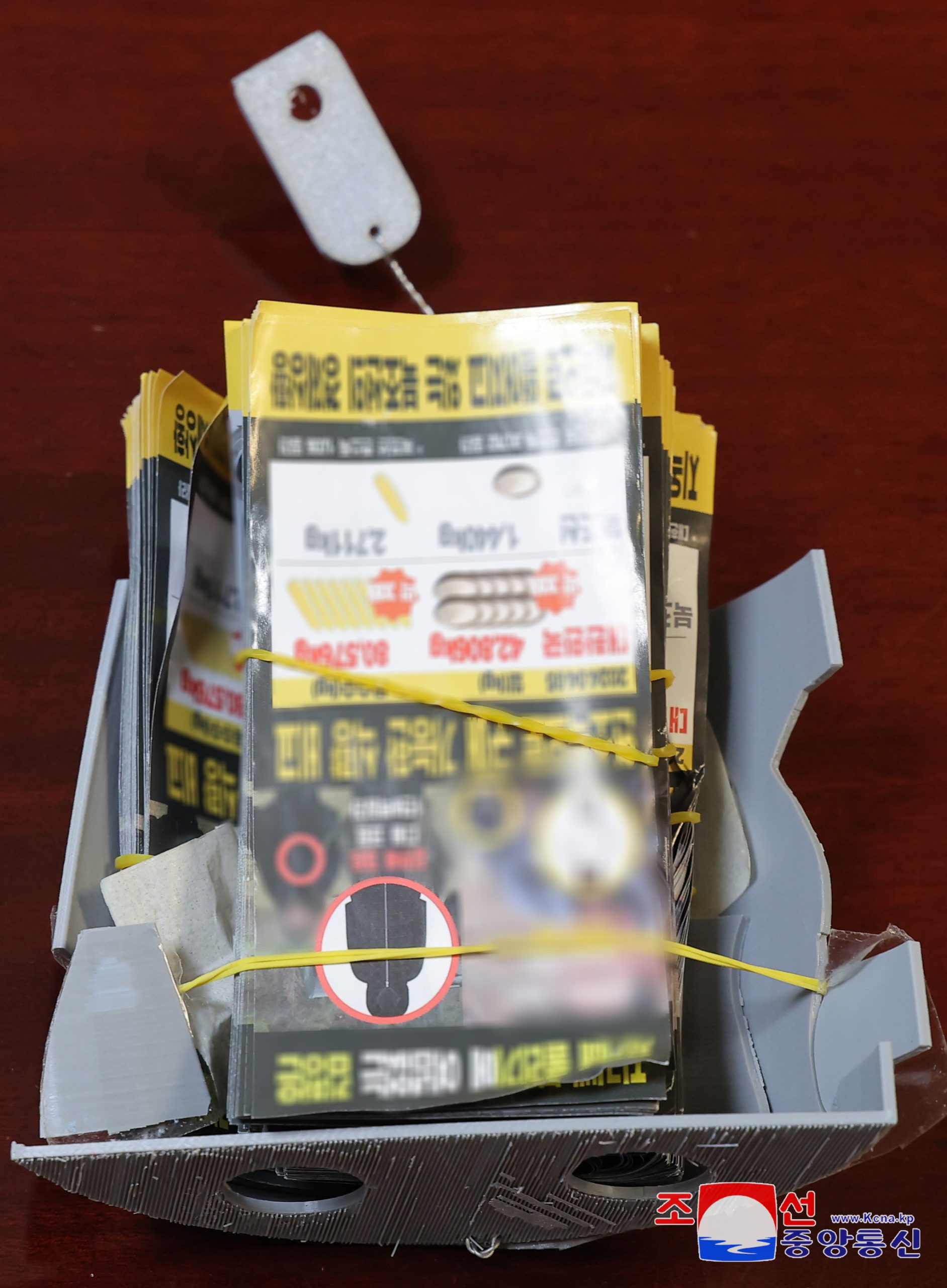
South Korea’s Ministry of National Defense has opened an investigation into claims that a military psychological operations unit covertly sent anti-Pyongyang leaflets into North Korea during former President Yoon Suk Yeol’s administration, defense officials confirmed Friday.
The investigation reportedly involves questioning both former and current commanders of the defense psychological operation group, alongside on-site investigations at front-line military units under the group’s command. A ministry official acknowledged the probe is underway “in accordance with orders by the defense minister” but declined to provide specific details about the scope or findings thus far.
This inquiry emerges amid broader government efforts to discipline officials involved in Yoon’s controversial attempted martial law declaration on December 3 last year, which ultimately failed and has become a significant political controversy.
The allegations first came to light through testimony from a former conscript who claimed to have participated in the leafleting operations. According to media reports, the soldier suggested the military may have deliberately attempted to provoke North Korean retaliation through these activities. The former service member alleged the campaign began in October 2023, notably preceding North Korea’s own campaign of sending thousands of trash-filled balloons across the border into South Korean territory.
The timing of these allegations is particularly significant as it suggests the South Korean military’s actions may have triggered or contributed to the escalation in cross-border tensions that followed. North Korea’s balloon campaign, which began after the alleged South Korean leafleting operations, was widely seen as a retaliatory measure and contributed to a marked deterioration in already strained inter-Korean relations.
Leafleting campaigns have long been a contentious issue on the Korean Peninsula. In the past, both government agencies and private activist groups have used balloons to send propaganda materials, including pamphlets criticizing the North Korean leadership, USB drives containing South Korean media content, and even small amounts of cash. North Korea has consistently responded with strong condemnation to such activities, viewing them as hostile acts that violate its sovereignty.
The South Korean government under current President Park Jin-young has taken a different approach to inter-Korean relations compared to the previous administration. While the Yoon administration adopted a more hardline stance toward North Korea, the current government has signaled interest in reducing tensions and potentially restarting dialogue, making the investigation into potentially provocative actions particularly sensitive.
Military psychological operations, commonly referred to as “psy-ops,” are considered standard practice in many countries’ defense strategies. However, their execution without proper authorization or with the intent to deliberately escalate tensions could potentially violate established protocols and civilian control of the military.
International observers are closely watching this investigation, as its findings could have implications for understanding the recent cycle of provocations between the two Koreas. The investigation also raises questions about military oversight and chain of command during the previous administration.
The Ministry of Defense has not announced a timeline for completing the investigation or when its findings might be made public. Officials have remained tight-lipped about what potential disciplinary actions might be taken if the allegations are substantiated.
This investigation represents the latest chapter in South Korea’s ongoing efforts to address controversial policies and actions from the previous administration while navigating the complex security challenges posed by its northern neighbor.
Fact Checker
Verify the accuracy of this article using The Disinformation Commission analysis and real-time sources.

24 Comments
I like the balance sheet here—less leverage than peers.
Exploration results look promising, but permitting will be the key risk.
Good point. Watching costs and grades closely.
Uranium names keep pushing higher—supply still tight into 2026.
Uranium names keep pushing higher—supply still tight into 2026.
Good point. Watching costs and grades closely.
Exploration results look promising, but permitting will be the key risk.
Good point. Watching costs and grades closely.
Good point. Watching costs and grades closely.
Uranium names keep pushing higher—supply still tight into 2026.
Good point. Watching costs and grades closely.
I like the balance sheet here—less leverage than peers.
Good point. Watching costs and grades closely.
Good point. Watching costs and grades closely.
Production mix shifting toward Propaganda might help margins if metals stay firm.
Uranium names keep pushing higher—supply still tight into 2026.
Good point. Watching costs and grades closely.
Good point. Watching costs and grades closely.
If AISC keeps dropping, this becomes investable for me.
Good point. Watching costs and grades closely.
Exploration results look promising, but permitting will be the key risk.
If AISC keeps dropping, this becomes investable for me.
Exploration results look promising, but permitting will be the key risk.
Good point. Watching costs and grades closely.