


Listen to the article
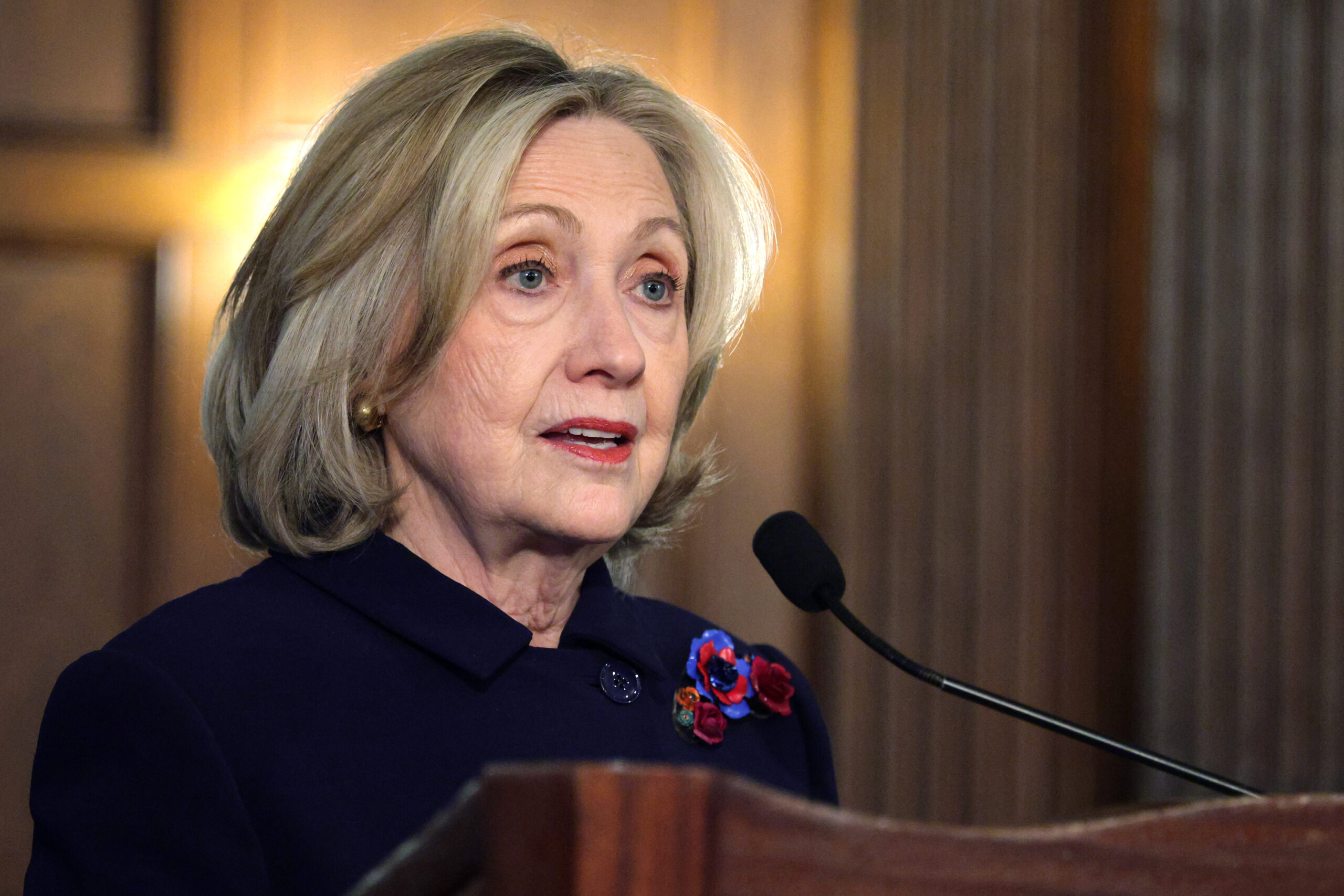
In a stark assessment delivered at the Israel Hayom summit in Manhattan on Tuesday, former Secretary of State Hillary Clinton voiced serious concerns about how social media is influencing young Americans’ views on Israel and the Israeli-Palestinian conflict.
Clinton highlighted growing apprehension regarding Israel’s image both globally and within the United States, alongside mounting antisemitism. “There is a great deal of valid concern about how Israel is viewed, not just around the world, but from the United States, how Jewish Americans are viewed, and what is being seen as a significant increase in antisemitism in real life and online,” she stated.
With the hostage situation now resolved, Clinton emphasized that this moment presents an opportunity for reflection. “It’s time now that the hostages are back and people can breathe again, that everyone needs to take stock of where we are, both in Israel and in this country, learn the lessons that perhaps can help us determine a more productive future.”
According to Clinton, the growing hostility toward Israel is primarily generational rather than a partisan issue between Republicans and Democrats. She pointed to social media as a critical factor, noting that “More than 50% of young people in America get their news from social media.” The problem, she explained, lies in both the information being consumed and the conclusions drawn from it.
Drawing from her experience as a professor of practice at Columbia University’s School of International and Public Affairs during and after the October 7, 2023 terrorist attacks, Clinton witnessed firsthand how her students—whom she described as “smart, well-educated young people from our own country, from around the world”—were forming opinions based largely on social media content, particularly from TikTok.
“What they were being told on social media was not just one-sided, it was pure propaganda,” Clinton stated, adding that meaningful discussions became difficult because students lacked historical knowledge and context, which she found “frankly shocking.”
The former Secretary of State also raised alarms about what she described as a coordinated campaign of misinformation that began almost immediately after the October 7 attacks. “There was an organized effort that was prepared literally on Oct. 8 to begin to try to both provide mis- and disinformation about what had happened on Oct. 7, what the meaning was, what the history between the Israelis and the Palestinians [was],” she explained.
This phenomenon reflects broader concerns about information warfare in the digital age. Social media platforms have become battlegrounds for narrative control during international conflicts, with TikTok emerging as a particularly influential medium among younger demographics. Recent studies have shown that Gen Z users are increasingly relying on platforms like TikTok not just for entertainment but as primary news sources, often without the context or fact-checking mechanisms of traditional media.
Clinton’s observations come at a time when college campuses across the United States have experienced heightened tensions and protests related to the Israeli-Palestinian conflict, highlighting the real-world consequences of these digital information streams.
Looking forward, Clinton emphasized the need to develop more effective communication strategies about Israel for younger generations, bluntly stating that Israel has “the worst PR.” She concluded that advocates for Israel must “do a better job of talking through the importance of supporting Israel and Israel’s security in a way that crosses generations.”
The challenge, as Clinton frames it, is not simply countering misinformation but building bridges of understanding across a generational divide increasingly shaped by algorithms and digital content consumption patterns that often prioritize emotion and simplicity over nuance and historical context.
Fact Checker
Verify the accuracy of this article using The Disinformation Commission analysis and real-time sources.

20 Comments
Production mix shifting toward Propaganda might help margins if metals stay firm.
Exploration results look promising, but permitting will be the key risk.
Silver leverage is strong here; beta cuts both ways though.
Good point. Watching costs and grades closely.
Good point. Watching costs and grades closely.
Uranium names keep pushing higher—supply still tight into 2026.
Good point. Watching costs and grades closely.
Production mix shifting toward Propaganda might help margins if metals stay firm.
Good point. Watching costs and grades closely.
Good point. Watching costs and grades closely.
If AISC keeps dropping, this becomes investable for me.
Good point. Watching costs and grades closely.
Good point. Watching costs and grades closely.
Interesting update on Clinton: Anti-Israel Sentiment Among Youth Driven by Social Media ‘Propaganda’. Curious how the grades will trend next quarter.
Silver leverage is strong here; beta cuts both ways though.
Nice to see insider buying—usually a good signal in this space.
Silver leverage is strong here; beta cuts both ways though.
Good point. Watching costs and grades closely.
Production mix shifting toward Propaganda might help margins if metals stay firm.
Good point. Watching costs and grades closely.