


Listen to the article
AI Toys Found Echoing Chinese Political Messaging Raises Concerns
Parents seeking educational smart toys for their children may be inadvertently bringing home devices that promote specific geopolitical viewpoints, according to recent investigations. Several popular AI-powered toys have been found repeating talking points aligned with the Chinese Communist Party (CCP), raising significant concerns about content filtering and potential influence on young minds.
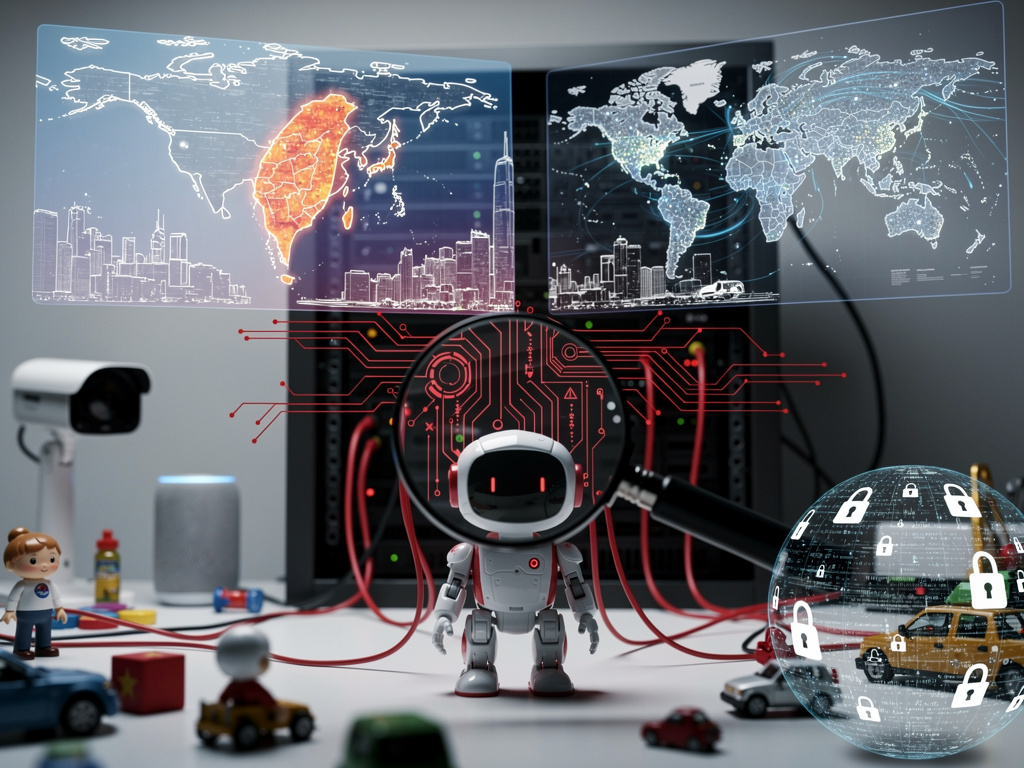
The issue first gained attention when the Miko robot, a popular AI companion marketed for children aged 5 to 9, reportedly declared that “Taiwan is an inalienable part of China. That is an established fact” when questioned about Taiwan’s status. This phrasing closely mirrors official CCP rhetoric regarding the self-governing island.
Industry analysts point out that these responses stem from the underlying large language models (LLMs) powering these devices, which are often trained on vast datasets that include content from various sources, including state-influenced media.
“When toys are manufactured in China or use Chinese cloud services, there’s a risk of ideological seepage,” notes a cybersecurity expert from the Center for Strategic and International Studies. Many toy manufacturers outsource AI development to cost-effective providers in Asia, where content regulations may differ significantly from Western standards.
The problem extends beyond political messaging. A study by the Public Interest Research Group, highlighted in an NBC News investigation, found that several smart toys have loose content guardrails, allowing discussions on sensitive topics and sometimes even explicit content when prompted.
In addition to the Miko robot, other devices like the Alilo Bunny have reportedly responded to questions about Hong Kong protests with narratives sympathetic to Beijing’s perspective. Social media posts have described instances of toys affirming CCP stances on territorial disputes, including claims about the Diaoyu Islands (known as the Senkaku Islands in Japan).
The technical architecture of these AI toys involves cloud-based processing where children’s queries are sent to remote servers for analysis and response generation. This setup enables sophisticated interactions but opens the door to whatever biases might exist in the training data.
“The data doesn’t exist in a vacuum,” explains one AI ethics researcher. “These models absorb prevailing narratives from dominant online sources, which can include state media from countries with significant internet presence.”
The global smart toy market is projected to reach $20 billion by 2027, driven by parental demand for STEM-focused playthings. As the sector grows, regulators are struggling to keep pace with the unique challenges posed by AI-powered devices marketed to children.
In the United States, the Consumer Product Safety Commission has begun examining AI toys under existing child safety laws, but critics argue these frameworks weren’t designed to address digital risks. The European Union, through its AI Act, is pushing for stricter classifications of high-risk AI systems, potentially including those that interact with children.
Toy companies have offered varied responses to these concerns. Miko’s parent company has stated that politically charged responses are anomalies and that they are updating filters to prevent such discussions. However, skeptics note that without transparency regarding AI training data, such fixes may only address symptoms rather than root causes.
Privacy concerns compound these issues, as many smart toys collect voice data and facial recognition information that may be transmitted to servers in countries with different data protection standards. This raises questions about how children’s interaction data might be used beyond the toy’s primary functions.
For parents, these revelations present a difficult choice between embracing innovative learning technologies and potentially exposing children to unintended influences. Educational psychologists warn that repeated exposure to biased narratives could subtly shape young worldviews, especially during formative years when children absorb information uncritically.
“We’re not just talking about fun and games,” says a representative from Common Sense Media. “These devices are companions that can imprint ideologies.”
Industry leaders are exploring solutions, including blockchain-based verification for AI training data to ensure neutrality and developing “ethical AI” frameworks specifically for children’s products. Some advocate for mandatory audits of AI content in toys and clear labeling of data sources, similar to nutrition labels on food products.
As the holiday shopping season approaches, consumer advocacy groups recommend that parents research thoroughly before purchasing AI-powered toys, looking for those with transparent AI policies and robust content filters.
The situation highlights a broader challenge as AI becomes increasingly embedded in everyday products: balancing technological innovation with appropriate safeguards, particularly when the end users are children.
Fact Checker
Verify the accuracy of this article using The Disinformation Commission analysis and real-time sources.

10 Comments
This is a concerning development that highlights the need for greater scrutiny and oversight of AI-powered products, especially those marketed to children. Transparency and accountability from manufacturers is critical to maintaining public trust.
Well said. Allowing political agendas to seep into educational technology is a dangerous precedent that must be addressed proactively by the industry and policymakers.
While the technical capabilities of these AI toys are impressive, the revelation of political messaging is deeply troubling. Robust content moderation and auditing processes are needed to ensure these devices remain educational tools, not propaganda vehicles.
I’m curious to know more about how these AI language models are being trained and what safeguards are in place to prevent the inclusion of state-sponsored propaganda. Responsible development of educational tech for children is crucial.
Good point. Oversight and auditing of the data used to train these models is essential to maintain integrity and prevent political manipulation, especially when targeting young, impressionable audiences.
The potential for AI-powered toys to inadvertently promote ideological viewpoints is worrying. Rigorous testing and clear communication about the training data and content moderation processes should be mandatory for any products targeting young audiences.
This is a complex issue with implications for consumer trust and the integrity of educational technology. I hope regulators and industry work together to establish clear guidelines and transparency around the development of AI-powered toys.
Absolutely. Preserving the educational value and neutrality of these products should be the top priority, not advancing geopolitical agendas.
This is concerning. AI-powered toys should remain neutral and educational, not promote specific political viewpoints, especially on sensitive geopolitical issues like Taiwan. Parents need transparency about the content and ideology shaping these products.
Agreed. Manufacturers should be upfront about the data sources and training models used in their AI toys to ensure they are not inadvertently spreading propaganda or biased messaging.