


Listen to the article
Russian TV Commentator Dimitri Simes Challenges Sanctions-Related Charges on Free Speech Grounds
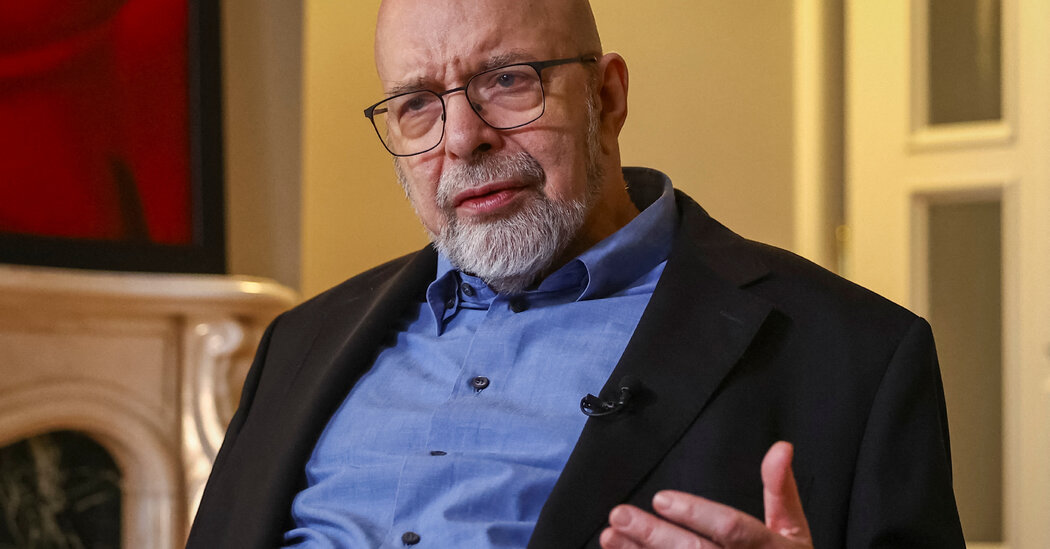
Dimitri K. Simes, an American commentator for Russian television who was indicted during the Biden administration, filed a motion Monday seeking dismissal of charges on First Amendment grounds, bringing new attention to the tension between national security concerns and free speech protections.
Simes and his wife, Anastasia, were charged in 2024 with violating U.S. economic sanctions against Russia for their work with a state-owned Russian television network. According to the indictment, Simes received approximately $1 million from Channel One, a sanctioned Russian broadcaster, after sanctions were imposed.
The case represents a significant moment in the ongoing debate about foreign influence in American politics. The Biden administration had implemented various measures to counter what it described as Russian disinformation campaigns aimed at undermining faith in U.S. elections and fostering political division. These efforts included warnings about faked videos and other propaganda, as well as legal actions against individuals accused of acting on behalf of Russian interests.
The Trump administration has since scaled back many of these initiatives, characterizing them as infringements on free speech and attempts to silence conservative voices. This policy shift highlights the fundamental disagreement about where legitimate national security concerns end and censorship begins.
“No one disputes the government’s right to impose economic sanctions on the Russian economy,” said Michel Paradis, a lawyer representing Simes. “But prosecuting an American journalist because he reports for a Russian television channel is just censorship.”
Simes, 78, has a long history in American politics. After immigrating to the United States from the Soviet Union in the 1970s, he became an adviser to Richard Nixon and later headed the Center for the National Interest, a think tank founded by the former president. During the 2016 election, Simes hosted Donald Trump for one of his few major foreign policy addresses and served as an adviser to Trump’s first presidential campaign.
Though mentioned in the Mueller report investigating Russian interference in the 2016 election, Simes was ultimately exonerated, with investigators finding no evidence that he had been a conduit for messages between the Russian government and the Trump campaign.
Speaking from Moscow, where he now resides permanently with dual Russian-American citizenship, Simes claimed the charges against him were politically motivated. “I continue to feel that a great injustice was done to me,” he said. “I think that this is a very dangerous precedent. The United States has a free press.”
The government’s case centers not only on sanctions violations but also on allegations that Simes received instructions from the Russian government about how to present developments in the Ukraine war, specifically to minimize Ukrainian successes. The indictment details how his salary was deposited in a sanctioned Russian bank, arguing he was aware of the sanctions status of both the television network and the financial institution.
Simes contends that he maintained editorial independence, even inviting critics of Russia’s Ukraine invasion on his show and asking challenging questions of Russian President Vladimir Putin. “I was hosting a nightly analytical program right after the news,” he explained. “What I did not expect was that this critical attention would lead to a criminal indictment.”
Legal experts note that Simes’s defense raises important constitutional questions. Evelyn Douek, an associate professor at Stanford Law School, observed that while initially skeptical of Simes’s claims, his arguments appear stronger than anticipated. “It’s a really important and fundamental principle because one person’s propaganda is another person’s political argument,” she said.
Douek added that the case highlights broader concerns about government power over speech: “This moment emphasizes the importance of First Amendment protections against government efforts to crack down on whatever it wants to call propaganda. Because once you give that power to the government, you don’t get to choose which government gets to wield that power.”
The motion filed by Simes’s legal team points out that the law he’s being prosecuted under actually contains protections for “information or informational materials,” prohibiting the government from regulating their import or export.
As this case proceeds, it will likely become a significant test of the balance between national security interests and constitutional protections for free expression, particularly in an era of increased concerns about foreign influence operations.
Fact Checker
Verify the accuracy of this article using The Disinformation Commission analysis and real-time sources.

22 Comments
Interesting update on American Commentator Faces Legal Challenge Over Work with Russian Television Network. Curious how the grades will trend next quarter.
Good point. Watching costs and grades closely.
Good point. Watching costs and grades closely.
Exploration results look promising, but permitting will be the key risk.
If AISC keeps dropping, this becomes investable for me.
Good point. Watching costs and grades closely.
Good point. Watching costs and grades closely.
Nice to see insider buying—usually a good signal in this space.
Good point. Watching costs and grades closely.
I like the balance sheet here—less leverage than peers.
Good point. Watching costs and grades closely.
Uranium names keep pushing higher—supply still tight into 2026.
Good point. Watching costs and grades closely.
Good point. Watching costs and grades closely.
Silver leverage is strong here; beta cuts both ways though.
Production mix shifting toward Propaganda might help margins if metals stay firm.
Good point. Watching costs and grades closely.
If AISC keeps dropping, this becomes investable for me.
Nice to see insider buying—usually a good signal in this space.
Good point. Watching costs and grades closely.
Good point. Watching costs and grades closely.
The cost guidance is better than expected. If they deliver, the stock could rerate.