


Listen to the article
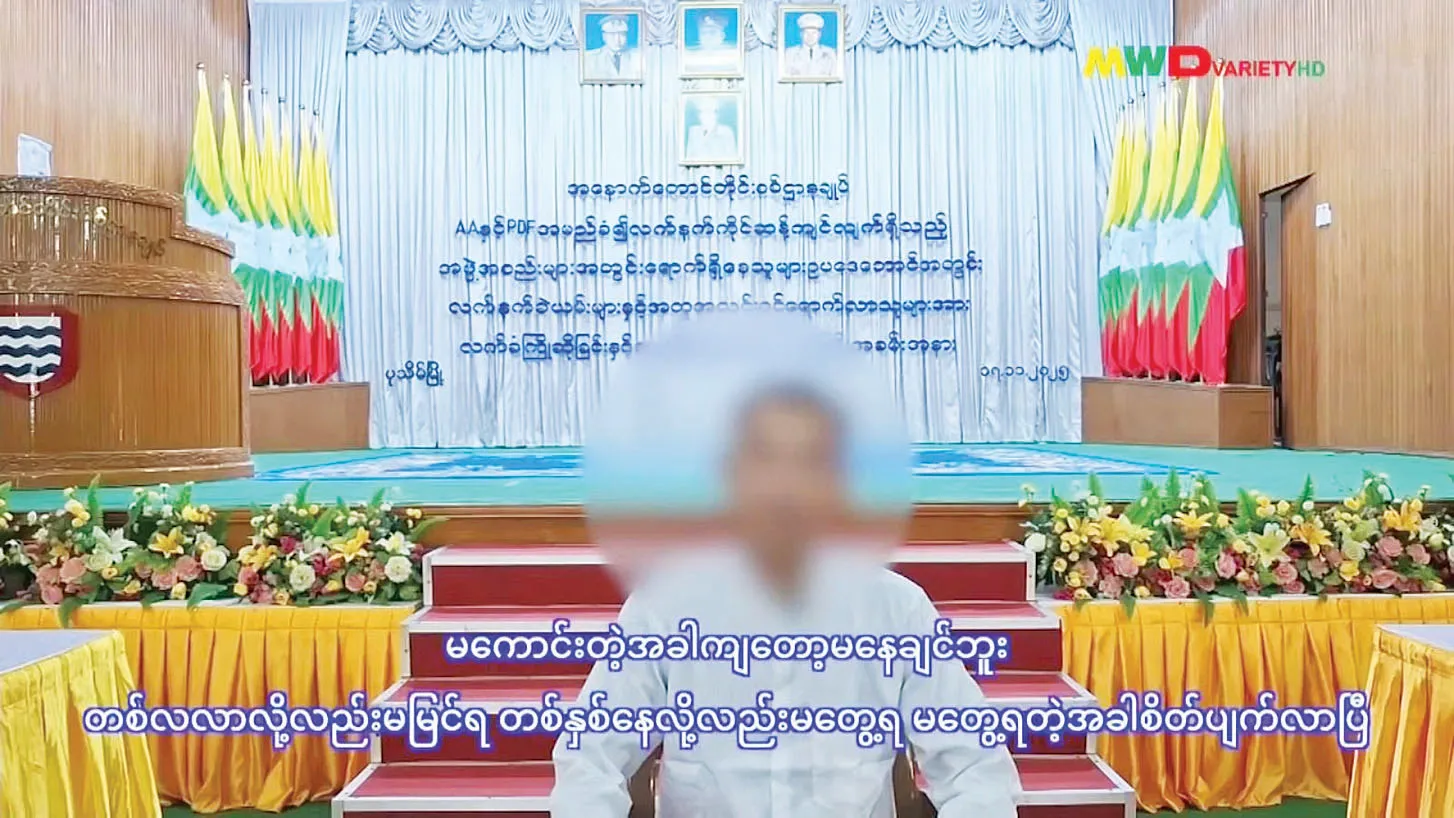
An Arakan Army (AA) spokesperson has strongly rejected claims published in a Myanmar junta newspaper that nine AA members surrendered to military authorities alongside six members of the People’s Defense Force (PDF).
The report, which appeared in the military-controlled publication, was dismissed as “blatant propaganda” designed to undermine the resistance group’s credibility and sow discord among opposition forces challenging the military regime.
“This is a textbook example of the junta’s disinformation tactics,” the AA spokesperson told reporters during a virtual press briefing. “None of our members have surrendered. These fabricated stories are created to demoralize our fighters and mislead the public about the strength and unity of resistance forces.”
The Arakan Army, one of Myanmar’s most formidable ethnic armed organizations, has been engaged in intensified conflict with Myanmar’s military junta since the February 2021 coup that overthrew the democratically elected government. Based primarily in western Myanmar’s Rakhine State, the AA has expanded its territorial control significantly in recent months, capturing several military outposts and administrative centers.
Military-controlled media in Myanmar has a documented history of publishing false surrender stories as part of psychological warfare operations. Security analysts who monitor the conflict note that such claims typically increase during periods when resistance forces make territorial gains or following successful operations against junta troops.
“The timing of this particular propaganda piece is telling,” said Min Zaw Oo, a conflict researcher with the Myanmar Peace Institute. “It comes just days after the AA successfully captured strategic positions near Maungdaw and Buthidaung, dealing significant blows to military morale. The junta is attempting to counter these losses in the information space when they cannot win on the battlefield.”
The alleged joint surrender of AA and PDF members appears designed to create the impression of fracturing resistance. The PDF, comprised largely of civilian volunteers and former police and military defectors, emerged after the coup as the armed wing of the National Unity Government. While the AA and PDF operate independently, they share the common goal of opposing the military junta.
Residents in Rakhine State, speaking on condition of anonymity due to security concerns, confirmed to reporters that they had seen no evidence of AA surrenders. “The AA’s presence and control in our areas has only strengthened,” said one resident from Mrauk-U township. “They administer most daily affairs here now. The idea that they would surrender when they are clearly advancing is absurd.”
Military propaganda has become increasingly sophisticated across Myanmar as the junta struggles to maintain control amid nationwide resistance. False surrender stories, digitally manipulated photos, and fabricated defector testimonies regularly appear in state-controlled media outlets.
The contested narrative highlights the increasing importance of the information war running parallel to the armed conflict. Both sides recognize that public perception significantly impacts recruitment, civilian cooperation, and international support.
For civilians caught in the crossfire, distinguishing fact from propaganda has become increasingly difficult. Independent media organizations like Narinjara News play a crucial role in verifying claims from both sides, though journalists face severe restrictions and potential imprisonment under the junta’s harsh media laws.
The AA spokesperson urged international observers and Myanmar citizens to critically evaluate all information published by junta-controlled media. “Their desperation is showing through these increasingly transparent falsehoods,” the spokesperson added. “The reality on the ground tells a completely different story from what they publish.”
As fighting continues across Rakhine State and multiple regions of Myanmar, accurate reporting remains challenging due to internet blackouts, travel restrictions, and threats against journalists. International human rights organizations continue to call for unimpeded access for reporters and humanitarian workers to conflict-affected areas.
Fact Checker
Verify the accuracy of this article using The Disinformation Commission analysis and real-time sources.
