


Listen to the article
Virginia Voters to Decide on Controversial Redistricting Amendment in National Power Struggle
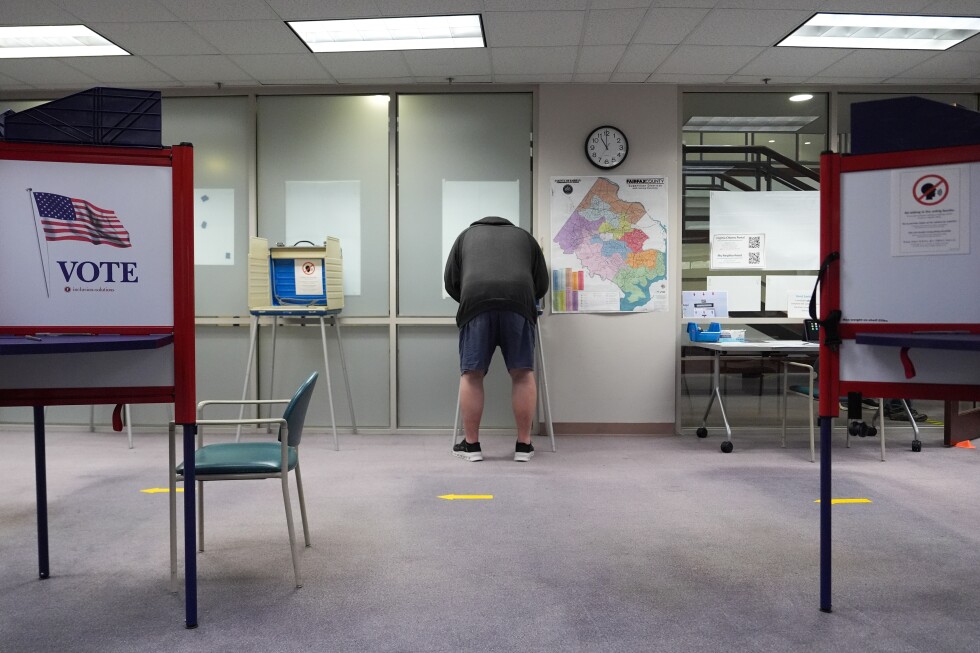
Virginia voters head to the polls Tuesday to determine the fate of an unusual mid-decade redistricting plan that could significantly boost Democratic representation in the U.S. House of Representatives. The referendum marks the latest development in an escalating national battle over congressional district boundaries ahead of November’s critical midterm elections.
The proposed constitutional amendment, backed by Virginia Democrats, would bypass the state’s bipartisan redistricting commission to implement new congressional district maps approved by state lawmakers. If passed, the plan could help Democrats flip as many as four additional House seats in their quest to regain control of the closely divided chamber.
The Virginia vote represents a direct counter to efforts initiated by former President Donald Trump, who successfully urged Texas Republicans to redraw congressional districts in their favor last year, triggering similar redistricting pushes in multiple states. Virginia would follow California’s lead, which approved its own mid-decade redistricting effort last November through a voter referendum.
Ironically, the Virginia referendum comes just six years after voters approved an amendment designed to reduce partisan gerrymandering by shifting redistricting authority away from the legislature to a bipartisan commission. Critics argue this latest move contradicts those reform efforts, while supporters frame it as necessary to counterbalance Republican gerrymandering in other states.
Even if voters approve the amendment, its implementation remains uncertain. The Virginia Supreme Court is currently reviewing whether the redistricting plan violates state law in a case that could potentially nullify Tuesday’s referendum results entirely.
Congressional redistricting typically occurs once every decade following the U.S. census. However, Trump’s encouragement of Texas Republicans to redraw district lines ahead of the November elections sparked a nationwide redistricting scramble. Republicans believe they can gain up to nine additional House seats through new maps in Texas, Missouri, North Carolina, and Ohio, while Democrats anticipate picking up five seats in California, one in Utah, and potentially four more in Virginia.
Virginia Democrats currently hold six of the state’s 11 U.S. House seats under districts imposed by the state Supreme Court in 2021, after the bipartisan commission failed to agree on maps based on the latest census data. The proposed new plan strategically reshapes districts to increase Democratic competitiveness, including one northern Virginia district shaped like a lobster that stretches into Republican-leaning rural areas.
The political stakes have drawn high-profile figures to both sides. Former Virginia Governor Glenn Youngkin, a Republican, rallied with opponents Monday night, calling the redistricting plan “dishonest” and “brazenly deceptive.” Meanwhile, House Minority Leader Hakeem Jeffries told reporters the amendment “will serve as a check and balance on this out-of-control Trump administration.”
Virginia Democratic Governor Abigail Spanberger has framed the effort as “pushing back against what other states have done in trying to stack the deck for Donald Trump.” Former President Barack Obama has appeared in advertisements supporting the amendment, while opponents have circulated materials highlighting past statements from both Obama and Spanberger criticizing gerrymandering.
“Democrats were all against gerrymandering before they were for it,” Virginia Republican Party Chairman Jeff Ryer said, highlighting the political reversal.
The legal challenges facing the amendment are substantial. A Tazewell County judge has already ruled the redistricting push illegal on procedural grounds, finding that lawmakers failed to follow their own rules when adding the amendment during a special session. The judge also determined that the state failed to properly publish the amendment before last year’s election, as required by law.
The Virginia Supreme Court’s eventual ruling on these challenges could render Tuesday’s referendum results meaningless, regardless of voter preferences.
As Virginia voters make their decision, the national battle over congressional maps continues, with Florida’s Republican-led legislature scheduled to convene April 28 for a special session that could result in yet another redrawn map favoring Republicans.
Fact Checker
Verify the accuracy of this article using The Disinformation Commission analysis and real-time sources.

16 Comments
This redistricting plan seems quite politically charged. I’m curious to see how Virginia voters weigh the potential partisan implications against the stated goals of the proposal.
Yes, redistricting is a complex and often controversial issue. It will be interesting to see if Virginia’s voters prioritize fairness or party advantage.
As someone with an interest in the mining and energy sectors, I’ll be watching this Virginia redistricting vote with an eye towards how it could impact related policies and legislation down the line.
Good point. Redistricting can have ripple effects across many policy areas, so it’s important for stakeholders in different industries to stay informed.
This vote seems to be a proxy battle in the broader national struggle over gerrymandering and fair representation. I’ll be curious to see how it plays out and what the implications might be.
Absolutely, redistricting is a critical issue that goes to the heart of our democratic process. The Virginia vote could set an important precedent.
I don’t have a strong opinion on the merits of this particular redistricting plan, but I do believe that the drawing of congressional district boundaries should be as impartial and non-partisan as possible.
That’s a fair perspective. Maintaining the integrity of the electoral process should be the top priority, not partisan advantage.
As someone with an interest in mining and energy issues, I’m less familiar with the intricacies of US congressional redistricting. But I can appreciate how it could impact the balance of political power and policies in those sectors.
That’s a good point. Redistricting can have ripple effects across many policy areas, including industries like mining and energy.
This redistricting vote in Virginia seems like a high-stakes battle that goes beyond just partisan politics. I’ll be curious to see how it plays out and what the broader implications might be.
Agreed. Redistricting is a complex issue with major ramifications for the balance of political power and policymaking. It’s an important issue to follow closely.
I’m somewhat skeptical of mid-decade redistricting efforts, as they can come across as overly partisan power grabs. But I’ll reserve judgment until I see the details and rationale behind Virginia’s proposal.
That’s a reasonable stance. Redistricting should aim for fairness and balance, not just short-term political gains.
Given my background in mining and energy, I’ll be keeping an eye on how this redistricting decision could impact policies and legislation related to those industries. It’s an issue worth following closely.
Good point. Redistricting can have downstream effects on everything from energy regulations to mining permits and approvals. It’s a complex issue with wide-ranging implications.