


Listen to the article
Pediatricians Navigate Rising Vaccine Hesitancy in Post-Pandemic America
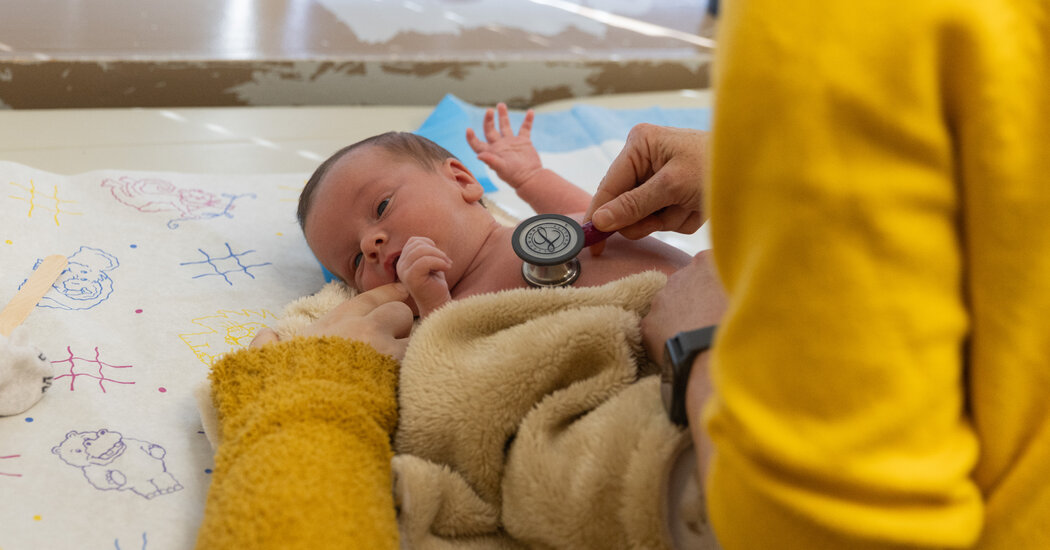
As pediatric nurse practitioner Alissa Parker examined 11-day-old Asher during a routine checkup at Primary Plus community clinic in Ashland, Kentucky, she gently broached the subject of RSV vaccination. When his parents demurred, having already declined the hepatitis B vaccine at birth and planning to refuse all routine childhood immunizations, she didn’t push.
“If there’s any way I can answer your questions and make you feel more comfortable about it, I’m happy to,” Dr. Parker offered before leaving the room.
This scene is playing out in pediatric offices across America, where healthcare providers are confronting unprecedented levels of vaccine skepticism while trying to maintain supportive relationships with families.
Vaccine hesitancy, once confined to the fringes of American society, has surged into the mainstream following the COVID-19 pandemic. The rapid development of coronavirus vaccines and associated mandates breathed new life into anti-vaccine sentiment and fostered widespread distrust of medical institutions.
This skepticism now enjoys validation from the highest levels of government. Health Secretary Robert F. Kennedy Jr. and his associates have questioned childhood vaccine safety, made false claims about their effectiveness, and rescinded recommendations for routine vaccination against multiple diseases.
Despite pediatrics being the lowest-paid medical specialty, Kennedy and others have portrayed practitioners as promoting vaccines primarily for financial gain, further eroding public trust in these healthcare providers.
Recent data from a KFF-Washington Post survey reveals the impact: 16 percent of parents reported skipping or delaying at least one routine childhood vaccine other than flu or COVID-19. Even more concerning, this hesitancy is expanding beyond vaccines to include rejection of other standard pediatric treatments like antibiotics, common medications, and diagnostic procedures.
The consequences can be devastating. In Boise, Idaho, three infants died last year after their parents declined vitamin K shots routinely given to newborns to prevent bleeding, according to pediatrician Dr. Amanda Lee.
“Families are not actually interested in information or facts or rates of side effects,” Dr. Lee observed. “Logic is no longer part of the discussion. It’s just kind of based on a feeling.”
While most parents still consider pediatricians their most trusted information source, practitioners find themselves increasingly unable to compete with a deluge of misinformation.
“It’s getting harder and harder to maintain that connection that we have with families,” said Dr. Kenneth Strzelecki, a pediatrician at Children’s Wisconsin in Milwaukee. “We’re up against a lot of noise.”
The strain has pushed some practitioners to consider abandoning their profession altogether. “It’s just a really sad and stressful time for pediatricians,” said Dr. Megan Schultz, a pediatric emergency physician in Milwaukee. “I really worry about us as a field, honestly.”
Building trust remains crucial to navigating this landscape. Bethany Browning, who initially rejected vaccines for her children after negative experiences with healthcare providers, later reconnected with the medical system through Dr. Parker, whom she met at a breastfeeding support group.
“We saw differently about the vaccine thing, but she never made me feel like she thought that I was a bad parent,” Browning said. After her children’s hospitalizations with flu and witnessing what she called “horrendous” advice from anti-vaccine influencers during the pandemic, she turned back to Dr. Parker and began catching her children up on their immunizations.
Medical conferences now routinely include training on building parental trust, teaching pediatricians to be less authoritarian and more patient. “Definitely, I’m more successful when I have built a relationship with the family,” noted Dr. Meera Nagarajan from Salt Lake City.
Trust-building proves particularly challenging in emergency settings where physicians may be treating previously unvaccinated children with illnesses many young doctors have never encountered. In Wisconsin, emergency departments have had to develop new protocols for treating unvaccinated children with unexplained fevers.
Even familiar threats like tetanus are presenting new challenges. Dr. Kennedy in Kansas recently treated two unvaccinated children hospitalized with tetanus – a preventable disease. While one family opted for catch-up vaccinations afterward, another refused despite their child spending three months hospitalized and nearly dying twice.
Legal frameworks vary widely, with most states allowing religious exemptions from school vaccination requirements and 16 permitting philosophical exemptions, which are increasingly claimed. Dr. Parker experienced this firsthand when moving from West Virginia (which allowed only medical exemptions) to Kentucky (which permits religious exemptions).
Parents like the Skaggses, who fully vaccinated their older children but refuse all vaccines for their newborn, cite changing government messaging as influencing their decision. Under Kennedy’s direction, the CDC website now states that “studies have not ruled out the possibility that infant vaccines cause autism,” replacing previous language affirming no link existed.
Some pediatricians refuse to accept unvaccinated patients, fearing risk to vulnerable individuals in their practice. More commonly, doctors have parents sign refusal forms while periodically revisiting the topic, hoping to gradually rebuild trust.
For parents like Browning who eventually returned to vaccination, the journey brings mixed emotions. “I feel a little bit angry about it, because I think there is a market online where people profit from feeding off of those fears,” she reflected. “We were really fortunate that nothing bad happened with our kids.”
Fact Checker
Verify the accuracy of this article using The Disinformation Commission analysis and real-time sources.

15 Comments
Pediatricians are on the frontlines of this issue, and their ability to navigate these challenging conversations is crucial. Maintaining open dialogue and building trust with families is paramount.
I agree. Pediatricians’ unwavering commitment to patient care and public health is truly admirable. Their expertise and empathy are vital in overcoming the rise in vaccine skepticism.
It’s alarming to see vaccine hesitancy becoming more widespread. Pediatricians’ efforts to combat misinformation and educate families are commendable. Their patience and dedication are truly inspiring.
Vaccine hesitancy is a complex issue, but pediatricians must remain steadfast in their commitment to protecting children. Nuanced discussions and building trust are essential.
Well said. Pediatricians have a challenging task ahead, but their expertise and dedication to patient care are invaluable. I hope more parents can be convinced to follow the medical consensus.
Navigating the rise in vaccine hesitancy must be incredibly challenging for pediatricians. Their ability to have nuanced discussions and address concerns thoughtfully is crucial. Maintaining trust is key.
Absolutely. Pediatricians play a vital role in promoting evidence-based practices and protecting vulnerable populations. Their expertise and compassion are invaluable during these turbulent times.
It’s concerning to see vaccine hesitancy becoming more mainstream. Pediatricians play a crucial role in educating families and dispelling misinformation. Their patience and empathy are admirable.
The rise in vaccine skepticism is concerning, especially for vulnerable populations like young children. It’s critical that medical professionals continue to prioritize evidence-based practices.
I agree. Pediatricians need our support as they work to promote vaccination and counter the spread of misinformation. The health of our communities depends on it.
Pediatricians are facing an uphill battle against vaccine misinformation. Their commitment to patient care and public health is commendable. I hope more parents can be convinced to trust the science.
Interesting to see how pediatricians are navigating the increased vaccine hesitancy. It’s a delicate balance between providing information and respecting parental concerns. Maintaining open dialogue is key.
Absolutely. Combating misinformation with facts and empathy is crucial. Pediatricians play a vital role in ensuring children’s health and safety.
The pandemic has undoubtedly fueled vaccine skepticism, but pediatricians must continue to advocate for evidence-based practices. Maintaining open dialogues with parents is key to overcoming this challenge.
I agree. Pediatricians are on the frontlines of this issue, and their tireless efforts to protect children’s health deserve our utmost respect and support.